
Recombinant Mouse Dectin-1 protein (rFc Tag)(HPLC verified)
Species
Mouse
Purity
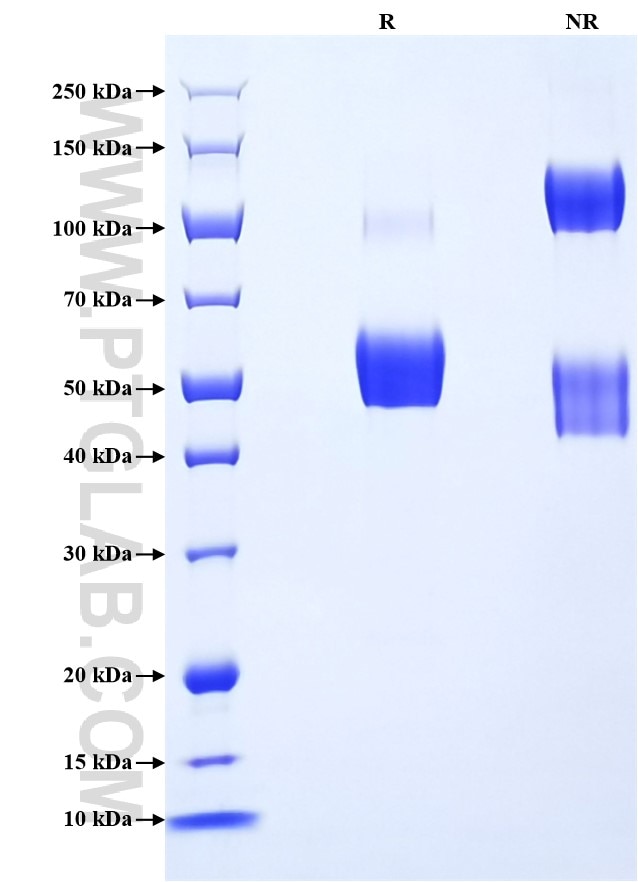
>90 %, SDS-PAGE
>90%, SEC-HPLC
Tag
rFc Tag
Activity
not tested
Cat no : Eg2676
Validation Data Gallery
Product Information
| Purity | >90 %, SDS-PAGE >90%, SEC-HPLC |
| Endotoxin | <0.1 EU/μg protein, LAL method |
| Activity |
Not tested |
| Expression | HEK293-derived Mouse Dectin-1 protein Gly71-Leu244 (Accession# Q6QLQ4) with a rabbit IgG Fc tag at the C-terminus. |
| GeneID | 56644 |
| Accession | Q6QLQ4 |
| PredictedSize | 45.8 kDa |
| SDS-PAGE | 48-60 kDa, reducing (R) conditions |
| Formulation | Lyophilized from 0.22 μm filtered solution in PBS, pH 7.4. Normally 5% trehalose and 5% mannitol are added as protectants before lyophilization. |
| Reconstitution | Briefly centrifuge the tube before opening. Reconstitute at 0.1-0.5 mg/mL in sterile water. |
| Storage Conditions |
It is recommended that the protein be aliquoted for optimal storage. Avoid repeated freeze-thaw cycles.
|
| Shipping | The product is shipped at ambient temperature. Upon receipt, store it immediately at the recommended temperature. |
Background
C-type lectin structural domain family 7 member A (Clec7a), also known as Dectin-1, is a transmembrane protein containing an intracellular immune receptor tyrosine-based activation (ITAM)-like motif and an extracellular C-type lectin-like structural domain for recognition. Clec7a has important roles in the innate immune system, particularly in the recognition of β-glucans. Studies have revealed potential links between Clec7a and a variety of biological processes such as immune homeostasis, autoimmunity, allergy, and cancer. Clec7a regulates phagocytosis by macrophages in a variety of peripheral tissues. Clec7a is upregulated in microglial cells during neurodegeneration and is an important receptor for microglial cell activation in response to AD pathology. (PMID: 39088351)
References:
1. Wan H, et al. (2024). Adv Sci (Weinh). 11(36):e2403064.
2. Wang J, et al. (2024). Front Immunol. 15:1361351.                                                                                                                            3. Wang Y, et al. (2022). Front Immunol. 13:1008727.