
Recombinant Mouse CD37 protein (rFc Tag)
Species
Mouse
Purity
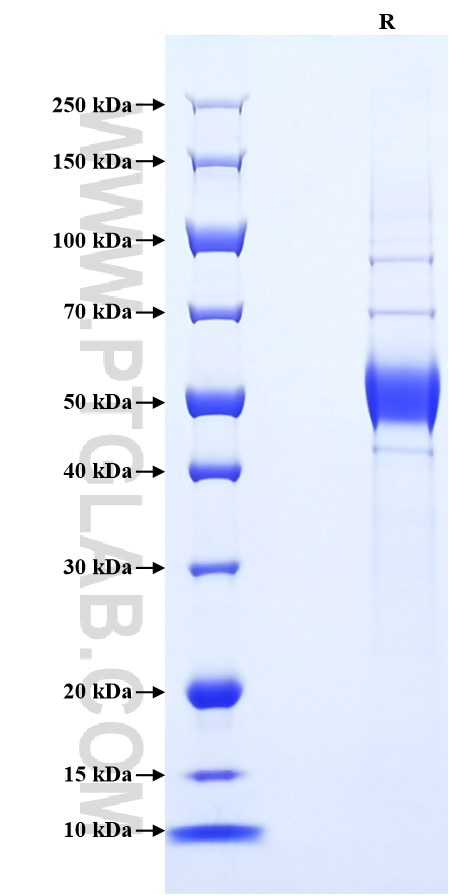
>90 %, SDS-PAGE
Tag
rFc Tag
Activity
not tested
Cat no : Eg2729
Validation Data Gallery
Product Information
| Purity | >90 %, SDS-PAGE |
| Endotoxin | <0.1 EU/μg protein, LAL method |
| Activity |
Not tested |
| Expression | HEK293-derived Mouse CD37 protein Arg112-Asn241 (Accession# Q61470) with a rabbit IgG Fc tag at the C-terminus. |
| GeneID | 12493 |
| Accession | Q61470 |
| PredictedSize | 41.2 kDa |
| SDS-PAGE | 46-60 kDa, reducing (R) conditions |
| Formulation | Lyophilized from 0.22 μm filtered solution in PBS, pH 7.4. Normally 5% trehalose and 5% mannitol are added as protectants before lyophilization. |
| Reconstitution | Briefly centrifuge the tube before opening. Reconstitute at 0.1-0.5 mg/mL in sterile water. |
| Storage Conditions |
It is recommended that the protein be aliquoted for optimal storage. Avoid repeated freeze-thaw cycles.
|
| Shipping | The product is shipped at ambient temperature. Upon receipt, store it immediately at the recommended temperature. |
Background
CD37 (TSPAN26) is a cell surface glycoprotein that is a member of the transmembrane tetrasuperfamily of proteins (TM4SF), which are predominantly expressed on the surface of a variety of immune cells. Due to the additional carbohydrate chains, the molecular weight of CD37 fluctuates between approximately 40 and 64 kDa, CD37 is predominantly expressed in B-cells and is critical in regulating B-cell survival, shaping immune responses and immune evasion.CD37 plays a role in immune regulation and tumor suppression, and its immunotherapeutic targeting may provide additional benefit to patients with refractory B-cell malignancies. (PMID: 33333768) In acute myeloid leukemia (AML), CD37 has also been shown to be expressed on AML cells but not on normal hematopoietic stem cells (HSCs), which provides new therapeutic directions for the development of antibody-drug couplings (ADCs) targeting CD37.
References:
1. Bobrowicz M,et al. Int J Mol Sci. 2020;21(24):9531.
2. Caulier B, et al. Cell Rep Med. 2024;5(6):101572.
3. van Deventer S,et al. Biophys J. 2024;123(15):2301-2311.
4. Xu-Monette ZY, et al. Blood. 2016;128(26):3083-3100.