
Recombinant Mouse CXCL1 protein (hFc Tag)
Species
Mouse
Purity
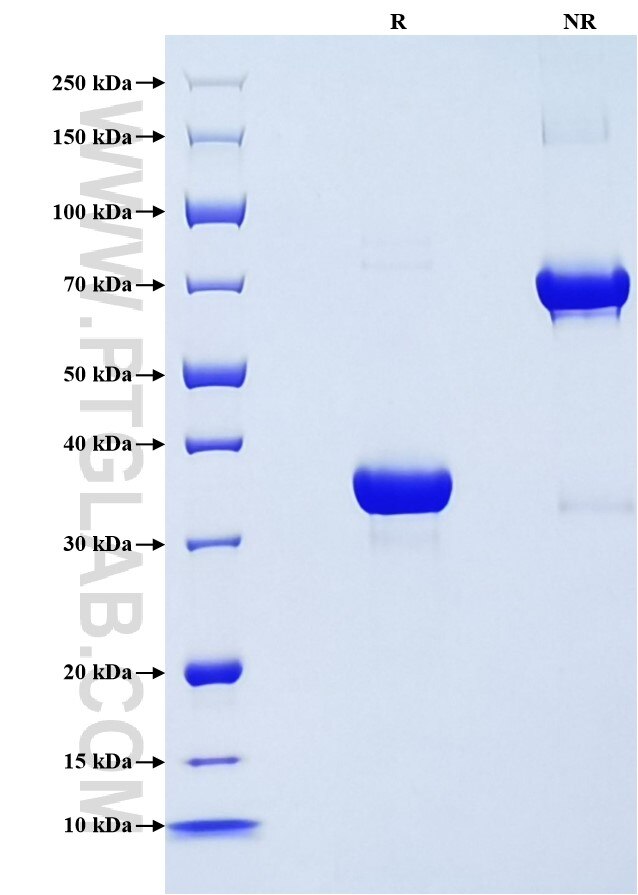
>90 %, SDS-PAGE
Tag
hFc Tag
Activity
not tested
Cat no : Eg0160
Validation Data Gallery
Product Information
| Purity | >90 %, SDS-PAGE |
| Endotoxin | <0.1 EU/μg protein, LAL method |
| Activity |
Not tested |
| Expression | HEK293-derived Mouse CXCL1 protein Ala25-Lys96 (Accession# P12850) with a human IgG2 Fc tag at the C-terminus. |
| GeneID | 14825 |
| Accession | P12850 |
| PredictedSize | 33.8 kDa |
| SDS-PAGE | 33-37 kDa, reducing (R) conditions |
| Formulation | Lyophilized from 0.22 μm filtered solution in PBS, pH 7.4. Normally 5% trehalose and 5% mannitol are added as protectants before lyophilization. |
| Reconstitution | Briefly centrifuge the tube before opening. Reconstitute at 0.1-0.5 mg/mL in sterile water. |
| Storage Conditions |
It is recommended that the protein be aliquoted for optimal storage. Avoid repeated freeze-thaw cycles.
|
| Shipping | The product is shipped at ambient temperature. Upon receipt, store it immediately at the recommended temperature. |
Background
CXCL1 a is a member of CXC family and also known as keratinocyte-derived chemokines (KC) or growth-related oncogene (GRO). CXCL1 is expressed by macrophages, neutrophils and epithelial cells. CXCL1 binding specifically to the CXC chemokine receptor CXCR2, is involved in fibrogenesis and angiogenesis. This protein also plays a role in inflammation and as a chemoattractant for neutrophils. CXCL1 is upregulated in some types of human cancer, including colorectal, bladder, breast, prostate and skin cancers.
References:
1. D. Wang. et al. (2000). Oncogene. 19: 4647-4659.
2. Verbeke H. et al.(2011). Cytokine Growth Factor Rev. 22: 345-358.
3. Miyake M. et al.(2014). Pathol Res Pract. 210: 74-75.
4. Dhawan P. et al.(2002). J Leukoc Biol. 72: 9-18.