
Recombinant Mouse CD48 protein (rFc Tag) (HPLC verified)
Species
Mouse
Purity
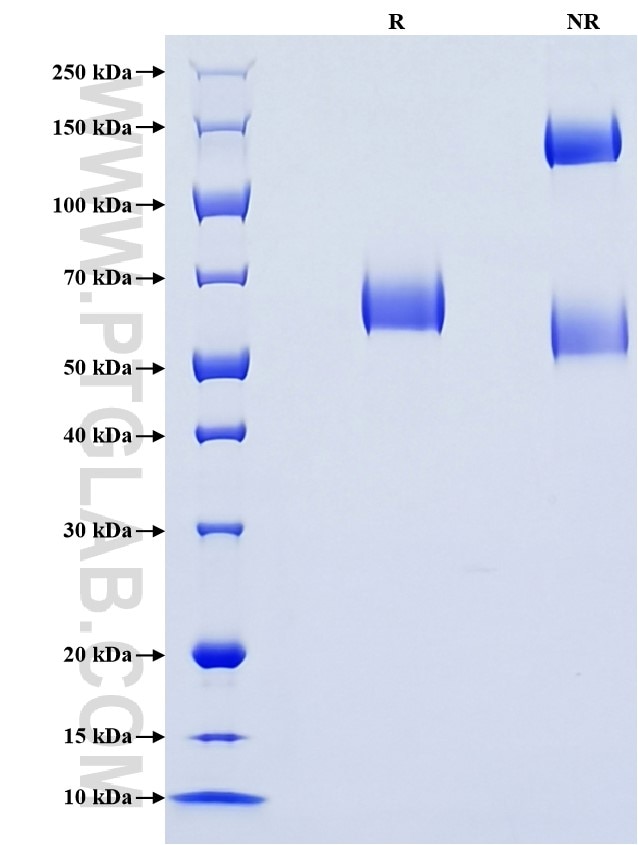
>90 %, SDS-PAGE
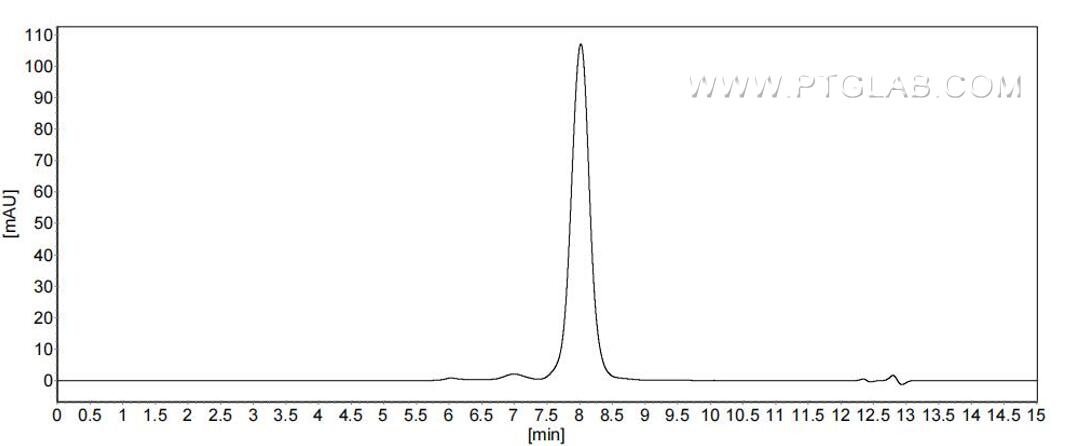
>90 %, SEC-HPLC
Tag
rFc Tag
Activity
not tested
Cat no : Eg1393
Validation Data Gallery
Product Information
| Purity | >90 %, SDS-PAGE >90 %, SEC-HPLC |
| Endotoxin | <0.1 EU/μg protein, LAL method |
| Activity |
Not tested |
| Expression | HEK293-derived Mouse CD48 protein Phe23-Ser217 (Accession# BAE96326.1) with a rabbit IgG Fc tag at the C-terminus. |
| GeneID | 12506 |
| Accession | BAE96326.1 |
| PredictedSize | 48.7 kDa |
| SDS-PAGE | 60-70 kDa, reducing (R) conditions |
| Formulation | Lyophilized from 0.22 μm filtered solution in PBS, pH 7.4. Normally 5% trehalose and 5% mannitol are added as protectants before lyophilization. |
| Reconstitution | Briefly centrifuge the tube before opening. Reconstitute at 0.1-0.5 mg/mL in sterile water. |
| Storage Conditions |
It is recommended that the protein be aliquoted for optimal storage. Avoid repeated freeze-thaw cycles.
|
| Shipping | The product is shipped at ambient temperature. Upon receipt, store it immediately at the recommended temperature. |
Background
Signaling lymphocytic activation molecule family 2 (SLAMF2, CD48) is an adhesion and costimulatory molecule expressed constitutively on most hematopoietic cells, particularly in antigen-presenting cells (APC). CD48 is expressed on all the hematopoietic cells, both in humans and mice, except for murine neutrophils and long-term HSC. CD48 exists as both a membrane-bound (mCD48) and a soluble (sCD48) form. CD48 can activate T cells, antigen-presenting cells and granulocytes, by binding to CD2 or bacterial FimH, and through cell intrinsic effects. Interactions between CD48 and its high-affinity ligand CD244 are more complex, with both stimulatory and inhibitory outcomes.
References:
1. Zou C. et al. (2019). Onco Targets Ther. 12:4181-4193.
2. Boles NC. et al. (2011). Blood. 118(1):80-7.
3. Pahima H. et al. (2023). Ann Allergy Asthma Immunol. 130(2):245-253.
4. McArdel SL. et al. (2016). Clin Immunol. 164:10-20.