
Recombinant Mouse CD3 Delta protein (rFc Tag)
Species
Mouse
Purity
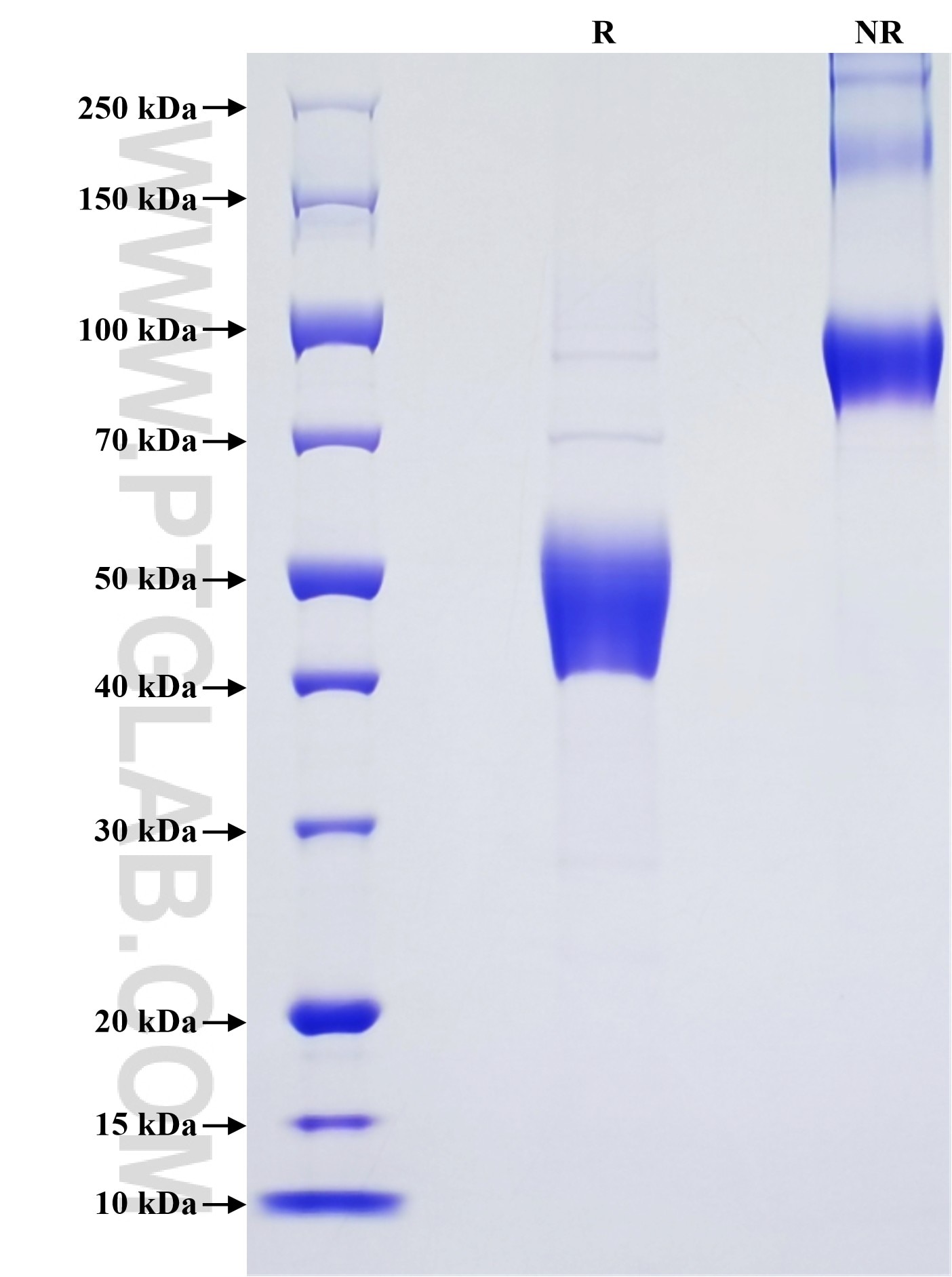
>90 %, SDS-PAGE
Tag
rFc Tag
Activity
not tested
Cat no : Eg4665
Validation Data Gallery
Product Information
| Purity | >90 %, SDS-PAGE |
| Endotoxin | <0.1 EU/μg protein, LAL method |
| Activity |
Not tested |
| Expression | HEK293-derived Mouse CD3 Delta protein Phe22-Ala105 (Accession# P04235) with a rabbit IgG Fc tag at the C-terminus. |
| GeneID | 12500 |
| Accession | P04235 |
| PredictedSize | 34.9 kDa |
| SDS-PAGE | 40-58 kDa, reducing (R) conditions |
| Formulation | Lyophilized from 0.22 μm filtered solution in PBS, pH 7.4. Normally 5% trehalose and 5% mannitol are added as protectants before lyophilization. |
| Reconstitution | Briefly centrifuge the tube before opening. Reconstitute at 0.1-0.5 mg/mL in sterile water. |
| Storage Conditions |
It is recommended that the protein be aliquoted for optimal storage. Avoid repeated freeze-thaw cycles.
|
| Shipping | The product is shipped at ambient temperature. Upon receipt, store it immediately at the recommended temperature. |
Background
CD3 Delta (CD3δ) is a key signal transduction subunit of the T cell receptor (TCR) complex and a member of the immunoglobulin superfamily. It forms the TCR-CD3 complex together with CD3ε, CD3γ, and CD3ζ. CD3δ contains an immunoreceptor tyrosine-based activation motif (ITAM). After the TCR recognizes the MHC-peptide complex, the ITAM is phosphorylated by Src family kinases, recruiting downstream signaling molecules such as ZAP-70 and initiating a cascade of signals leading to T cell activation, proliferation, and cytokine production. Mutations in the CD3δ gene lead to severe combined immunodeficiency (SCID), with patients exhibiting arrested T cell development and severely impaired immune function. Furthermore, anti-CD3 monoclonal antibodies (e.g., OKT3) target the CD3ε/δ complex to inhibit T cell activation and are widely used in the treatment of organ transplant rejection and autoimmune diseases. In immunological research and clinical diagnosis, anti-CD3δ antibodies are used for T cell identification, diagnosis of immunodeficiencies, and exploration of T cell signaling mechanisms.
References:
1. Wei, Zhengyu et al. Bioengineered vol. 13,5 (2022): 13784-13800.
2. Yang, Yi et al. Immunotherapy vol. 12,1 (2020): 25-35.
3. Xin, Weizhi et al. Nature vol. 630,8015 (2024): 222-229.