
Recombinant Mouse PTGFRN/CD315 protein (C-rFc)
Species
Mouse
Purity
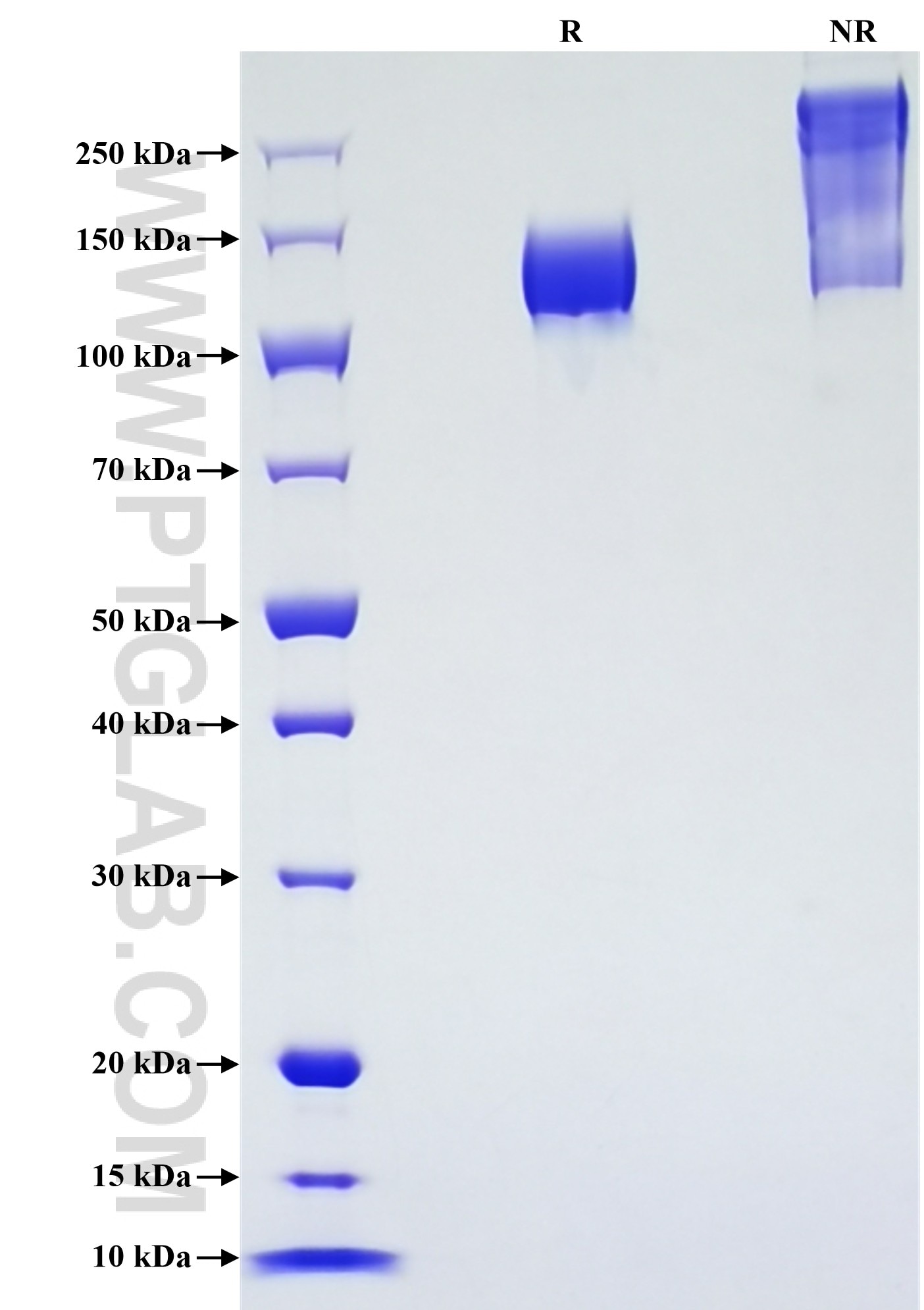
>90 %, SDS-PAGE
Tag
rFc Tag
Activity
not tested
Cat no : Eg6319
Validation Data Gallery
Product Information
| Purity | >90 %, SDS-PAGE |
| Endotoxin | <0.1 EU/μg protein, LAL method |
| Activity |
Not tested |
| Expression | HEK293-derived Mouse PTGFRN protein Arg22-Pro832 (Accession# Q9WV91) with a rabbit IgG Fc tag at the C-terminus. |
| GeneID | 19221 |
| Accession | Q9WV91 |
| PredictedSize | 117.7 kDa |
| SDS-PAGE | 120-150 kDa, reducing (R) conditions |
| Formulation | Lyophilized from 0.22 μm filtered solution in PBS, pH 7.4. Normally 5% trehalose and 5% mannitol are added as protectants before lyophilization. |
| Reconstitution | Briefly centrifuge the tube before opening. Reconstitute at 0.1-0.5 mg/mL in sterile water. |
| Storage Conditions |
It is recommended that the protein be aliquoted for optimal storage. Avoid repeated freeze-thaw cycles.
|
| Shipping | The product is shipped at ambient temperature. Upon receipt, store it immediately at the recommended temperature. |
Background
PTGFRN (Prostaglandin F2 Receptor Negative Regulator), also known as CD315, is a trans-membrane protein that modulates prostaglandin F2α signaling and links the tetraspanin web to the cytoskeleton, it is now recognized as a driver of metastasis; high expression correlates with aggressive proliferation, migration, and spheroid growth in epidermoid carcinoma, medulloblastoma, and mesothelioma, while silencing PTGFRN impairs these traits and disrupts autophagy.
References:
1.Orlicky, D J et al. Human genetics vol. 97,5 (1996): 655-8.
2.Aguila, Brittany et al. Cancer letters vol. 462 (2019): 33-42.
3.Marquez, Jorge et al. Journal of cellular biochemistry vol. 125,8 (2024): e30616.