
Recombinant Mouse CD246/Alk protein (rFc Tag)
Species
Mouse
Purity
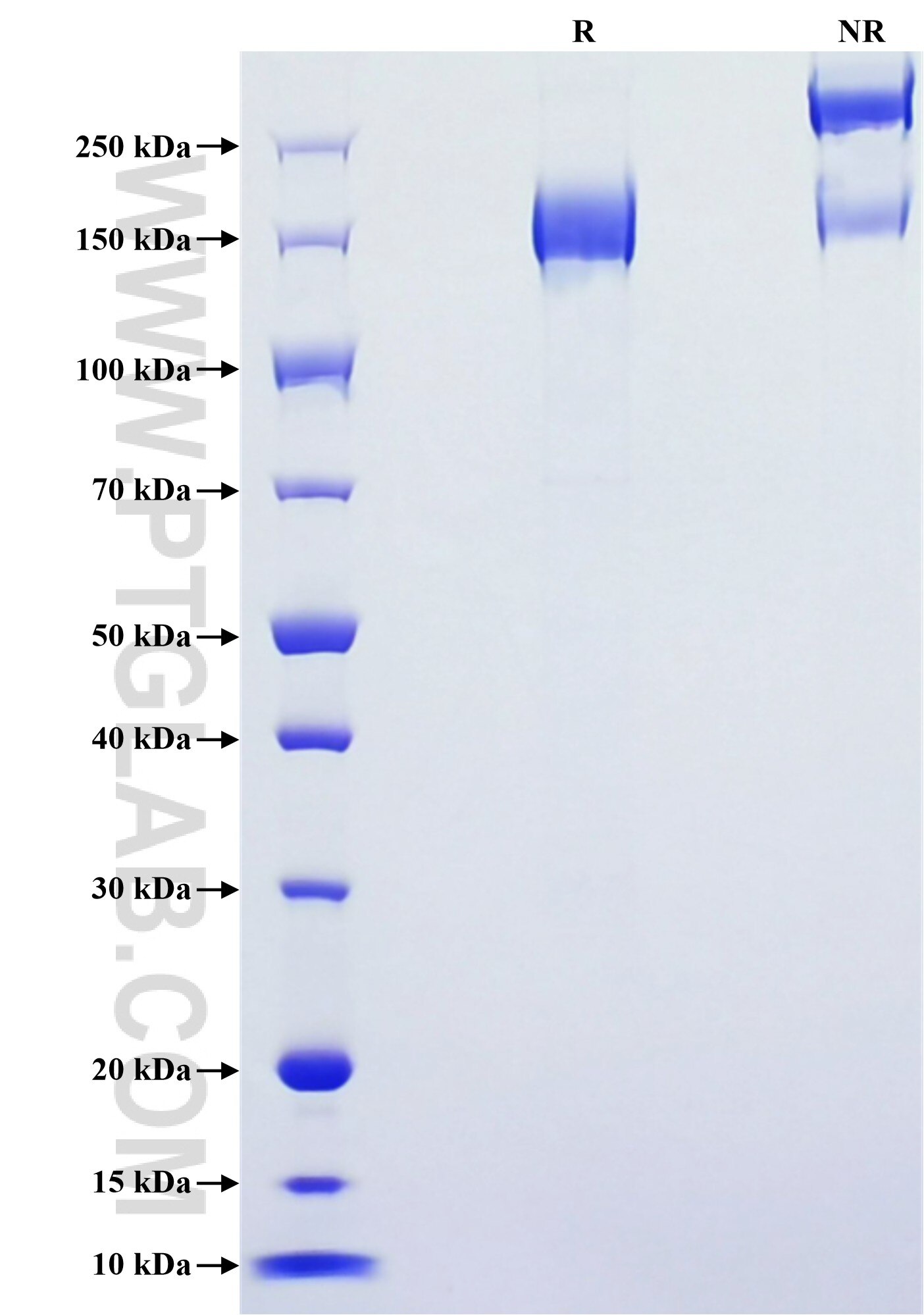
>90 %, SDS-PAGE
Tag
rFc Tag
Activity
not tested
Cat no : Eg6308
Validation Data Gallery
Product Information
| Purity | >90 %, SDS-PAGE |
| Endotoxin | <0.1 EU/μg protein, LAL method |
| Activity |
Not tested |
| Expression | HEK293-derived Mouse CD246 protein Ser19-Ser1042 (Accession# P97793) with a rabbit IgG Fc tag at the C-terminus. |
| GeneID | 11682 |
| Accession | P97793 |
| PredictedSize | 135.7 kDa |
| SDS-PAGE | 140-200 kDa, reducing (R) conditions |
| Formulation | Lyophilized from 0.22 μm filtered solution in PBS, pH 7.4. Normally 5% trehalose and 5% mannitol are added as protectants before lyophilization. |
| Reconstitution | Briefly centrifuge the tube before opening. Reconstitute at 0.1-0.5 mg/mL in sterile water. |
| Storage Conditions |
It is recommended that the protein be aliquoted for optimal storage. Avoid repeated freeze-thaw cycles.
|
| Shipping | The product is shipped at ambient temperature. Upon receipt, store it immediately at the recommended temperature. |
Background
CD246/ALK (Anaplastic Lymphoma Kinase) is a receptor tyrosine kinase belonging to the insulin receptor superfamily, playing a dual role in neural development and tumorigenesis. Under normal physiological conditions, ALK is mainly expressed in the central nervous system, where it participates in neuronal differentiation, axon guidance, and the regulation of synaptic plasticity. In tumors, ALK gene rearrangements (e.g., EML4-ALK) represent a key driver mutation in non-small cell lung cancer (NSCLC) and a hallmark genetic alteration in anaplastic large cell lymphoma (ALCL), leading to constitutive kinase activation and aberrant activation of downstream signaling pathways such as PI3K/AKT, RAS/MAPK, and JAK/STAT, thereby promoting malignant proliferation and survival of tumor cells. ALK inhibitors (e.g., crizotinib, alectinib) have become the standard of care for precision therapy in ALK-positive tumors.
References:
1.Iwahara, T et al. Oncogene vol. 14,4 (1997): 439-49.
2.Gupta, Somnath J et al. Neuroscience insights vol. 18 (2023): 26331055231186993.
3.Šutić, Maja et al. Journal of personalized medicine vol. 11,11 (2021): 1102.
4.Uemura, Takehiro, and Toyoaki Hida. Annals of translational medicine vol. 5,21 (2017): 433.