
Validation Data Gallery
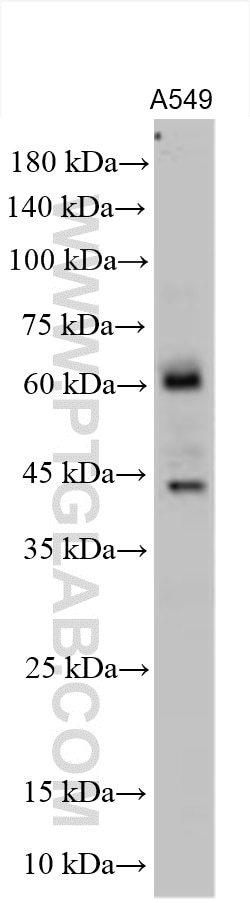
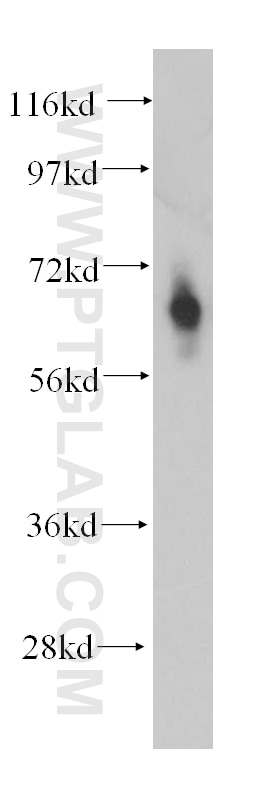
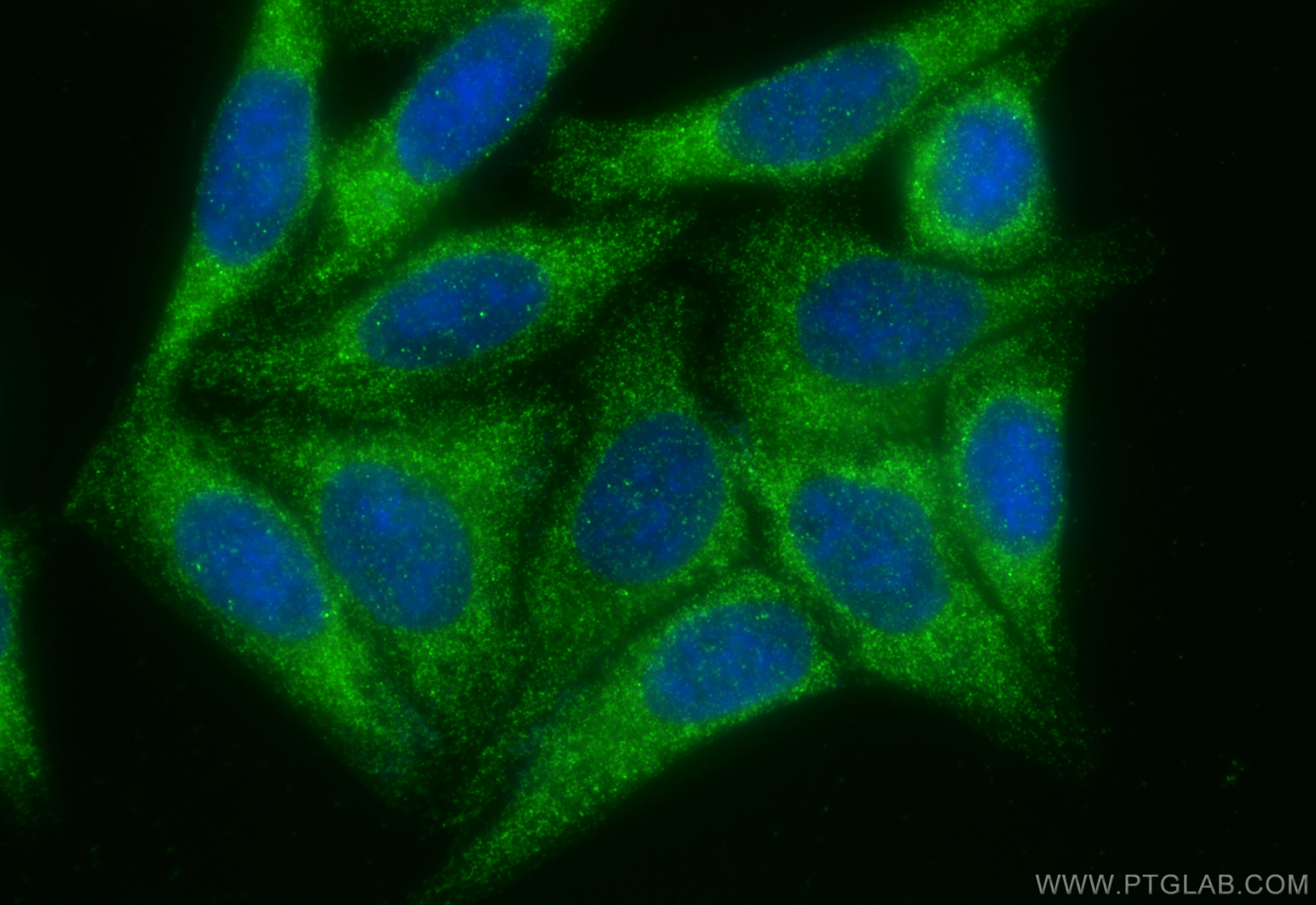
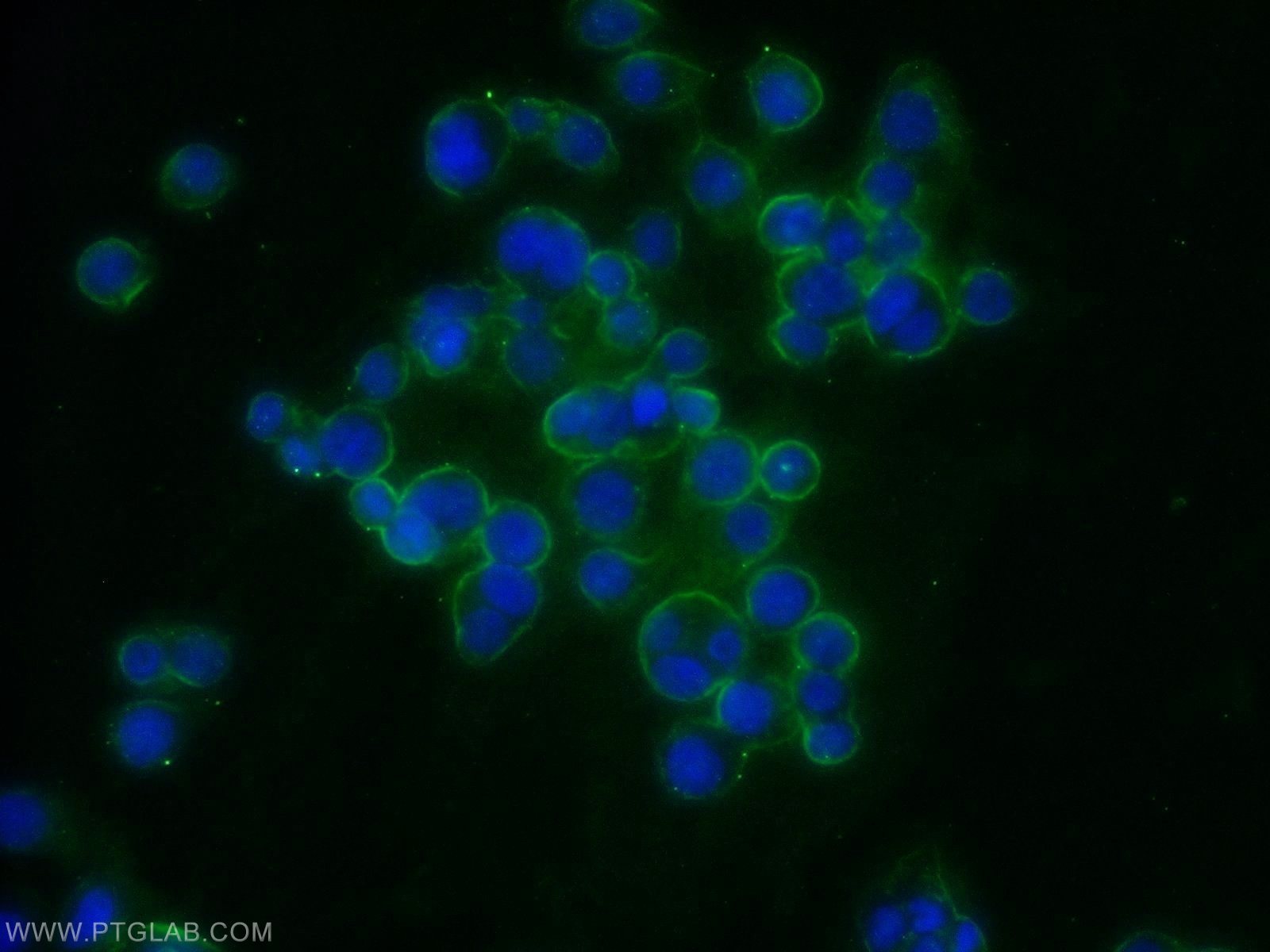
Tested Applications
| Positive WB detected in | A549 cells, human colon tissue |
| Positive IF/ICC detected in | HepG2 cells, COLO 320 cells |
Recommended dilution
| Application | Dilution |
|---|---|
| Western Blot (WB) | WB : 1:500-1:1000 |
| Immunofluorescence (IF)/ICC | IF/ICC : 1:200-1:800 |
| It is recommended that this reagent should be titrated in each testing system to obtain optimal results. | |
| Sample-dependent, Check data in validation data gallery. | |
Published Applications
| KD/KO | See 2 publications below |
| WB | See 30 publications below |
| IHC | See 8 publications below |
| IF | See 5 publications below |
Product Information
14552-1-AP targets MMP14 / MT1-MMP in WB, IHC, IF/ICC, ELISA applications and shows reactivity with human, mouse, rat samples.
| Tested Reactivity | human, mouse, rat |
| Cited Reactivity | human, mouse, rat |
| Host / Isotype | Rabbit / IgG |
| Class | Polyclonal |
| Type | Antibody |
| Immunogen |
CatNo: Ag5965 Product name: Recombinant human MMP14 protein Source: e coli.-derived, PGEX-4T Tag: GST Domain: 1-350 aa of BC064803 Sequence: MSPAPRPSRCLLLPLLTLGTALASLGSAQSSSFSPEAWLQQYGYLPPGDLRTHTQRSPQSLSAAIAAMQKFYGLQVTGKADADTMKAMRRPRCGVPDKFGAEIKANVRRKRYAIQGLKWQHNEITFCIQNYTPKVGEYATYEAIRKAFRVWESATPLRFREVPYAYIREGHEKQADIMIFFAEGFHGDSTPFDGEGGFLAHAYFPGPNIGGDTHFDSAEPWTVRNEDLNGNDIFLVAVHELGHALGLEHSSDPSAIMAPFYQWMDTENFVLPDDDRRGIQQLYGGESGFPTKMPPQPRTTSRPSVPDKPKNPTYGPNICDGNFDTVAMLRGEMFVFKERWFWRVRNNQVM 相同性解析による交差性が予測される生物種 |
| Full Name | matrix metallopeptidase 14 (membrane-inserted) |
| Calculated molecular weight | 66 kDa |
| Observed molecular weight | 66 kDa, 45-50 kDa |
| GenBank accession number | BC064803 |
| Gene Symbol | MMP14 |
| Gene ID (NCBI) | 4323 |
| RRID | AB_2250751 |
| Conjugate | Unconjugated |
| Form | |
| Form | Liquid |
| Purification Method | Antigen affinity purification |
| UNIPROT ID | P50281 |
| Storage Buffer | PBS with 0.02% sodium azide and 50% glycerol{{ptg:BufferTemp}}7.3 |
| Storage Conditions | Store at -20°C. Stable for one year after shipment. Aliquoting is unnecessary for -20oC storage. |
Background Information
MMP14, also named as MT1-MMP, is a key matrix metalloproteinase (MMP) family member which plays a crucial role in tumor growth, invasion and metastasis. MT1-MMP is a cell membrane-bound proteinase, and it enhances degradation of collagen IV, a major component of the basement membrane, by forming a complex with tissue inhibitor of metalloproteinase-2 (TIMP-2) to activate pro-MMP-2. MT1-MMP can influence venous invasion, intrahepatic metastasis , and patient outcome in hepatocellular carcinoma (HCC). MT1-MMP was reported to be present in centromere and could lead to chromosome instability in MDCK cells, indicating that MT1-MMP may have more novel functions in the intracellular compartments. In western blotting, pro-MMP14 (65 kDa) and MMP14 (51 kDa) bands showed with the truncated MMP14 (45, 42, 35, 20 kDa) forms (PMID:12097451).
Protocols
| Product Specific Protocols | |
|---|---|
| IF protocol for MMP14 / MT1-MMP antibody 14552-1-AP | Download protocol |
| WB protocol for MMP14 / MT1-MMP antibody 14552-1-AP | Download protocol |
| Standard Protocols | |
|---|---|
| Click here to view our Standard Protocols |
Publications
| Species | Application | Title |
|---|---|---|
Gut CD48 is a novel immune checkpoint on tumour-associated macrophages in hepatocellular carcinoma | ||
Adv Sci (Weinh) Neoadjuvant Chemotherapy With Cisplatin Up-Regulates GSDMD to Enhance Oral Squamous Cell Carcinoma Metastasis Through MMP14-Mediated EMT Activation | ||
J Control Release Dentin tubules as a long-term sustained release carrier to accelerate bone repair by loading FTY720 | ||
Cell Mol Biol Lett The promoting roles of GLP1R and GIPR in stemness maintenance and multiple lineage-specific differentiation of PDLSCs. | ||
Cancer Lett Long non-coding RNA MALAT1 promotes gastric cancer tumorigenicity and metastasis by regulating vasculogenic mimicry and angiogenesis. | ||
Int J Biol Sci Decrease of circARID1A retards glioblastoma invasion by modulating miR-370-3p/ TGFBR2 pathway |