
Validation Data Gallery
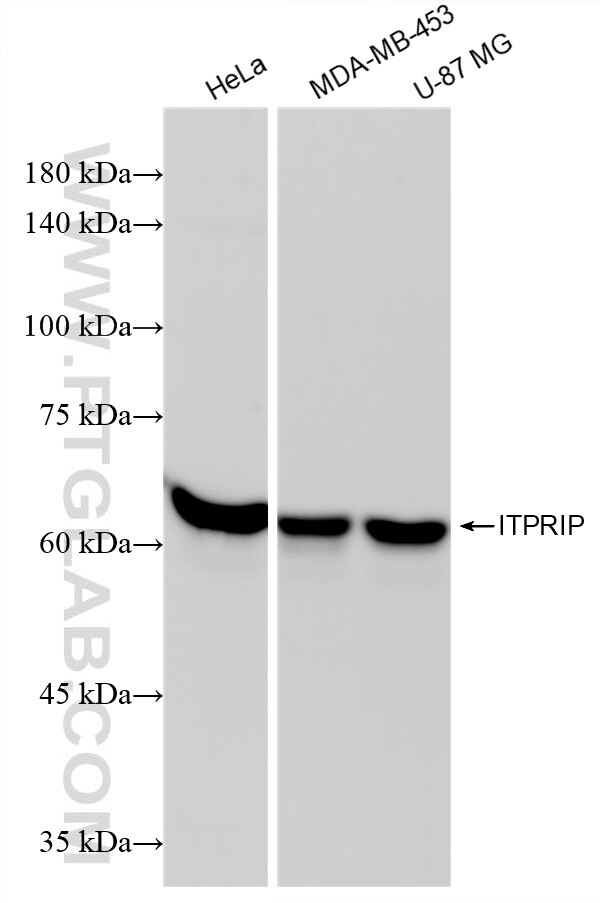
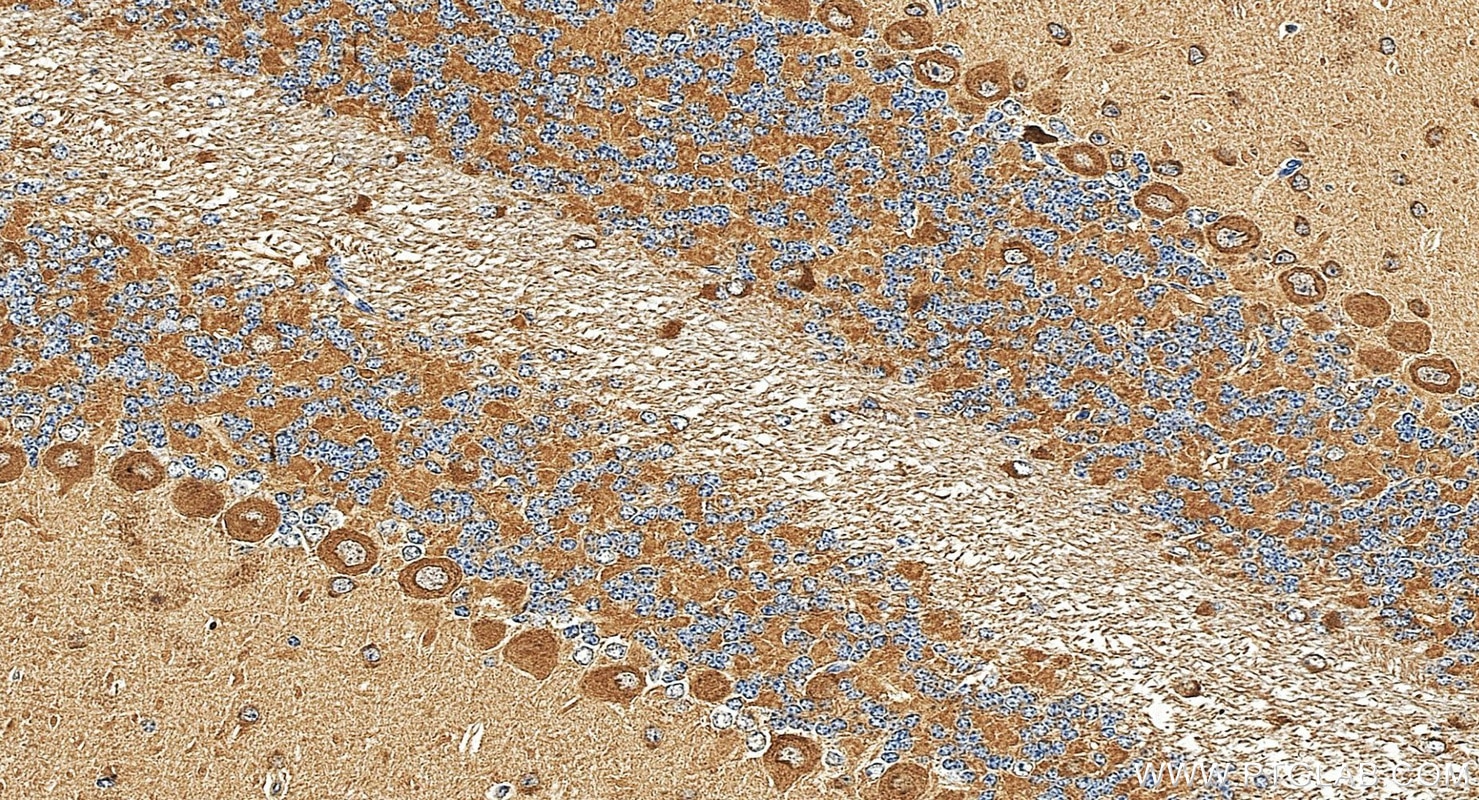
Tested Applications
Recommended dilution
| Application | Dilution |
|---|---|
| It is recommended that this reagent should be titrated in each testing system to obtain optimal results. | |
Product Information
88074-2-PBS targets ITPRIP in WB, IHC, Indirect ELISA applications and shows reactivity with human, mouse samples.
| Tested Reactivity | human, mouse |
| Host / Isotype | Rabbit / IgG |
| Class | Recombinant |
| Type | Antibody |
| Immunogen |
CatNo: Eg5612 Product name: Recombinant human ITPRIP protein Source: mammalian cells-derived, V37 Tag: C-rFc Domain: 16-83 aa of NM_001272012.2 Sequence: IINHPLLFPRENATVPENEEEIIRKMQAHQEKLQLEQLRLEEEVARLAAEKEALEQVAEEGRQQNETR 相同性解析による交差性が予測される生物種 |
| Full Name | inositol 1,4,5-triphosphate receptor interacting protein |
| Calculated molecular weight | 62 kDa |
| Observed molecular weight | 62 kDa |
| GenBank accession number | NM_001272012.2 |
| Gene Symbol | ITPRIP |
| Gene ID (NCBI) | 85450 |
| Conjugate | Unconjugated |
| Form | |
| Form | Liquid |
| Purification Method | Protein A purification |
| UNIPROT ID | Q8IWB1 |
| Storage Buffer | PBS only{{ptg:BufferTemp}}7.3 |
| Storage Conditions | Store at -80°C. |
Background Information
ITPRIP (inositol 1,4,5-trisphosphate receptor interacting protein) is a key regulatory protein that binds to IP3 receptors to modulate endoplasmic reticulum calcium release and intracellular calcium homeostasis. It is widely expressed in human tissues with high abundance in the central nervous system. ITPRIP participates in neurodevelopment, cell apoptosis, innate immunity and tumor progression. Its abnormal expression is closely linked to glioma malignancy, neurodevelopmental disorders and immune dysfunction, serving as an essential molecule in physiological regulation and disease pathogenesis. (PMID: 29899107)