
Validation Data Gallery
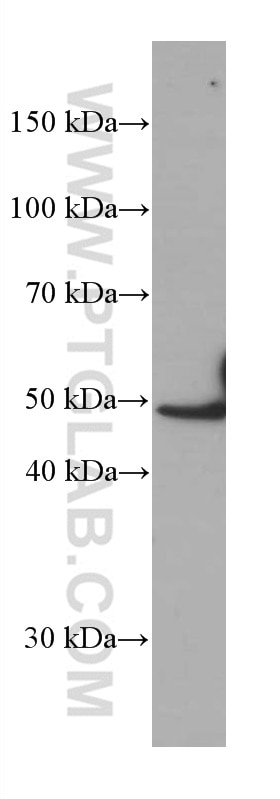
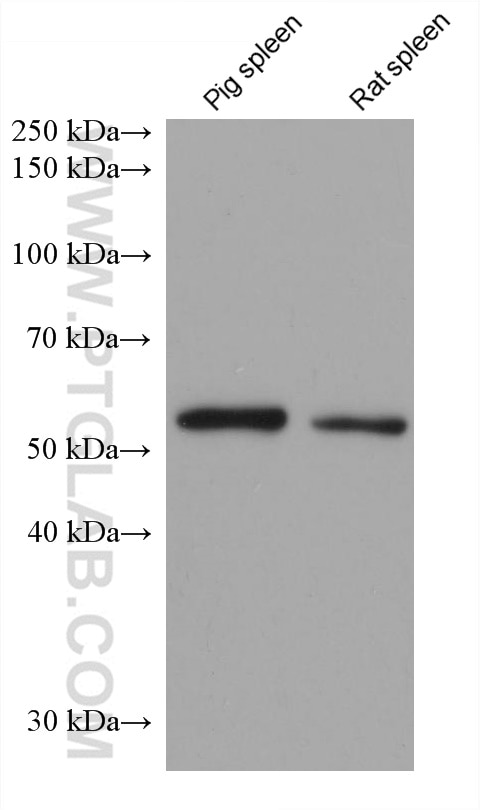
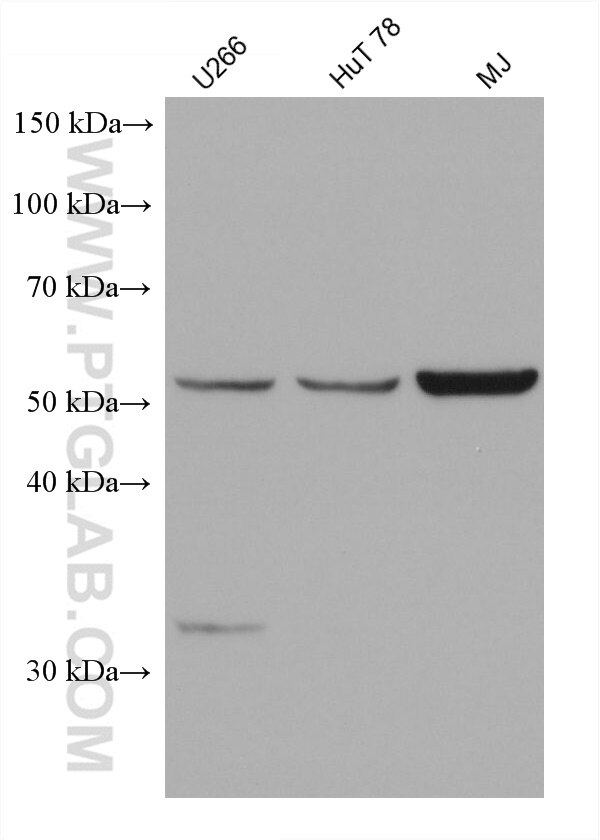
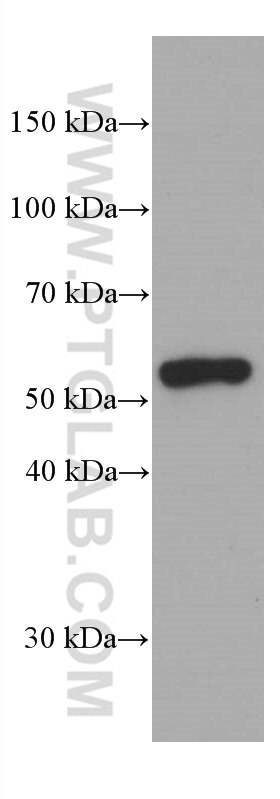
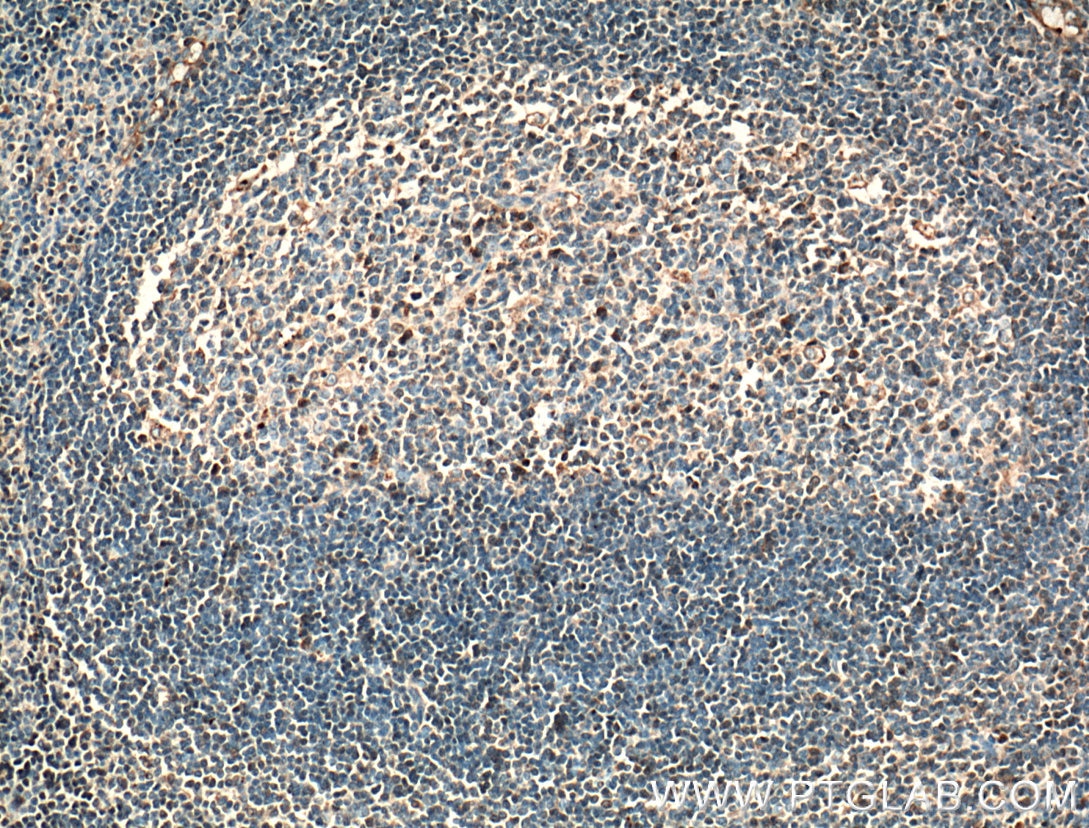
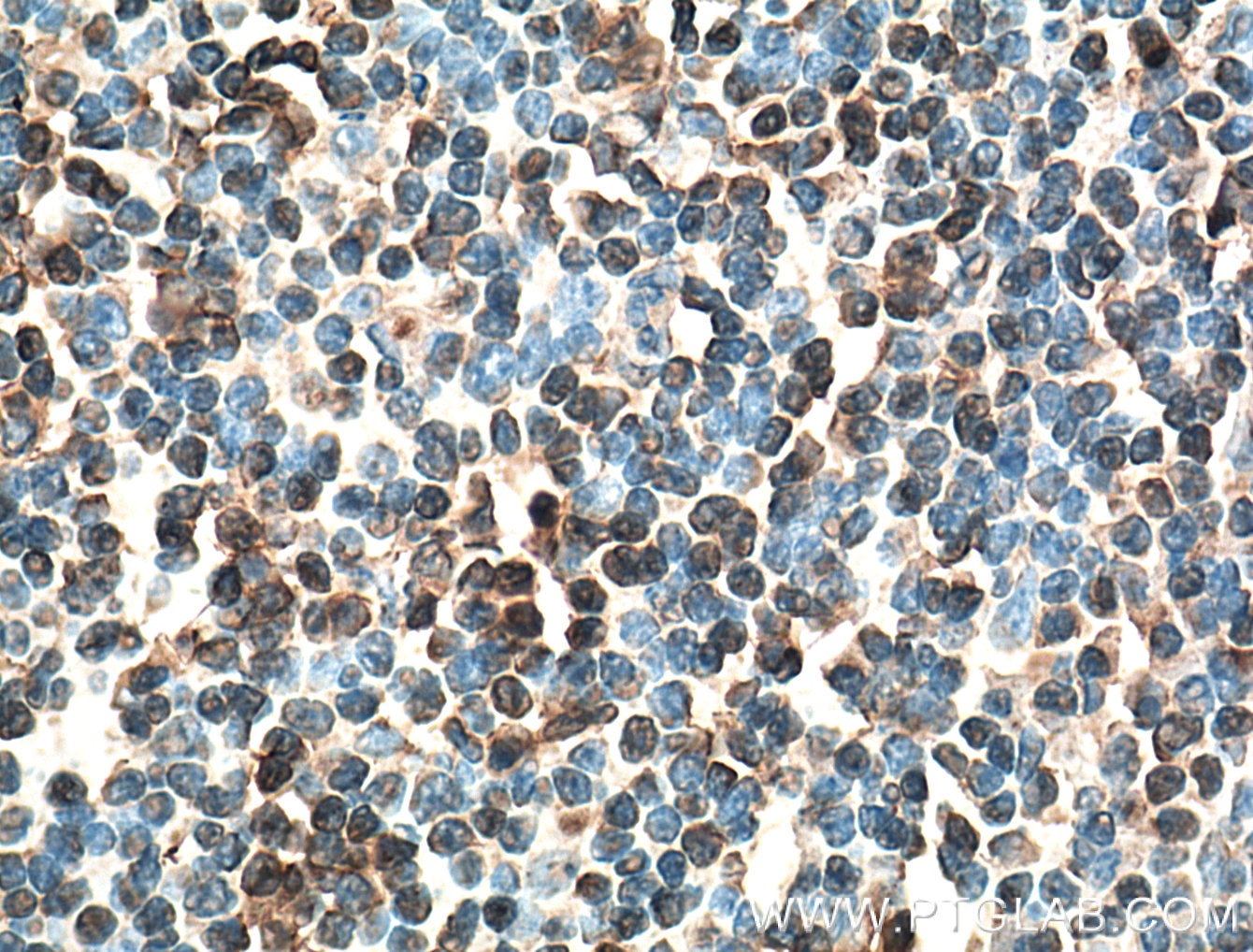
Tested Applications
Recommended dilution
| Application | Dilution |
|---|---|
| It is recommended that this reagent should be titrated in each testing system to obtain optimal results. | |
Product Information
66451-1-PBS targets IRF4 in WB, IHC, Indirect ELISA applications and shows reactivity with human, rat, pig samples.
| Tested Reactivity | human, rat, pig |
| Host / Isotype | Mouse / IgG1 |
| Class | Monoclonal |
| Type | Antibody |
| Immunogen |
CatNo: Ag25203 Product name: Recombinant human IRF4 protein Source: e coli.-derived, PET28a Tag: 6*His Domain: 1-451 aa of BC015752 Sequence: MNLEGGGRGGEFGMSAVSCGNGKLRQWLIDQIDSGKYPGLVWENEEKSIFRIPWKHAGKQDYNREEDAALFKAWALFKGKFREGIDKPDPPTWKTRLRCALNKSNDFEELVERSQLDISDPYKVYRIVPEGAKKGAKQLTLEDPQMSMSHPYTMTTPYPSLPAQQVHNYMMPPLDRSWRDYVPDQPHPEIPYQCPMTFGPRGHHWQGPACENGCQVTGTFYACAPPESQAPGVPTEPSIRSAEALAFSDCRLHICLYYREILVKELTTSSPEGCRISHGHTYDASNLDQVLFPYPEDNGQRKNIEKLLSHLERGVVLWMAPDGLYAKRLCQSRIYWDGPLALCNDRPNKLERDQTCKLFDTQQFLSELQAFAHHGRSLPRFQVTLCFGEEFPDPQRQRKLITAHVEPLLARQLYYFAQQNSGHFLRGYDLPEHISNPEDYHRSIRHSSIQE 相同性解析による交差性が予測される生物種 |
| Full Name | IRF 4 |
| Calculated molecular weight | 52 kDa |
| Observed molecular weight | 48-52 kDa |
| GenBank accession number | BC015752 |
| Gene Symbol | IRF4 |
| Gene ID (NCBI) | 3662 |
| ENSEMBL Gene ID | ENSG00000137265 |
| RRID | AB_2881820 |
| Conjugate | Unconjugated |
| Form | |
| Form | Liquid |
| Purification Method | Protein G purification |
| UNIPROT ID | Q15306 |
| Storage Buffer | PBS only{{ptg:BufferTemp}}7.3 |
| Storage Conditions | Store at -80°C. |
Background Information
IF regulatory factor 4 (IRF4) is a member of the IRF family of transcription factors, expressed in most cell types of the immune system. IRF4 is a transcription factor essential for the development of T helper-2 (Th2) cells, IL17-producing Th17 cells, and IL9-producing Th9 cells, as well as dendritic cell (DC). It binds to and activates the IF-stimulated response element (ISRE) of the MHC class I promoter, and may have a role in ISRE-targeted signal transduction mechanisms specific to lymphoid cells.