
Validation Data Gallery
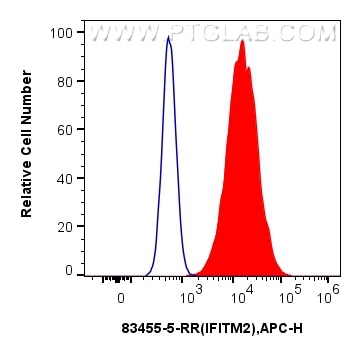
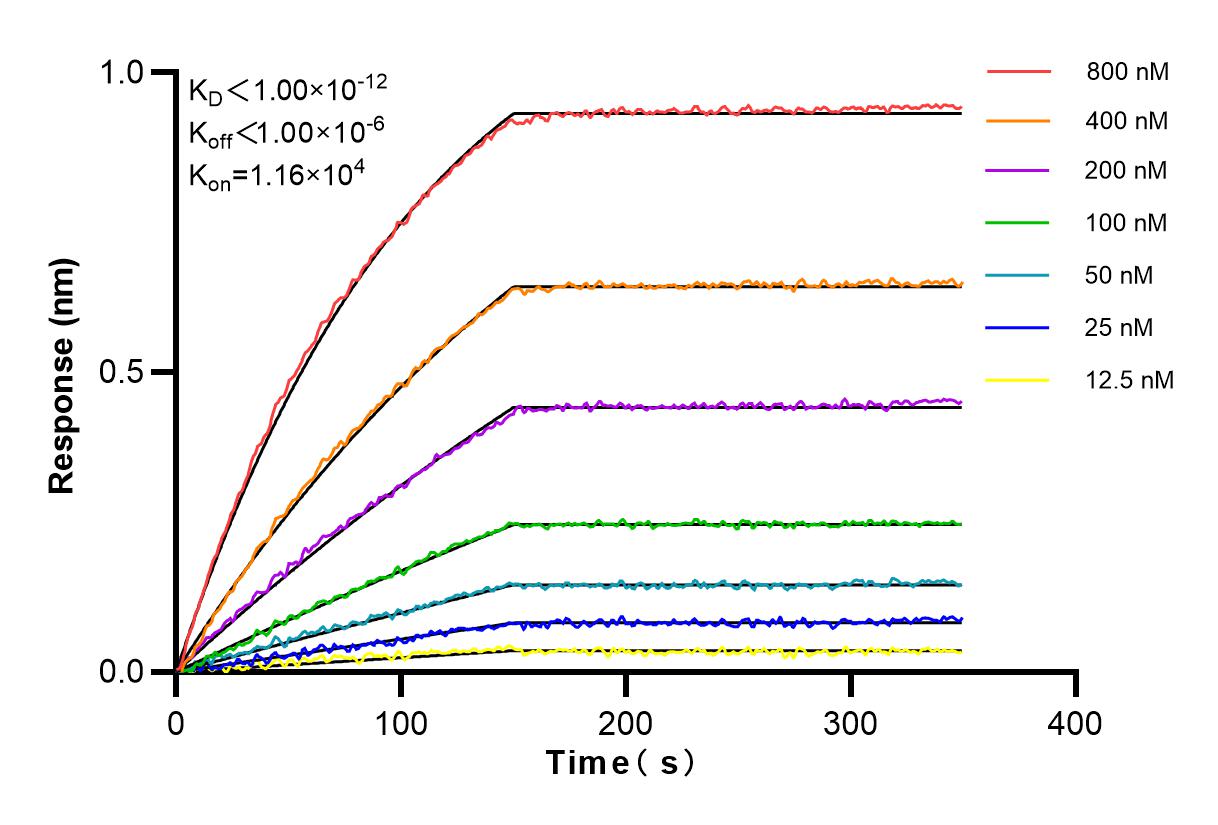
Tested Applications
Recommended dilution
| Application | Dilution |
|---|---|
| It is recommended that this reagent should be titrated in each testing system to obtain optimal results. | |
Product Information
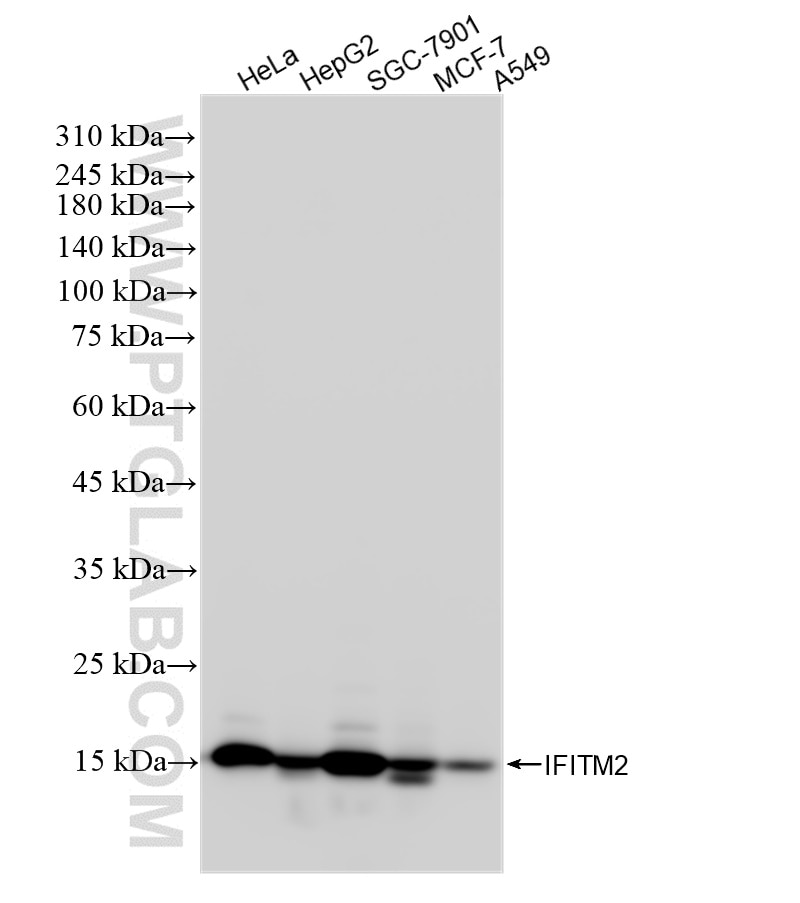
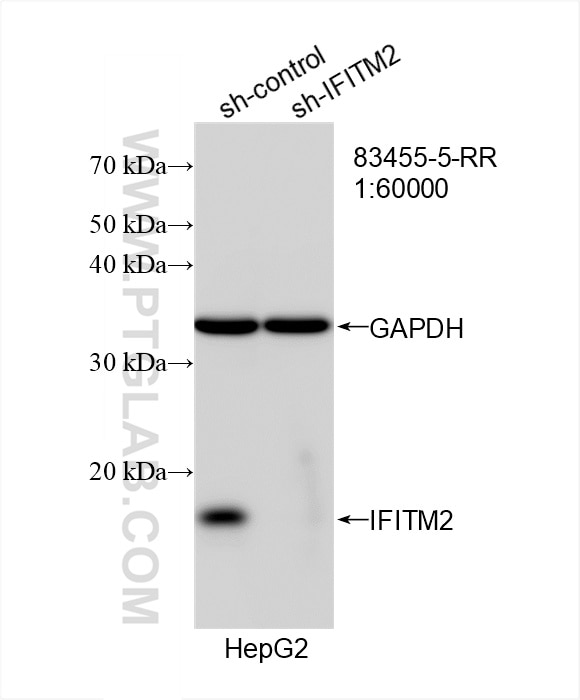
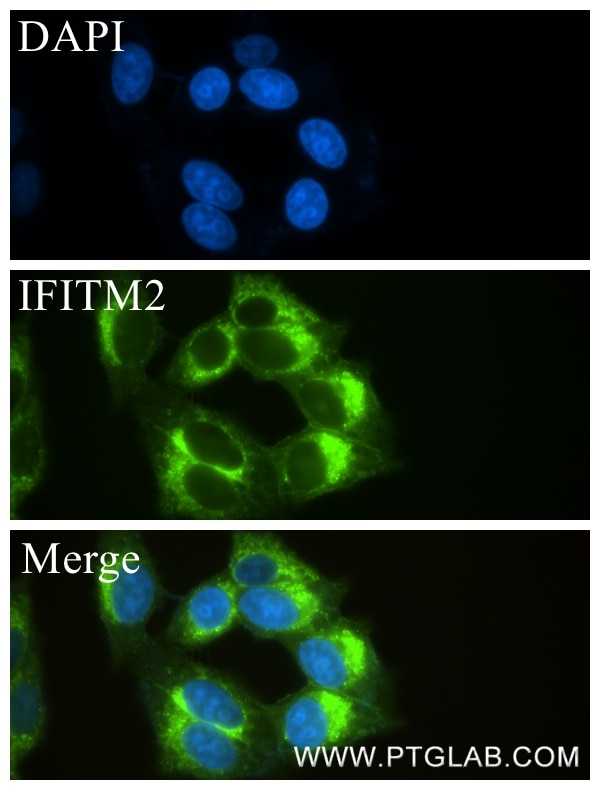
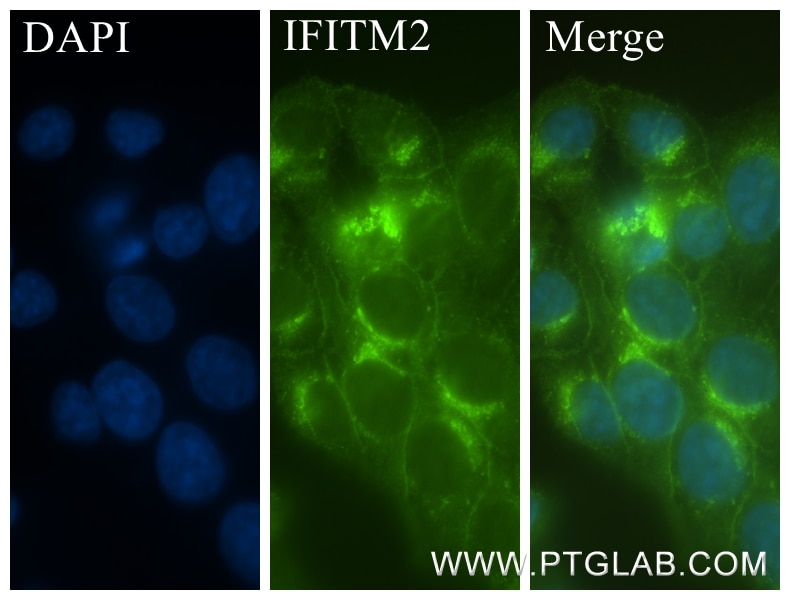
83455-5-PBS targets IFITM2 in WB, IF/ICC, FC (Intra), ELISA applications and shows reactivity with human samples.
| Tested Reactivity | human |
| Host / Isotype | Rabbit / IgG |
| Class | Recombinant |
| Type | Antibody |
| Immunogen |
CatNo: Ag3451 Product name: Recombinant human IFITM2 protein Source: e coli.-derived, PGEX-4T Tag: GST Domain: 1-132 aa of BC009696 Sequence: MNHIVQTFSPVNSGQPPNYEMLKEEQEVAMLGAPHNPAPPTSTVIHIRSETSVPDHVVWSLFNTLFMNTCCLGFIAFAYSVKSRDRKMVGDVTGAQAYASTAKCLNIWALILGIFMTILLVIIPVLVVQAQR 相同性解析による交差性が予測される生物種 |
| Full Name | interferon induced transmembrane protein 2 (1-8D) |
| Calculated molecular weight | 132 aa, 15 kDa |
| Observed molecular weight | 15 kDa |
| GenBank accession number | BC009696 |
| Gene Symbol | IFITM2 |
| Gene ID (NCBI) | 10581 |
| RRID | AB_3671091 |
| Conjugate | Unconjugated |
| Form | |
| Form | Liquid |
| Purification Method | Protein A purfication |
| UNIPROT ID | Q01629 |
| Storage Buffer | PBS only{{ptg:BufferTemp}}7.3 |
| Storage Conditions | Store at -80°C. |
Background Information
IFITM2, also named as 1-8D, belongs to the CD225 family. It is an IFN-induced antiviral protein that mediates cellular innate immunity to at least three major human pathogens, namely influenza A H1N1 virus, West Nile virus (WNV), and dengue virus, by inhibiting the early steps of replication. IFITM2 induces cell cycle arrest and mediates apoptosis by caspase activation and in a p53-independent manner. It is overexpressed in colon carcinoma. IFITM2 is a novel pro-apoptotic gene that will provide new insights into the regulated cellular pathways to death. IFITM proteins are recently identified as viral restriction factors that inhibit infection mediated by the influenza A virus (IAV) hemagglutinin (HA) protein. Also, they serve as important components of the innate immune system to restrict HIV-1 infection.