
Recombinant Human VEGFR3/FLT4 protein (hFc Tag)(HPLC verified)
Species
Human
Purity
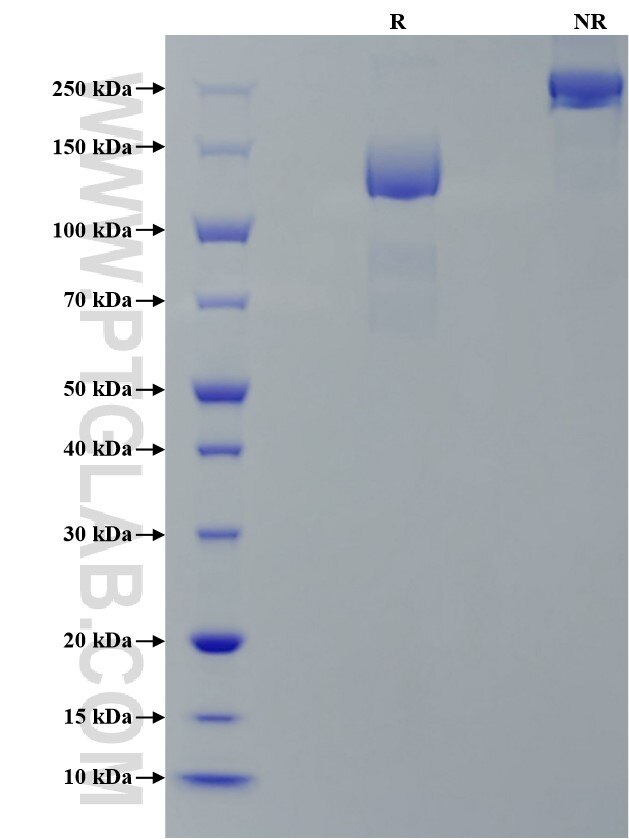
>95 %, SDS-PAGE
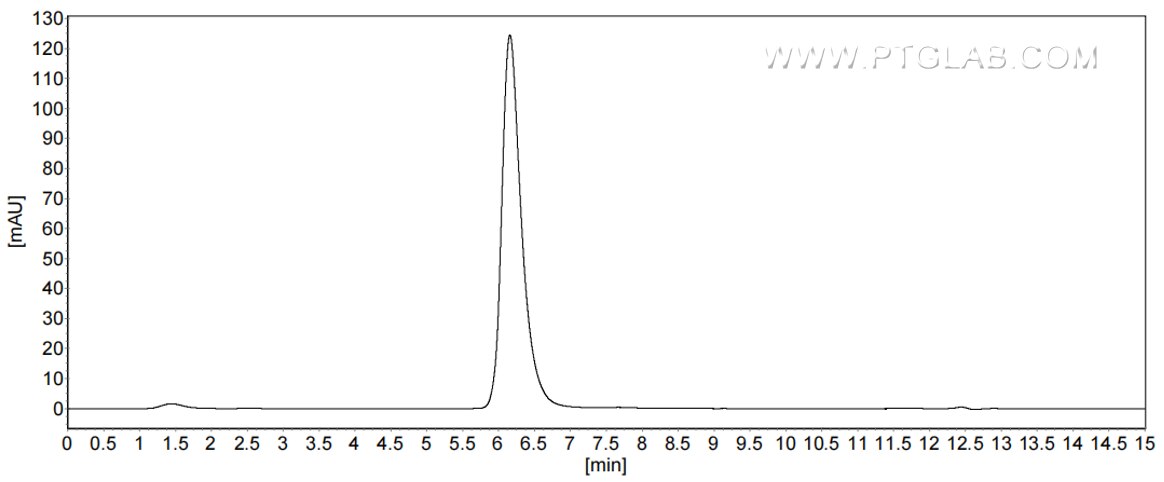
>90 %, SEC-HPLC
Tag
hFc Tag
Activity
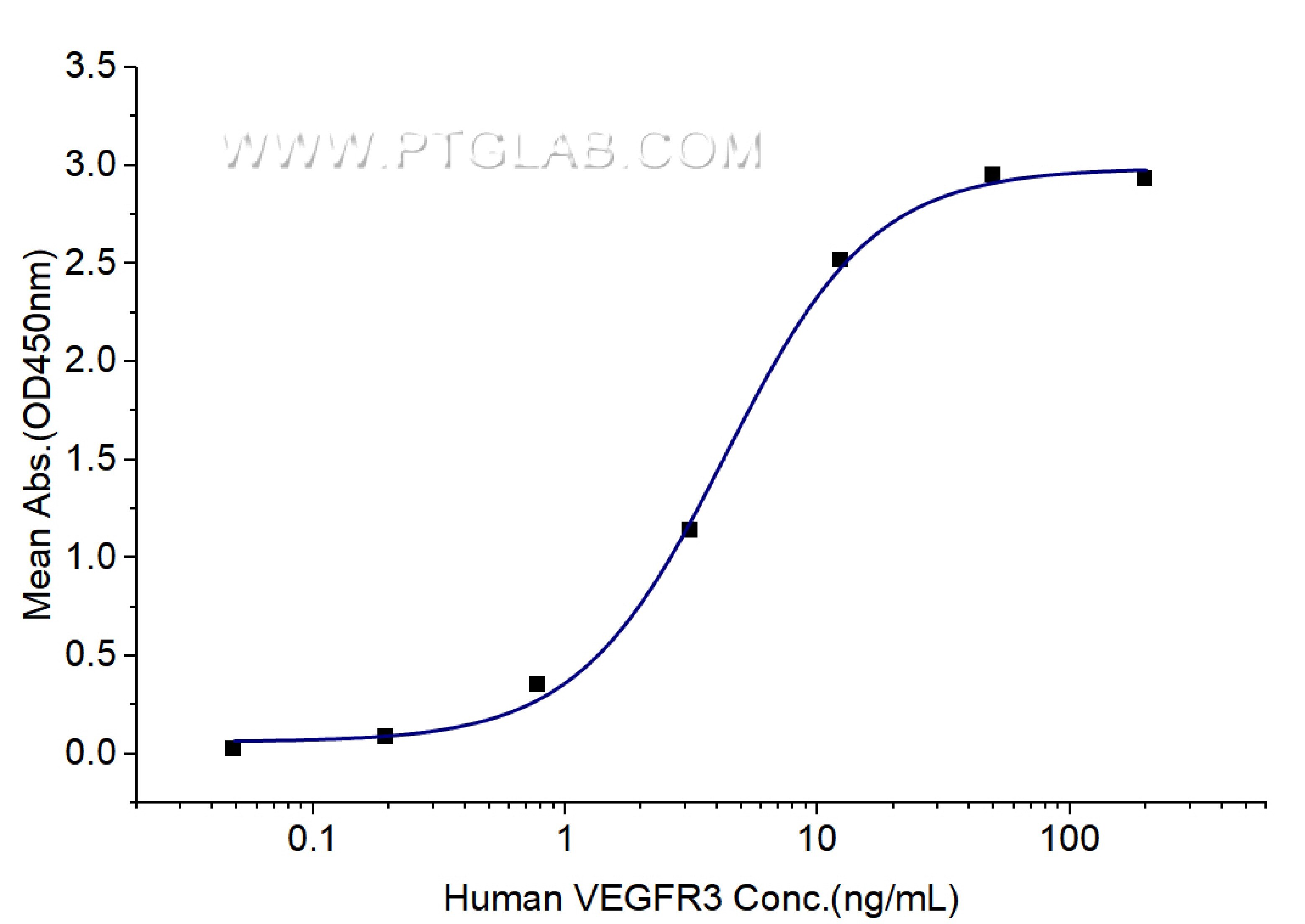
EC50: 2-9 ng/mL
Cat no : Eg0353
Validation Data Gallery
Product Information
| Purity | >95 %, SDS-PAGE >90 %, SEC-HPLC |
| Endotoxin | <0.1 EU/μg protein, LAL method |
| Activity |
Immobilized Human VEGFC (Myc tag, His tag) at 2 μg/mL (100 μL/well) can bind Human VEGFR3 (hFc tag) with a linear range of 2-9 ng/mL. |
| Expression | HEK293-derived Human VEGFR3 protein Tyr25-Ile776 & Ser473-Ile776 (Accession# P35916-1) with a human IgG1 Fc tag at the C-terminus. |
| GeneID | 2324 |
| Accession | P35916-1 |
| PredictedSize | 110.5 kDa |
| SDS-PAGE | 125-150 kDa, 85-95 kDa, 65-75kDa, reducing (R) conditions |
| Formulation | Lyophilized from 0.22 μm filtered solution in PBS, pH 7.4. Normally 5% trehalose and 5% mannitol are added as protectants before lyophilization. |
| Reconstitution | Briefly centrifuge the tube before opening. Reconstitute at 0.1-0.5 mg/mL in sterile water. |
| Storage Conditions |
It is recommended that the protein be aliquoted for optimal storage. Avoid repeated freeze-thaw cycles.
|
| Shipping | The product is shipped at ambient temperature. Upon receipt, store it immediately at the recommended temperature. |
Background
FLT4 (Fms-related tyrosine kinase 4; also known as VEGFR3) is the main receptor for VEGFC (vascular endothelial growth factor C), and its activation mediates LEC (lymphatic endothelial cell) proliferation, migration, and surviva. FLT4 and the ligand VEGFC increase their expression in macrophages upon bacterial infection. Studies have demonstrated the critical roles of the FLT4-mediated pathway in the regulation of lymphatic and blood vascular development. FLT4 and its ligand VEGFC are expressed in leukemic blasts in AML and that the role of this signaling axis is closely related to blast survival. In addition, VEGFC and FLT4 are expressed in the BM (bone marrow) of AML (Acute myeloid leukemia) and VEGFC can protect AML blasts against chemotherapy by inducing their proliferation, showing the importance of VEGFC signaling in blast maintenance.
References:
1.Tuomas Tammela. et al. (2008). Nature. 454(7204):656-660.
2.Ayelet Jerafi-Vider. et al. (2021).  Cell Reports. 35(11):109255.
3.Li Ma. et al. (2022). Autophagy.18(6):1385-1400.
4.de Jonge HJ. et al. (2008). Clinical Cancer Research. 14(3):924-930.
5.Sergio Dias. et al. (2002). Blood. 99(6):2179-2184.