
Recombinant Human VEGFR2/KDR protein (hFc Tag)
Species
Human
Purity
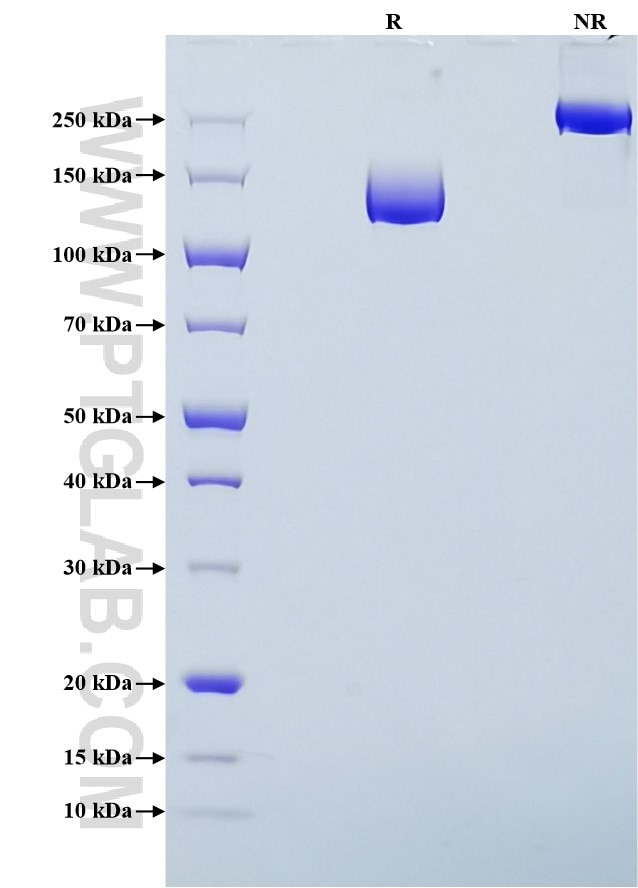
>95 %, SDS-PAGE
Tag
hFc Tag
Activity
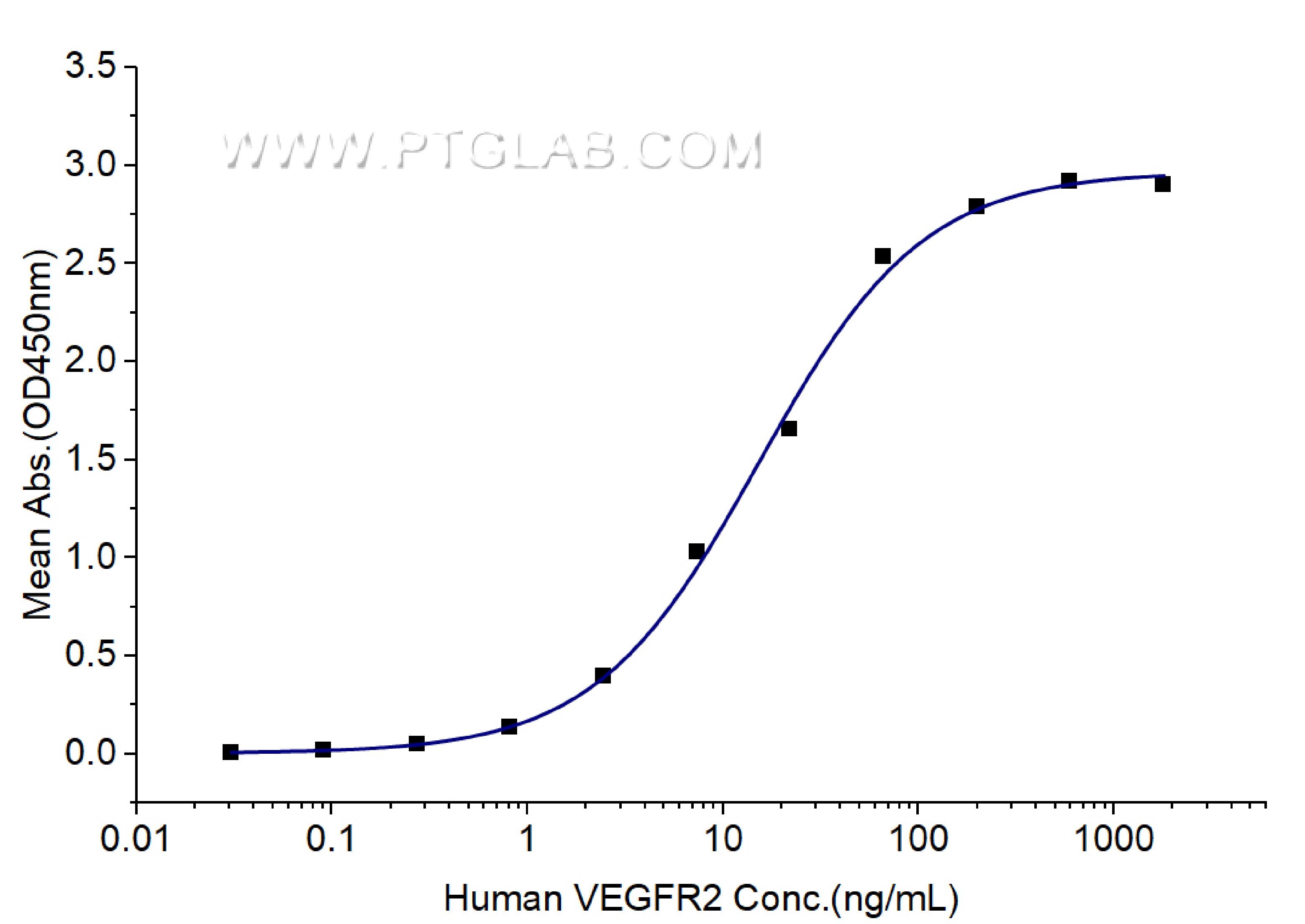
EC50: 7-30 ng/mL
Cat no : Eg0354
Validation Data Gallery
Product Information
| Purity | >95 %, SDS-PAGE |
| Endotoxin | <0.1 EU/μg protein, LAL method |
| Activity |
Immobilized Human VEGF165 (His tag) at 0.1 μg/mL (100 μL/well) can bind Human VEGFR2 (hFc tag) with a linear range of 7-30 ng/mL. |
| Expression | HEK293-derived Human VEGFR2 protein Ala20-Glu764 (Accession# P35968-1) with a human IgG1 Fc tag at the C-terminus. |
| GeneID | 3791 |
| Accession | P35968-1 |
| PredictedSize | 110.3 kDa |
| SDS-PAGE | 125-150 kDa, reducing (R) conditions |
| Formulation | Lyophilized from 0.22 μm filtered solution in PBS, pH 7.4. Normally 5% trehalose and 5% mannitol are added as protectants before lyophilization. |
| Reconstitution | Briefly centrifuge the tube before opening. Reconstitute at 0.1-0.5 mg/mL in sterile water. |
| Storage Conditions |
It is recommended that the protein be aliquoted for optimal storage. Avoid repeated freeze-thaw cycles.
|
| Shipping | The product is shipped at ambient temperature. Upon receipt, store it immediately at the recommended temperature. |
Background
VEGFR2, also named as KDR, FLK1 and CD309, is one of the two tyrosine kinase receptors involved in angiogenesis. VEGFR2 is mainly distributed in vascular endothelial cells, lymphatic endothelial cells, and embryonic precursor cells, and can bind to VEGF-A, VEGF-C, and VEGF-D. When activated by its ligand VEGF, VEGFR2 promotes neighbouring vessel formation to facilitate the delivery of growth factors, nutrients and oxygen for cancer proliferation, migration, metastasis and survival. VEGF and VEGFR2 mediated angiogenesis contributes to the aggressive natures and leads to high mortality rate in gastric cancer.
References:
1. Xinrong Wang. et al. (2020). Front Cell Dev Biol. 8:599281
2. Michael Simons. et al. (2016). Nat Rev Mol Cell Biol. 17(10):611-25.
3. Jing Yu. et al. (2016). J Hematol Oncol. 9(1):111.
4. Seong Ah Park.et al. (2018). BMB Rep. 51(2):73-78.