
Recombinant Human VEGF-B protein (hFc Tag) (HPLC verified)
Species
Human
Purity
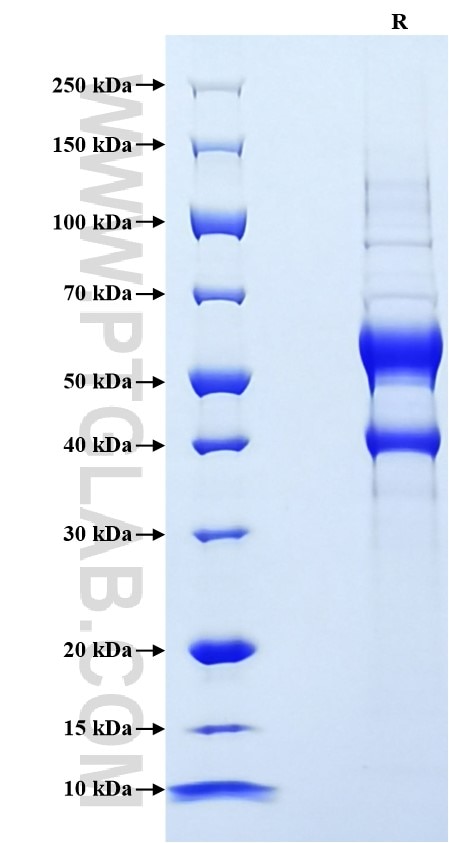
>90 %, SDS-PAGE
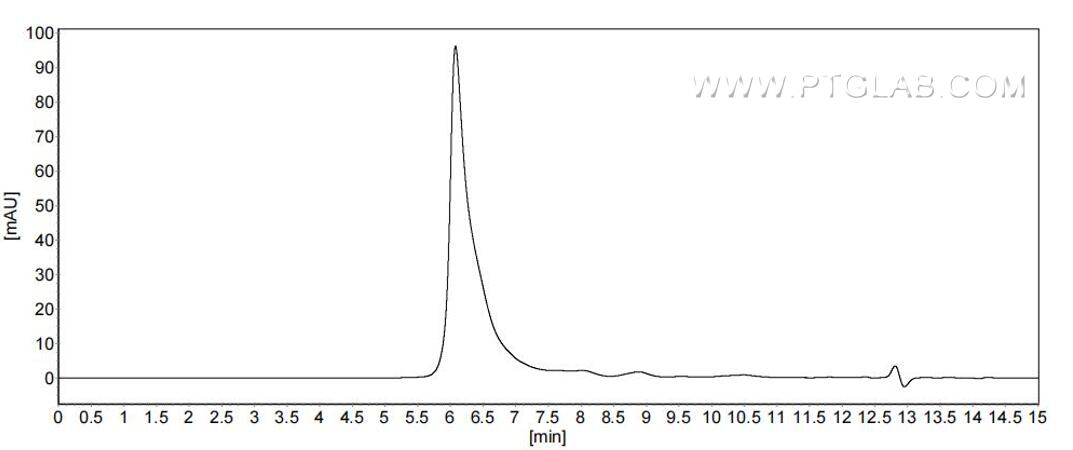
>90 %, SEC-HPLC
Tag
hFc Tag
Activity
not tested
Cat no : Eg0123
Validation Data Gallery
Product Information
| Purity | >90 %, SDS-PAGE >90 %, SEC-HPLC |
| Endotoxin | <0.1 EU/μg protein, LAL method |
| Activity |
Not tested |
| Expression | HEK293-derived Human VEGF-B protein Pro22-Ala207 (Accession# P49765-1) with a human IgG1 Fc tag at the N-terminus. |
| GeneID | 7423 |
| Accession | P49765-1 |
| PredictedSize | 45.4 kDa |
| SDS-PAGE | 40 kDa and 50-65 kDa, reducing (R) conditions |
| Formulation | Lyophilized from 0.22 μm filtered solution in PBS, pH 7.4. Normally 5% trehalose and 5% mannitol are added as protectants before lyophilization. |
| Reconstitution | Briefly centrifuge the tube before opening. Reconstitute at 0.1-0.5 mg/mL in sterile water. |
| Storage Conditions |
It is recommended that the protein be aliquoted for optimal storage. Avoid repeated freeze-thaw cycles.
|
| Shipping | The product is shipped at ambient temperature. Upon receipt, store it immediately at the recommended temperature. |
Background
Vascular endothelial growth factor B (VEGFB) is a member of the PDGF/VEGF growth factor family. It is produced as a secreted homodimer. VEGF-B binds to VEGF receptor-1 (Flt-1) and regulates plasminogen activator activity in endothelial cells. It also binds to Neuropilin-1 (NRP1). There are two splice isoforms, VEGF-B (167) and VEGF-B (186), which have identical NH(2)-terminal cystine knot growth factor domains but differ in their COOH-terminal domains. VEGF-B (167) has a heparin-binding domain so can bind to cell-surface heparan sulphate proteoglycans upon secretion, while VEGF-B (186) does not contain the heparin-binding domain.
References:
1. B Olofsson, et al. (1998) Proc Natl Acad Sci U S A. 95(20):11709-14.
2. T Makinen, et al. (1999) J Biol Chem. 274(30):21217-22.
3. Xuri Li. (2010) Cell Res. 20(7):741-4.