
Recombinant Human TYRO3 protein (rFc Tag) (HPLC verified)
Species
Human
Purity
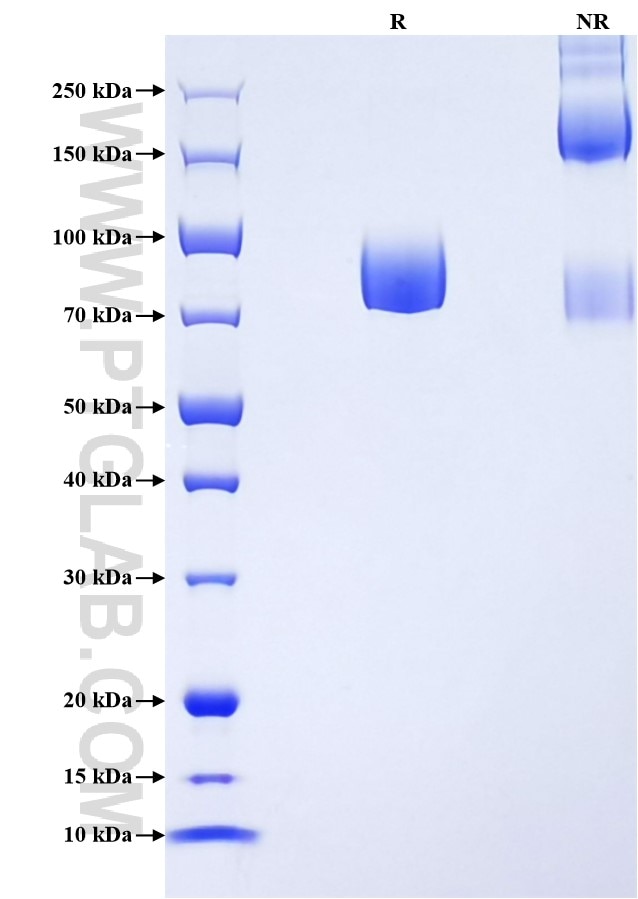
>90 %, SDS-PAGE
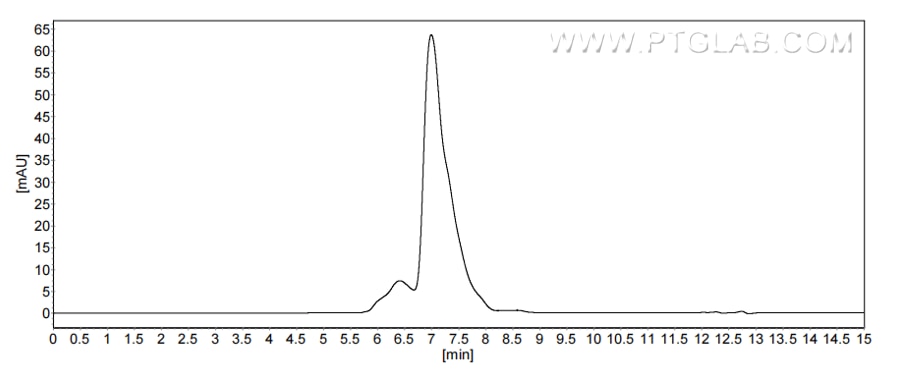
>90 %, SEC-HPLC
Tag
rFc Tag
Activity
not tested
Cat no : Eg2892
Validation Data Gallery
Product Information
| Purity | >90 %, SDS-PAGE >90 %, SEC-HPLC |
| Endotoxin | <0.1 EU/μg protein, LAL method |
| Activity |
Not tested |
| Expression | HEK293-derived Human TYRO3 protein Ala41-Ser428 (Accession# Q06418) with a rabbit IgG Fc tag at the C-terminus. |
| GeneID | 7301 |
| Accession | Q06418 |
| PredictedSize | 67.6 kDa |
| SDS-PAGE | 70-100 kDa, reducing (R) conditions |
| Formulation | Lyophilized from 0.22 μm filtered solution in PBS, pH 7.4. Normally 5% trehalose and 5% mannitol are added as protectants before lyophilization. |
| Reconstitution | Briefly centrifuge the tube before opening. Reconstitute at 0.1-0.5 mg/mL in sterile water. |
| Storage Conditions |
It is recommended that the protein be aliquoted for optimal storage. Avoid repeated freeze-thaw cycles.
|
| Shipping | The product is shipped at ambient temperature. Upon receipt, store it immediately at the recommended temperature. |
Background
TYRO3 has a structure includes a cytoplasmic domain and an extracellular ligand binding region. And ligand binding at the cell surface induces dimerization and autophosphorylation of TYRO3 on its intracellular domain that provides docking sites for downstream signaling molecules. TYRO3 is associated with many physiological processes including cell survival, migration and differentiation. It has been reported that TYRO3 can be expressed in various regions of the mammalian central nervous system. 28513-1-AP antibody recognizes the 97 kDa and 140 kDa protein which might be the glycosylated form similar to the papers.((PMID: 8873131, 23354874, 21539887)
References:
1.	Tomobe YI, Hama H, et al. (1996) Neurosci Lett. 214(1):57-60.
2.	el Sayadi H, Pissaloux D, et al. (2013) Target Oncol. 8(4):261-9.
3.	Pierce A, Xu M, et al. (2011) Mol Cell Endocrinol. 339(1-2):151-8.