
Recombinant Human TAC3 protein (rFc Tag)
Species
Human
Purity
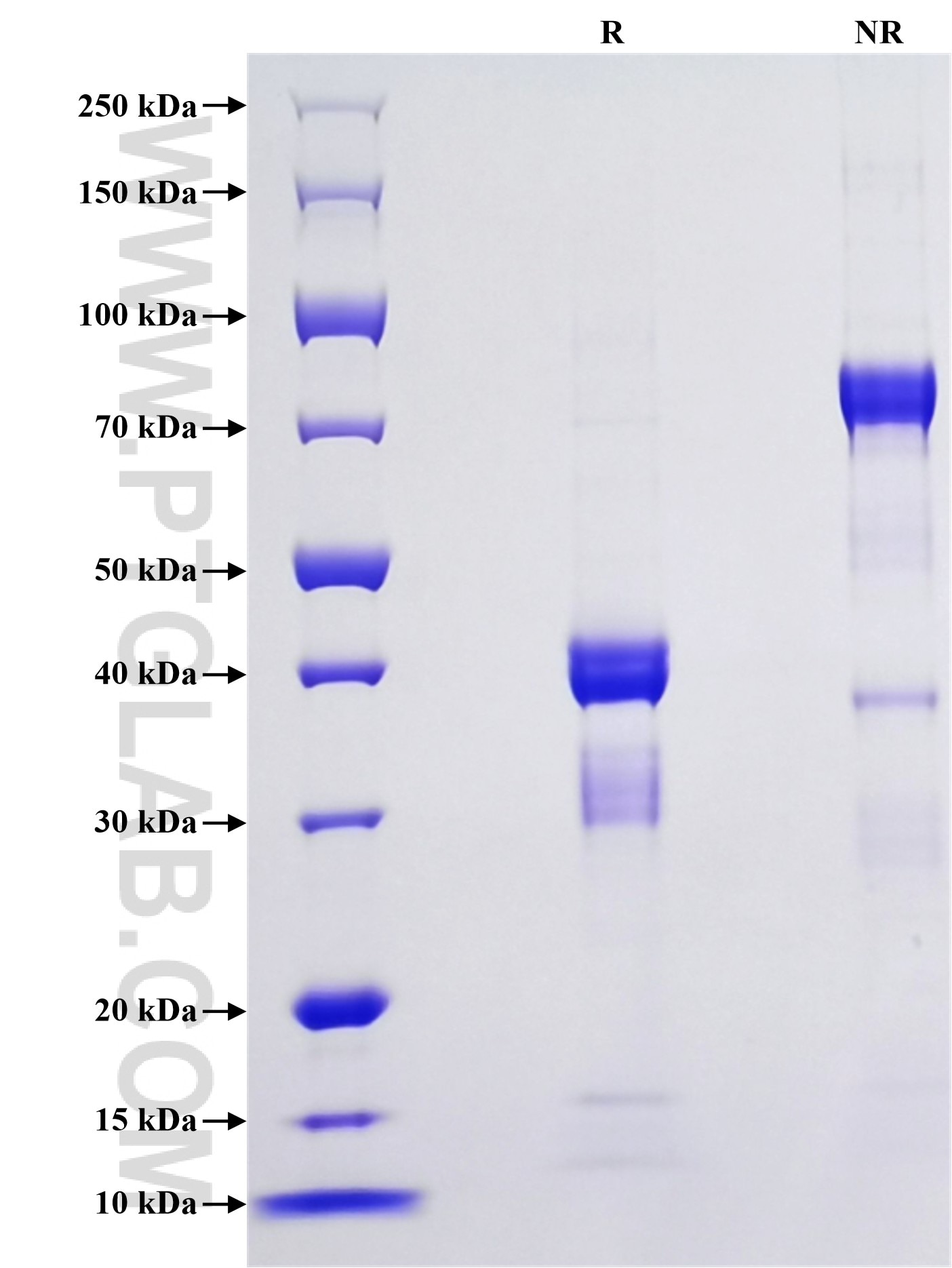
>90 %, SDS-PAGE
Tag
rFc Tag
Activity
not tested
Cat no : Eg2781
Validation Data Gallery
Product Information
| Purity | >90 %, SDS-PAGE |
| Endotoxin | <0.1 EU/μg protein, LAL method |
| Activity |
Not tested |
| Expression | HEK293-derived Human TAC3 protein Gln17-Glu121 (Accession# Q9UHF0-1) with a rabbit IgG Fc tag at the C-terminus. |
| GeneID | 6866 |
| Accession | Q9UHF0-1 |
| PredictedSize | 37.2 kDa |
| SDS-PAGE | 38-45 kDa, reducing (R) conditions |
| Formulation | Lyophilized from 0.22 μm filtered solution in PBS, pH 7.4. Normally 5% trehalose and 5% mannitol are added as protectants before lyophilization. |
| Reconstitution | Briefly centrifuge the tube before opening. Reconstitute at 0.1-0.5 mg/mL in sterile water. |
| Storage Conditions |
It is recommended that the protein be aliquoted for optimal storage. Avoid repeated freeze-thaw cycles.
|
| Shipping | The product is shipped at ambient temperature. Upon receipt, store it immediately at the recommended temperature. |
Background
Tachykinin 3 (TAC3), also known as NKB, is a member of the tachykinin family. In humans, TAC3 is predominantly expressed in the infundibular nucleus, anterior hypothalamic area septal region, diagonal band of Broca, bed nucleus of the stria terminalis, amygdala, and neocortex. TAC3 plays an important role in mammalian growth by modulating prolactin (PRL) synthesis and secretion and by causing contraction of the stomach and intestine.
References:
1. Zhang, Zhanxiong et al. Frontiers in endocrinology vol. 10 (2019): 556.
2. Zuo, Chenpeng et al. Frontiers in endocrinology vol. 13 (2022): 848808.
3. Patel, Bijal et al. Endocrine reviews vol. 45,1 (2024): 30-68.