
Recombinant Human PGC protein (rFc Tag)
Species
Human
Purity
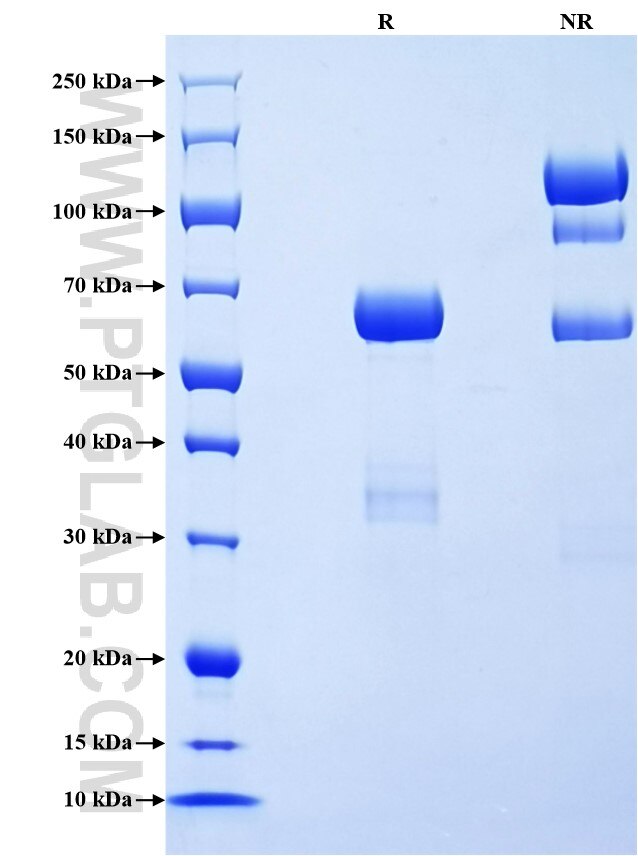
>90 %, SDS-PAGE
Tag
rFc Tag
Activity
not tested
Cat no : Eg4777
Validation Data Gallery
Product Information
| Purity | >90 %, SDS-PAGE |
| Endotoxin | <0.1 EU/μg protein, LAL method |
| Activity |
Not tested |
| Expression | HEK293-derived Human PGC protein Ala17-Ala388 (Accession# P20142) with a rabbit IgG Fc tag at the N-terminus. |
| GeneID | 5225 |
| Accession | P20142 |
| PredictedSize | 67.8 kDa |
| SDS-PAGE | 60-70 kDa, reducing (R) conditions |
| Formulation | Lyophilized from 0.22 μm filtered solution in PBS, pH 7.4. Normally 5% trehalose and 5% mannitol are added as protectants before lyophilization. |
| Reconstitution | Briefly centrifuge the tube before opening. Reconstitute at 0.1-0.5 mg/mL in sterile water. |
| Storage Conditions |
It is recommended that the protein be aliquoted for optimal storage. Avoid repeated freeze-thaw cycles.
|
| Shipping | The product is shipped at ambient temperature. Upon receipt, store it immediately at the recommended temperature. |
Background
PepsinogenⅠand Ⅱ, as precursors of pepsin, are produced by gastric mucosa and released into the gastric lumen and peripheral circulation. The advanced inflammation of gastric mucosa and its progression toward atrophic gastritis (AG) in the corpus is associated with a change in serum biomarkers pepsinogenⅠand Ⅱ. PepsinogenⅡ also known as progastricsin or PGC (pepsinogen C), is an aspartic protease expressed primarily in gastric chief cells and is a novel marker of type 2 cells with advantages over many of the current markers used to identify type 2 cells in the developing lung. It is involved in proteolysis and peptidolysis.
References:
1. Mohamadkhani A, et al. (2013). Arch Iran Med. 16(4):208-12.
2. Konishi N, et al. (1995). J Clin Pathol. 48(4):364-7.
3. Hosseini M, et al. (2013). J Res Med Sci. 18(3):225-9.