
Recombinant Human Osteopontin protein (hFc Tag)
Cat no : Eg0696
Validation Data Gallery
Product Information
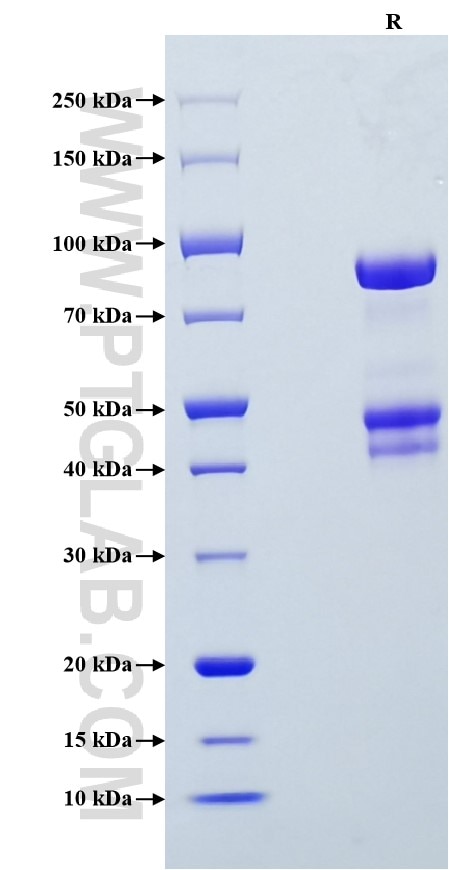
| Purity | >80 %, SDS-PAGE |
| Endotoxin | <0.1 EU/μg protein, LAL method |
| Activity |
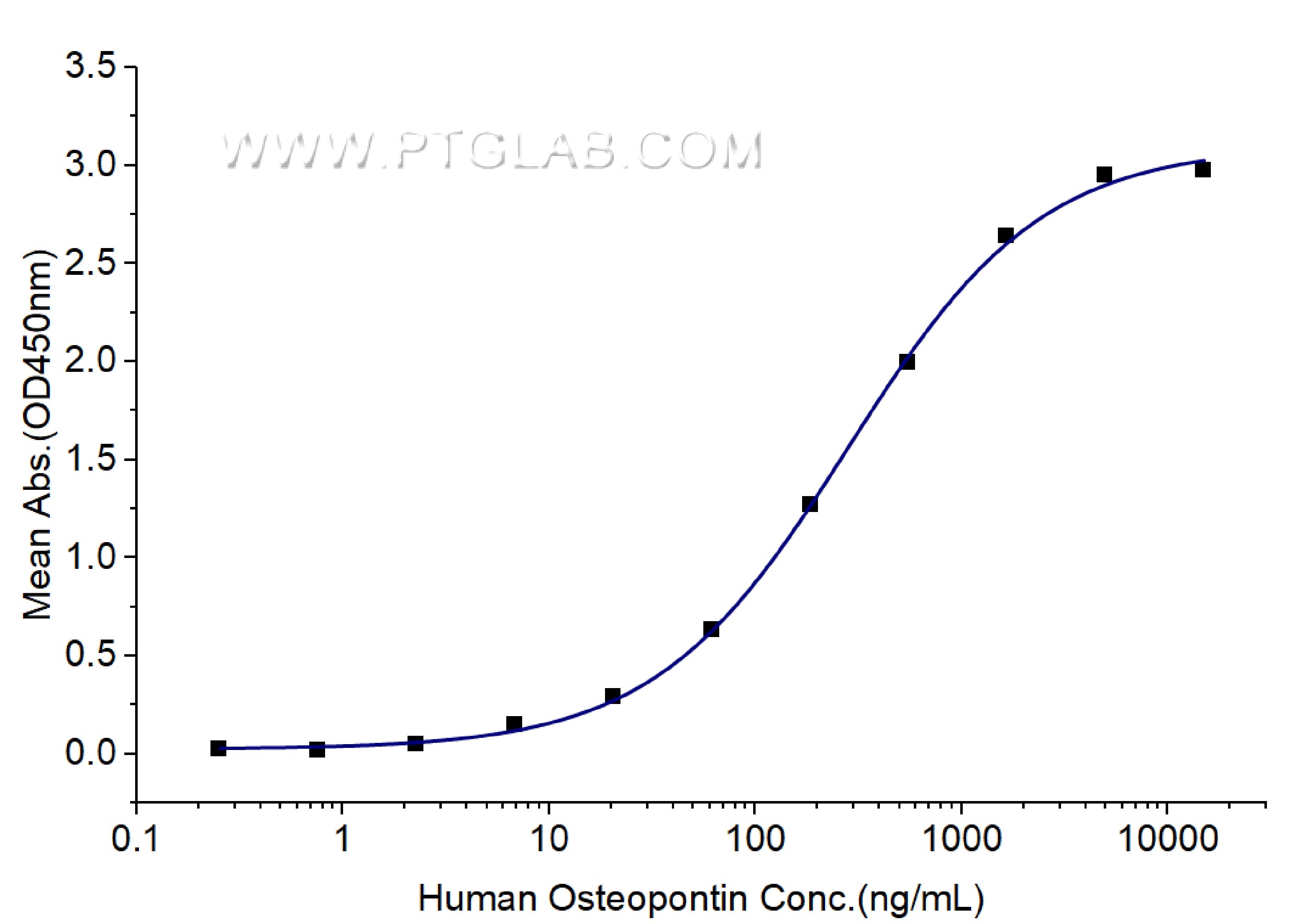
Immobilized Human ITGAV (GST tag) at 1 μg/mL (100 μL/well) can bind Human Osteopontin (hFc tag) with a linear range of 0.14 -0.56 μg/mL. |
| Expression | HEK293-derived Human Osteopontin protein Ile17-Asn300 (Accession# P10451-5) with a human IgG1 Fc tag at the C-terminus. |
| GeneID | 6696 |
| Accession | P10451-5 |
| PredictedSize | 59.5 kDa |
| SDS-PAGE | 85-95 kDa, reducing (R) conditions |
| Formulation | Lyophilized from 0.22 μm filtered solution in PBS, pH 7.4. Normally 5% trehalose and 5% mannitol are added as protectants before lyophilization. |
| Reconstitution | Briefly centrifuge the tube before opening. Reconstitute at 0.1-0.5 mg/mL in sterile water. |
| Storage Conditions |
It is recommended that the protein be aliquoted for optimal storage. Avoid repeated freeze-thaw cycles.
|
| Shipping | The product is shipped at ambient temperature. Upon receipt, store it immediately at the recommended temperature. |
Background
Osteopontin (OPN), also known as SPP1, is a secreted glycophosphoprotein that belongs to the small integrin-binding ligand N-linked glycoprotein (SIBLING) family. Originally isolated from bone. OPN has been found in kidneys, vascular tissues, biological fluids, and various tumor tissues. It can interact with CD44 and integrins and regulate diverse biological processes. It has a multifaceted role in bone development and remodeling, and is also involved in the inflammatory and immune response, oncogenesis and cancer progression.
References:
1. Denhardt DT, et al. (2001). J Clin Invest. 107(9):1055-61.
2. Fisher LW, et al. (2001). Biochem Biophys Res Commun. 280(2):460-5.
3. Rittling SR, et al. (2004). Br J Cancer. 90(10):1877-81.
4. Rangaswami H, et al. (2006). Trends Cell Biol. 16(2):79-87.
Publications
| Species | Title |
|---|---|
Sci Rep IL-1β alleviates suppressive potential of bone marrow mesenchymal stem cells in macrophage M1 polarization via autophagy mediated degradation of SPP1. |