
Recombinant Human Neprilysin/CD10 protein (rFc Tag)
Species
Human
Purity
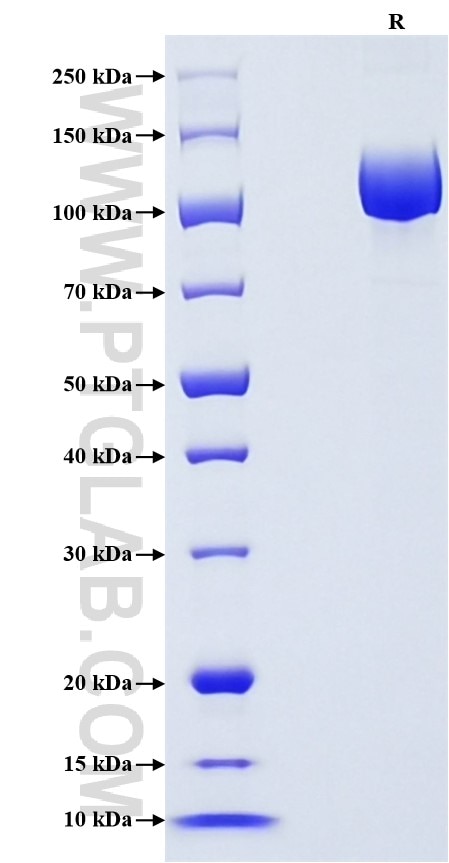
>90 %, SDS-PAGE
Tag
rFc Tag
Activity
not tested
Cat no : Eg2572
Validation Data Gallery
Product Information
| Purity | >90 %, SDS-PAGE |
| Endotoxin | <0.1 EU/μg protein, LAL method |
| Activity |
Not tested |
| Expression | HEK293-derived Human Neprilysin protein Tyr52-Trp750 (Accession# P08473) with a rabbit IgG Fc tag at the N-terminus. |
| GeneID | 4311 |
| Accession | P08473 |
| PredictedSize | 107.0 kDa |
| SDS-PAGE | 105-130 kDa, reducing (R) conditions |
| Formulation | Lyophilized from 0.22 μm filtered solution in PBS, pH 7.4. Normally 5% trehalose and 5% mannitol are added as protectants before lyophilization. |
| Reconstitution | Briefly centrifuge the tube before opening. Reconstitute at 0.1-0.5 mg/mL in sterile water. |
| Storage Conditions |
It is recommended that the protein be aliquoted for optimal storage. Avoid repeated freeze-thaw cycles.
|
| Shipping | The product is shipped at ambient temperature. Upon receipt, store it immediately at the recommended temperature. |
Background
CD10, also known as neprilysin, membrane metallo-endopeptidase (MME), neutral endopeptidase (NEP), or common acute lymphoblastic leukemia antigen (CALLA), is a 100-kDa type II transmembrane glycoprotein belonging to peptidase M13 family. Among hematopoietic cells, CD10 is expressed on granulocytes, B cell precursors, mature germinal center B cells, a subset of immature thymocytes. CD10 is also expressed on a variety of nonhematopoietic cell types, including bronchial epithelial cells, cultured fibroblasts, bone marrow stromal cells, renal proximal tubular epithelial cells, breast myoepithelium, biliary canaliculi. CD10 is a cell surface peptidase that cleaves peptide bonds on the amino side of hydrophobic amino acids and inactivates a variety of physiologically active peptides. Loss or decreases in CD10 expression have been reported in a variety of malignancies.
References:
1. B Lu, et al. (1995) J Exp Med. 181(6):2271-5.
2. M A Shipp, et al. (1993) Blood. 82(4):1052-70.
3. James R Cook, et al. (2003) Mod Pathol. 16(9):879-85.
4. Makoto Sumitomo, et al. (2005) Biochim Biophys Acta. 1751(1):52-9.