
Recombinant Human NGFR/TNFRSF16 protein (rFc Tag)(HPLC verified)
Species
Human
Purity
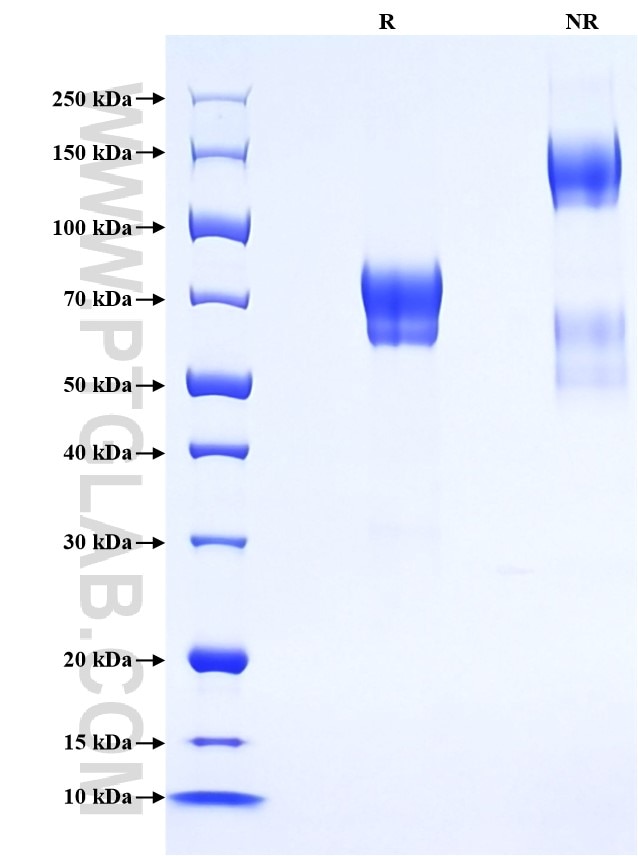
>90 %, SDS-PAGE
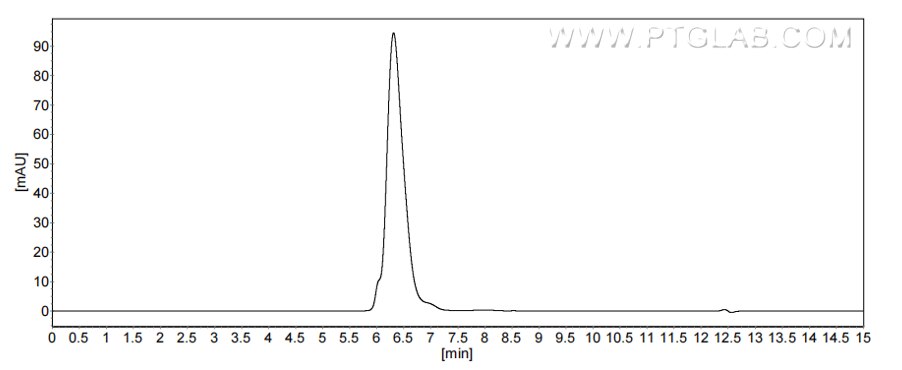
>90 %, SEC-HPLC
Tag
rFc Tag
Activity
not tested
Cat no : Eg4829
Validation Data Gallery
Product Information
| Purity | >90 %, SDS-PAGE >90 %, SEC-HPLC |
| Endotoxin | <0.1 EU/μg protein, LAL method |
| Activity |
Not tested |
| Expression | HEK293-derived Human NGFR protein Lys29-Asn250 (Accession# P08138-1) with a rabbit IgG Fc tag at the C-terminus. |
| GeneID | 4804 |
| Accession | P08138-1 |
| PredictedSize | 49.8 kDa |
| SDS-PAGE | 60-80 kDa, reducing (R) conditions |
| Formulation | Lyophilized from 0.22 μm filtered solution in PBS, pH 7.4. Normally 5% trehalose and 5% mannitol are added as protectants before lyophilization. |
| Reconstitution | Briefly centrifuge the tube before opening. Reconstitute at 0.1-0.5 mg/mL in sterile water. |
| Storage Conditions |
It is recommended that the protein be aliquoted for optimal storage. Avoid repeated freeze-thaw cycles.
|
| Shipping | The product is shipped at ambient temperature. Upon receipt, store it immediately at the recommended temperature. |
Background
NGFR, also named as p75 ICD and CD271, a member of the tumor necrosis factor superfamily. It is highly expressed in both neurons and glial cells during CNS development and after brain injury, whereas in normal adulthood, it is present only in specific brain regions such as neurons and astrocytes of hippocampal and especially in the cholinergic neurons of the basal forebrain. NGFR can mediate cell survival or cell death, can promote or inhibit axonal growth, and can facilitate or attenuate proliferation, depending on the cell context.
References:
1.Cragnolini AB and Friedman WJ. (2008) Trends Neurosci. 31(2):99-104.
2.Chen M. et al. (2022) Cell Mol Neurobiol. 42(4):1153-1166.
3.Yang CR. et al. (2022) FASEB J. 36(3):e22180.
4.Ali NH. Et al. (2024) Mol Neurobiol. 61(5):2469-2480.
5.Xie B. et al. (2023) Front Cell Dev Biol. 11:1283878.