
Recombinant Human INSL4 protein (rFc Tag)(HPLC verified)
Species
Human
Purity
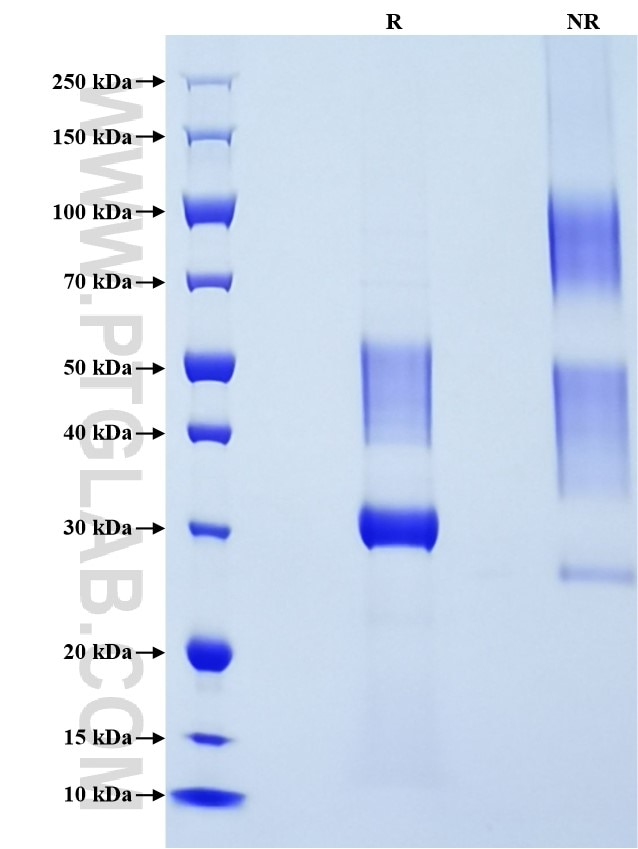
>90 %, SDS-PAGE
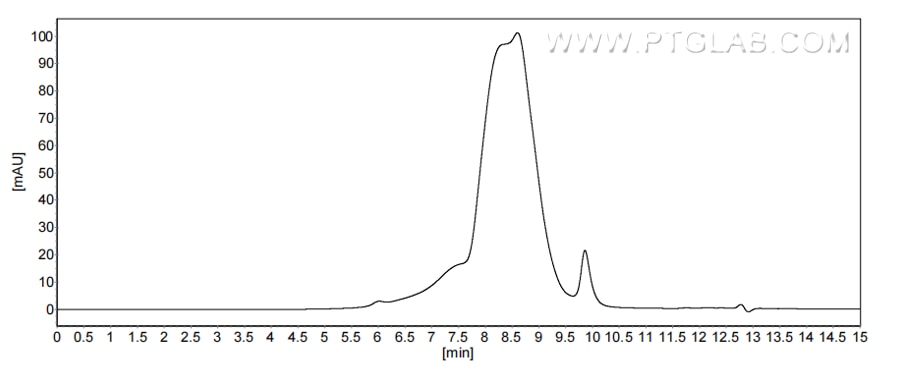
>90 %, SEC-HPLC
Tag
rFc Tag
Activity
not tested
Cat no : Eg2884
Validation Data Gallery
Product Information
| Purity | >90 %, SDS-PAGE >90 %, SEC-HPLC |
| Endotoxin | <0.1 EU/μg protein, LAL method |
| Activity |
Not tested |
| Expression | HEK293-derived Human INSL4 protein Ala26-Thr139 (Accession# Q14641) with a rabbit IgG Fc tag at the C-terminus. |
| GeneID | 3641 |
| Accession | Q14641 |
| PredictedSize | 38.6 kDa |
| SDS-PAGE | 28-33 kDa, reducing (R) conditions |
| Formulation | Lyophilized from 0.22 μm filtered solution in PBS, pH 7.4. Normally 5% trehalose and 5% mannitol are added as protectants before lyophilization. |
| Reconstitution | Briefly centrifuge the tube before opening. Reconstitute at 0.1-0.5 mg/mL in sterile water. |
| Storage Conditions |
It is recommended that the protein be aliquoted for optimal storage. Avoid repeated freeze-thaw cycles.
|
| Shipping | The product is shipped at ambient temperature. Upon receipt, store it immediately at the recommended temperature. |
Background
The early placental insulin-like peptide, (EPIL or INSL4) is also a member of the insulin superfamily, it has the most homology with the human relaxins, RLN1 and RLN2 (44% and 43% respectively), and only 15% homology to insulin. It was initially identified from a subtracted cDNA library of a first trimester placenta, and was shown to be most highly expressed in embryonic and trophoblastic tissues.
References:
1. Chassin D, et al. (1995). Genomics. 29:465–470.
2. Lin F, et al. (2004). J Pept Sci. 10:257–264.
3. Koman A, et al. (1996). J Biol Chem. 271:20238–20241.
4. Laurent A, et al. (1998). Mol Reprod Dev. 51:123–129.