
Recombinant Human ENPP2/Autotaxin protein (rFc Tag)
Species
Human
Purity
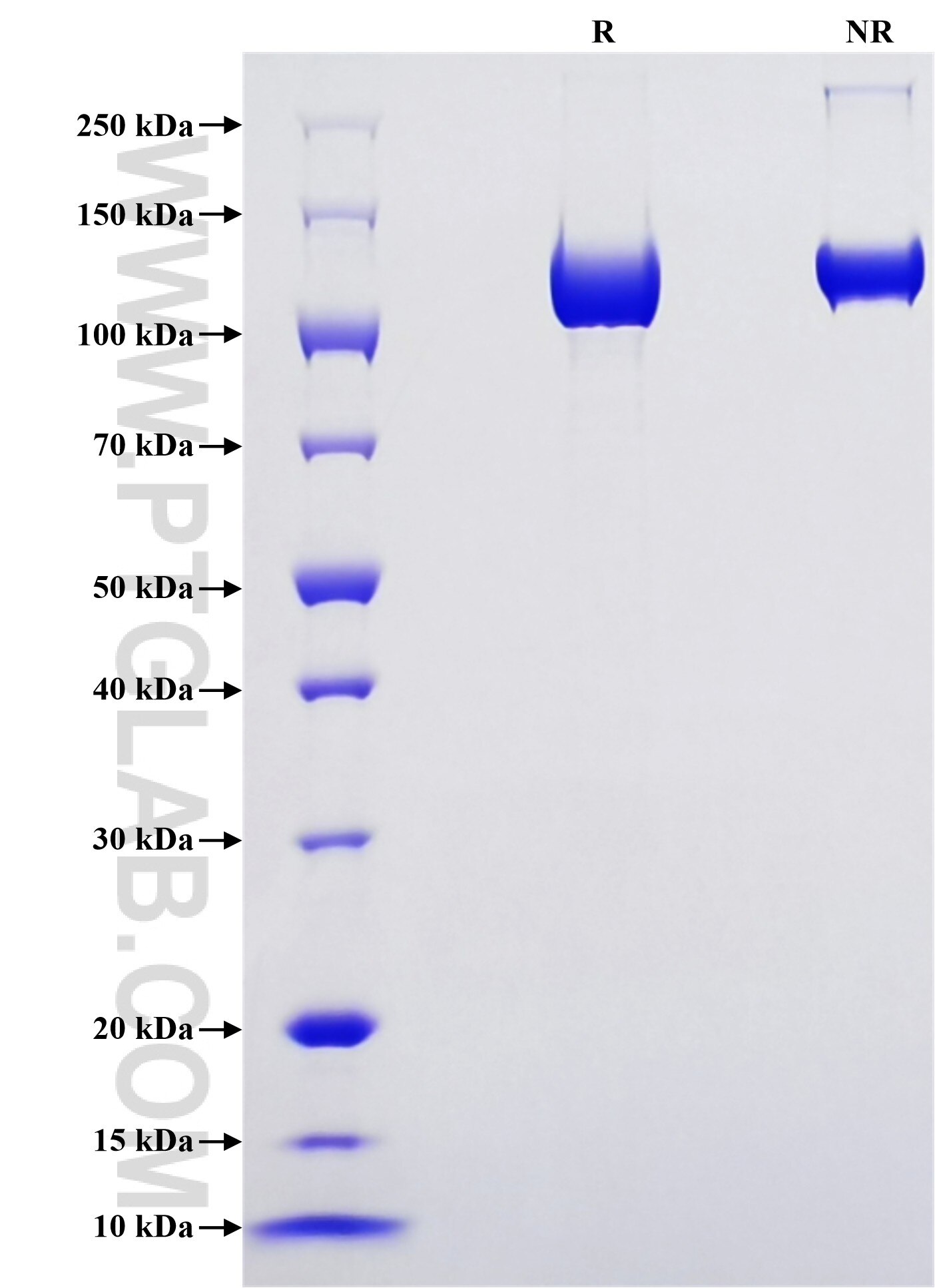
>90 %, SDS-PAGE
Tag
rFc Tag
Activity
not tested
Cat no : Eg7267
Validation Data Gallery
Product Information
| Purity | >90 %, SDS-PAGE |
| Endotoxin | <0.1 EU/μg protein, LAL method |
| Activity |
Not tested |
| Expression | HEK293-derived Human ENPP2 protein Asp49-Ile863 (Accession# Q13822-1) with a rabbit IgG Fc tag at the N-terminus. |
| GeneID | 5168 |
| Accession | Q13822-1 |
| PredictedSize | 119.8 kDa |
| SDS-PAGE | 105-135 kDa, reducing (R) conditions |
| Formulation | Lyophilized from 0.22 μm filtered solution in PBS, pH 7.4. Normally 5% trehalose and 5% mannitol are added as protectants before lyophilization. |
| Reconstitution | Briefly centrifuge the tube before opening. Reconstitute at 0.1-0.5 mg/mL in sterile water. |
| Storage Conditions |
It is recommended that the protein be aliquoted for optimal storage. Avoid repeated freeze-thaw cycles.
|
| Shipping | The product is shipped at ambient temperature. Upon receipt, store it immediately at the recommended temperature. |
Background
ENPP2, Autotaxin or Extracellular lysophospholipase D, is a 863 amino acid secreted protein, which is detected in blood plasma (at protein level). ENPP2 is Predominantly expressed in brain, placenta, ovary, and small intestine. ENPP2 is expressed in a number of carcinomas such as hepatocellular and prostate carcinoma, neuroblastoma and non-small-cell lung cancer. ENPP2 is expressed in body fluids such as plasma, cerebral spinal fluid (CSF), saliva, follicular and amniotic fluids. ENPP2 Hydrolyzes lysophospholipids to produce the signaling molecule lysophosphatidic acid (LPA) in extracellular fluids.
References:
1.Tokumura, Akira et al. The Journal of biological chemistry vol. 277,42 (2002): 39436-42.
2.Stein, Adam J et al. Molecular pharmacology vol. 88,6 (2015): 982-92.
3.van Meeteren, Laurens A et al. The Journal of biological chemistry vol. 280,22 (2005): 21155-61.
4.Stein, Adam J et al. Molecular pharmacology vol. 88,6 (2015): 982-92.
5.Bain, Gretchen et al. The Journal of pharmacology and experimental therapeutics vol. 360,1 (2017): 1-13.