
Recombinant Human EGFR protein (hFc Tag)
Species
Human
Purity
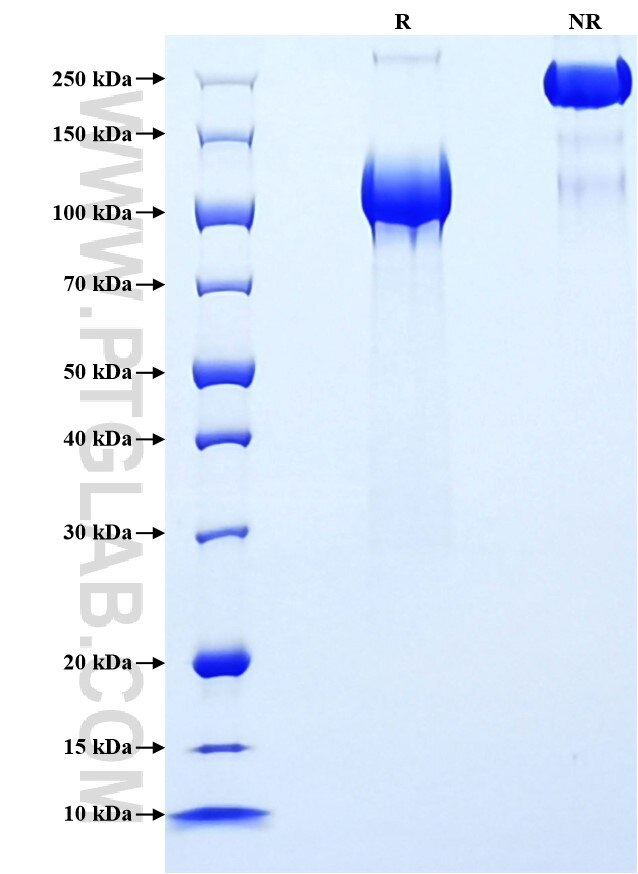
>90 %, SDS-PAGE
Tag
hFc Tag
Activity
not tested
Cat no : Eg0495
Validation Data Gallery
Product Information
| Purity | >90 %, SDS-PAGE |
| Endotoxin | <0.1 EU/μg protein, LAL method |
| Activity |
Not tested |
| Expression | HEK293-derived Human EGFR protein Leu25-Ser645 (Accession# P00533-1) with a human IgG1 Fc tag at the C-terminus. |
| GeneID | 1956 |
| Accession | P00533-1 |
| PredictedSize | 94.6 kDa |
| SDS-PAGE | 100-130 kDa, reducing (R) conditions |
| Formulation | Lyophilized from 0.22 μm filtered solution in PBS, pH 7.4. Normally 5% trehalose and 5% mannitol are added as protectants before lyophilization. |
| Reconstitution | Briefly centrifuge the tube before opening. Reconstitute at 0.1-0.5 mg/mL in sterile water. |
| Storage Conditions |
It is recommended that the protein be aliquoted for optimal storage. Avoid repeated freeze-thaw cycles.
|
| Shipping | The product is shipped at ambient temperature. Upon receipt, store it immediately at the recommended temperature. |
Background
The epidermal growth factor receptor (EGFR) belongs to the ErbB family of receptor tyrosine kinases (RTKs) and exerts critical functions in epithelial cell physiology. EGFR is a receptor of tyrosine kinase (RTK). It is consisted of a C-terminus intracellular region that possesses the kinase activity, and an N-terminus extracellular ligand-binding site, a hydrophobic transmembrane domain. EGFR is frequently mutated and/or overexpressed in different types of human cancers and is the target of multiple cancer therapies currently adopted in the clinical practice. Mutations in this gene are associated with lung cancer.
References:
1. Schlessinger J. et al. (2014). Cold Spring Harb Perspect Biol. 6(3).
2. Yoshida T. et al. (2010). Biochem Pharmacol. 80(5):613-23.
3. Wilson KJ. et al. (2012). Growth Factors. 30(2):107-16.
4. Sigismund S. et al. (2018). Mol Oncol. 12(1):3-20.