
Recombinant Human DSG2 protein (rFc Tag)
Species
Human
Purity
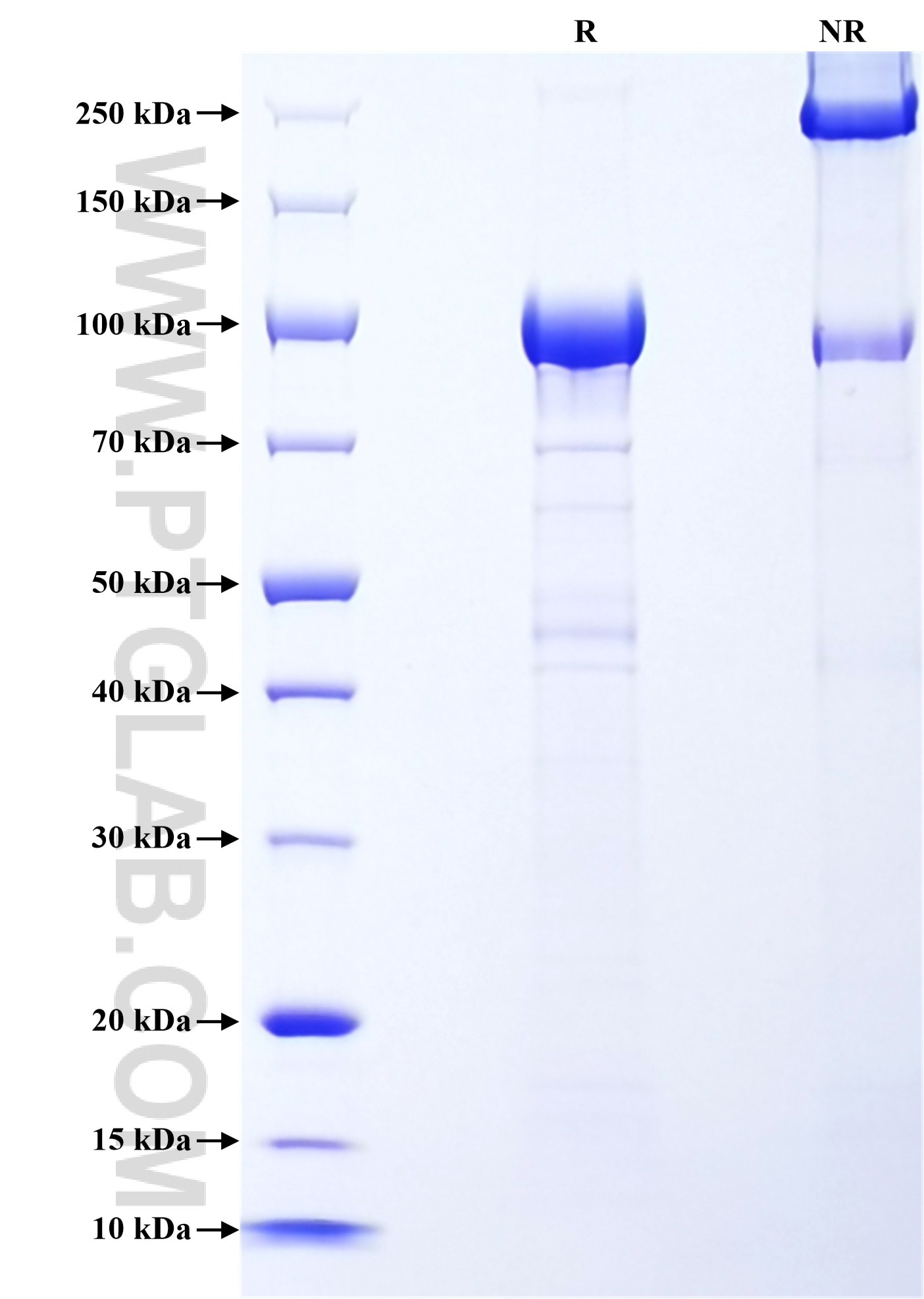
>90 %, SDS-PAGE
Tag
rFc Tag
Activity
not tested
Cat no : Eg6509
Validation Data Gallery
Product Information
| Purity | >90 %, SDS-PAGE |
| Endotoxin | <0.1 EU/μg protein, LAL method |
| Activity |
Not tested |
| Expression | HEK293-derived Human DSG2 protein Ala50-Gly609 (Accession# Q14126) with a rabbit IgG Fc tag at the C-terminus. |
| GeneID | 1829 |
| Accession | Q14126 |
| PredictedSize | 88.1 kDa |
| SDS-PAGE | 90-120 kDa, reducing (R) conditions |
| Formulation | Lyophilized from 0.22 μm filtered solution in PBS, pH 7.4. Normally 5% trehalose and 5% mannitol are added as protectants before lyophilization. |
| Reconstitution | Briefly centrifuge the tube before opening. Reconstitute at 0.1-0.5 mg/mL in sterile water. |
| Storage Conditions |
It is recommended that the protein be aliquoted for optimal storage. Avoid repeated freeze-thaw cycles.
|
| Shipping | The product is shipped at ambient temperature. Upon receipt, store it immediately at the recommended temperature. |
Background
Desmosomes are cell-cell junctions between epithelial, myocardial, and certain other cell types. Desmosomal cadherins, consisting of four desmogleins (DSG1-4) and three desmocollins (DSC1-3) in humans, mediate adhesion through calcium-dependent homophilic/heterophilic interactions. DSG2 is a single-pass transmembrane glycoprotein that is widely expressed in epithelial and non-epithelial tissues, such as the intestine, epidermis, testis, and heart. Defects in DSG2 are the cause of familial arrhythmogenic right ventricular dysplasia type 10 (ARVD10), and genetic variations in DSG2 are the cause of susceptibility to cardiomyopathy dilated type 1BB (CMD1BB).
References:
1.Kolegraff, Keli et al. Cell Adh Migr. 2011;5(4):306-314.
2.Awad, Mark M et al. American journal of human genetics vol. 79,1 (2006): 136-42.
3.Yeruva, Sunil, and Jens Waschke. Journal of anatomy vol. 242,1 (2023): 81-90.