
Recombinant Human CXCL3 protein (mFc Tag)
Species
Human
Purity
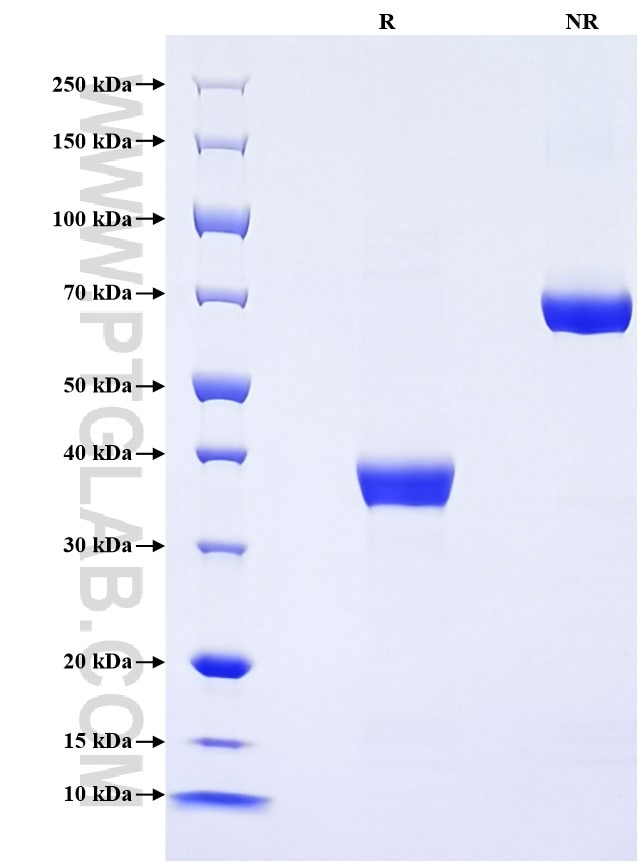
>90 %, SDS-PAGE
Tag
mFc Tag
Activity
not tested
Cat no : Eg3891
Validation Data Gallery
Product Information
| Purity | >90 %, SDS-PAGE |
| Endotoxin | <0.1 EU/μg protein, LAL method |
| Activity |
Not tested |
| Expression | HEK293-derived Human CXCL3 protein Ala35-Asn107 (Accession# O88792) with a mouse IgG Fc tag at the C-terminus. |
| GeneID | 2921 |
| Accession | P19876 |
| PredictedSize | 34.5 kDa |
| SDS-PAGE | 34-40 kDa, reducing (R) conditions |
| Formulation | Lyophilized from 0.22 μm filtered solution in PBS, pH 7.4. Normally 5% trehalose and 5% mannitol are added as protectants before lyophilization. |
| Reconstitution | Briefly centrifuge the tube before opening. Reconstitute at 0.1-0.5 mg/mL in sterile water. |
| Storage Conditions |
It is recommended that the protein be aliquoted for optimal storage. Avoid repeated freeze-thaw cycles.
|
| Shipping | The product is shipped at ambient temperature. Upon receipt, store it immediately at the recommended temperature. |
Background
CXCL3, also known as GRO-gamma, belongs to the CXC family of chemokines. CXCL3 is highly expressed in a variety of malignant tumors, including prostate cancer, breast cancer, and endometrial cancer. At the same time, CXCL3 has also been found to be widely present in inflammatory tissues and liver damage tissues.CXCL3 not only participates in the occurrence of tumors but also plays an important role in tumor progression. CXCL3 plays a key role in angiogenesis, tumorigenesis, and cell invasion and migration.
References:
1.Weng J. et al. (2021) J Oral Pathol Med. 50(9):902-910.
2.Cui C. et al. (2022) J Immunol Res. 2022:1336509.
3.Cheng Y. et al. (2023) BMC Cancer. 23(1):1162.