
Recombinant Human Cystatin SN/CST1 protein (rFc Tag)(HPLC verified)
Species
Human
Purity
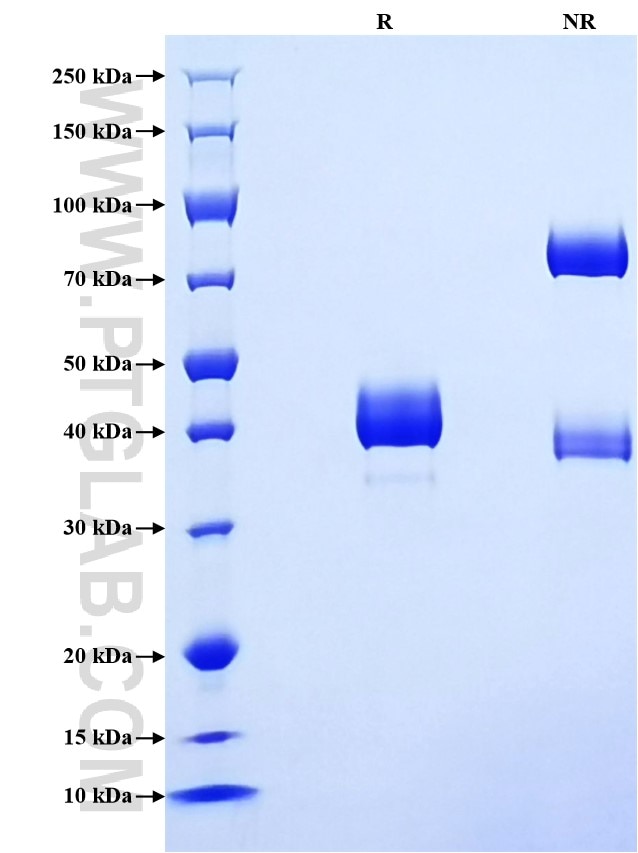
>90 %, SDS-PAGE
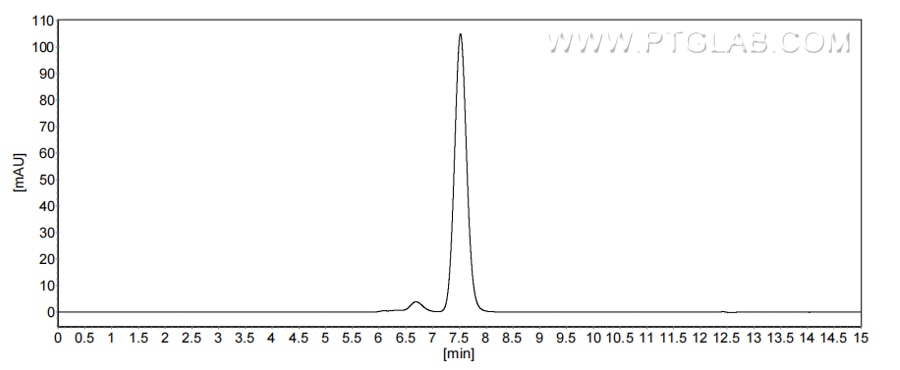
>90 %, SEC-HPLC
Tag
rFc Tag
Activity
not tested
Cat no : Eg4945
Validation Data Gallery
Product Information
| Purity | >90 %, SDS-PAGE >90 %, SEC-HPLC |
| Endotoxin | <0.1 EU/μg protein, LAL method |
| Activity |
Not tested |
| Expression | HEK293-derived Human Cystatin SN protein Trp21-Ser141 (Accession# P01037) with a rabbit IgG Fc tag at the N-terminus. |
| GeneID | 1469 |
| Accession | P01037 |
| PredictedSize | 41.5 kDa |
| SDS-PAGE | 39-45 kDa, reducing (R) conditions |
| Formulation | Lyophilized from 0.22 μm filtered solution in PBS, pH 7.4. Normally 5% trehalose and 5% mannitol are added as protectants before lyophilization. |
| Reconstitution | Briefly centrifuge the tube before opening. Reconstitute at 0.1-0.5 mg/mL in sterile water. |
| Storage Conditions |
It is recommended that the protein be aliquoted for optimal storage. Avoid repeated freeze-thaw cycles.
|
| Shipping | The product is shipped at ambient temperature. Upon receipt, store it immediately at the recommended temperature. |
Background
CST1, or cystatin SN, is a human gene encoding a secreted protein belonging to the type 2 cystatin superfamily, which includes CST1, CST2, CST3, CST4 and CST5. These proteins are cysteine proteinase inhibitors found in various human fluids and secretions where they appear to have protective functions. CST1 is specifically found in saliva, tears, urine and seminal fluid and plays a role in inhibiting the activity of cysteine proteases. CST1 has been implicated in several pathological processes, including tumour invasion and metastasis.
References:
1.Yang J. et al. (2022) BMC Cancer. 22(1):589.
2.Li D. et al. (2023) Oncogene. 42(2):83-98.
3.Jiang J. et al. (2015) Tumour Biol. 36(5):3903-10.
4.Zhang L. et al. (2024) Sci Rep. 14(1):4985.