
Recombinant Human CD99 protein (rFc Tag) (HPLC verified)
Species
Human
Purity
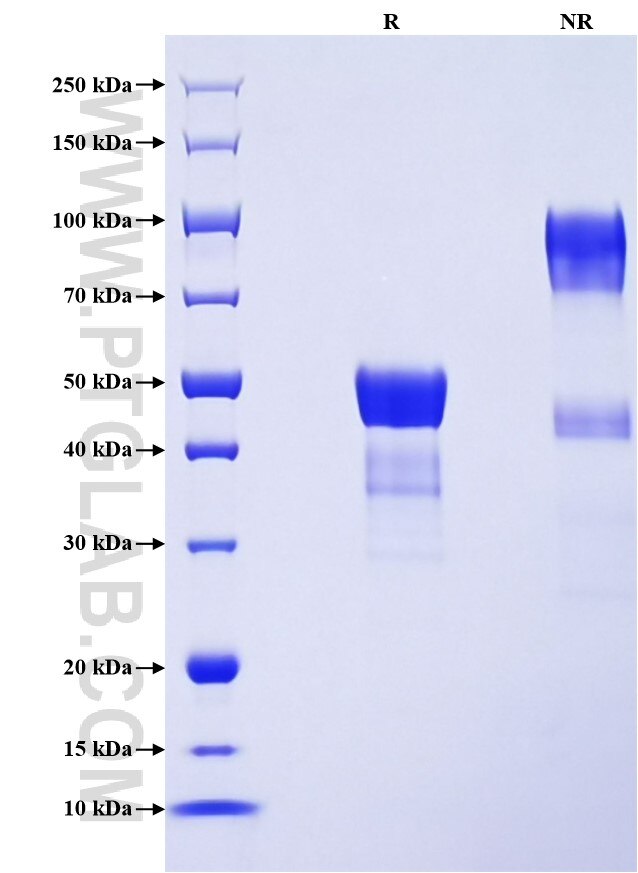
>90 %, SDS-PAGE
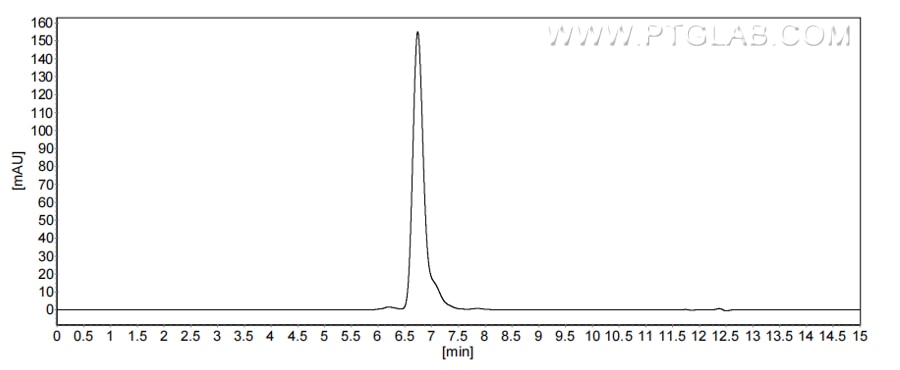
>90 %, SEC-HPLC
Tag
rFc Tag
Activity
not tested
Cat no : Eg1728
Validation Data Gallery
Product Information
| Purity | >90 %, SDS-PAGE >90 %, SEC-HPLC |
| Endotoxin | <0.1 EU/μg protein, LAL method |
| Activity |
Not tested |
| Expression | HEK293-derived Human CD99 protein Asp23-Asp122 (Accession# P14209-1) with a rabbit IgG Fc tag at the C-terminus. |
| GeneID | 4267 |
| Accession | P14209-1 |
| PredictedSize | 36.4 kDa |
| SDS-PAGE | 44-55 kDa, reducing (R) conditions |
| Formulation | Lyophilized from 0.22 μm filtered solution in PBS, pH 7.4. Normally 5% trehalose and 5% mannitol are added as protectants before lyophilization. |
| Reconstitution | Briefly centrifuge the tube before opening. Reconstitute at 0.1-0.5 mg/mL in sterile water. |
| Storage Conditions |
It is recommended that the protein be aliquoted for optimal storage. Avoid repeated freeze-thaw cycles.
|
| Shipping | The product is shipped at ambient temperature. Upon receipt, store it immediately at the recommended temperature. |
Background
CD99, also known as MIC2, is a heavily O-glycosylated transmembrane protein involved in T-cell adhesion processes and in spontaneous rosette formation with erythrocytes. CD99 is broadly distributed on many cell types, with particularly strong expression on human cortical thymocytes, Ewing's sarcoma cells and peripheral primitive neuroectodermal tumors. In normal cells, CD99 has been functionally implicated in cell adhesion, migration, apoptosis, differentiation, activation, and proliferation of lymphocytes and monocyte extravasation and transport of several transmembrane proteins.
References:
1. Waclavicek M. et al. (1998) Immunol. 161(9):4671-4678.
2. Byun, H. J. et al. (2006) J Biol Chem. 281(46):34833-47.
3. Alberti I. et al. (2002) FASEB J. 16(14):1946-1948.