
Recombinant Human CCL16 protein (rFc Tag) (HPLC verified)
Species
Human
Purity
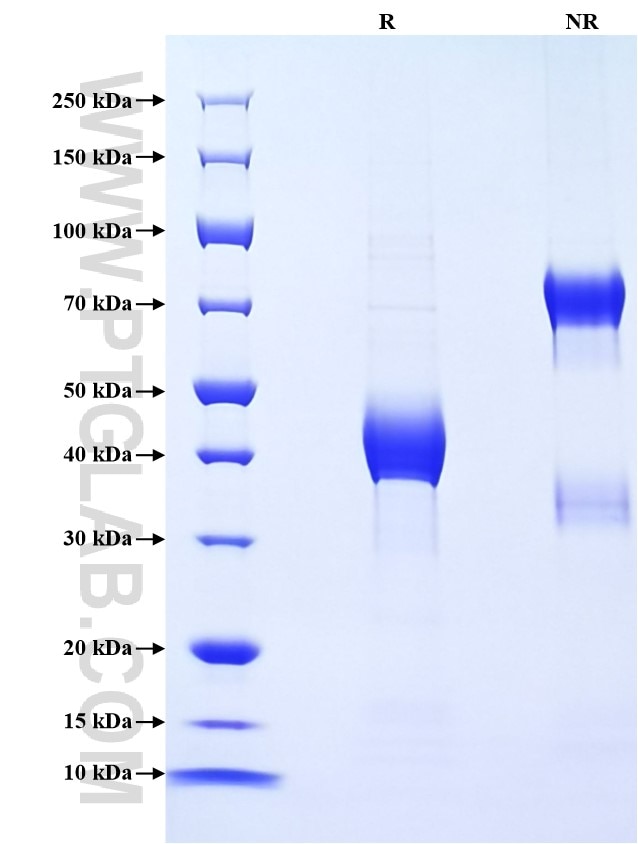
>90 %, SDS-PAGE
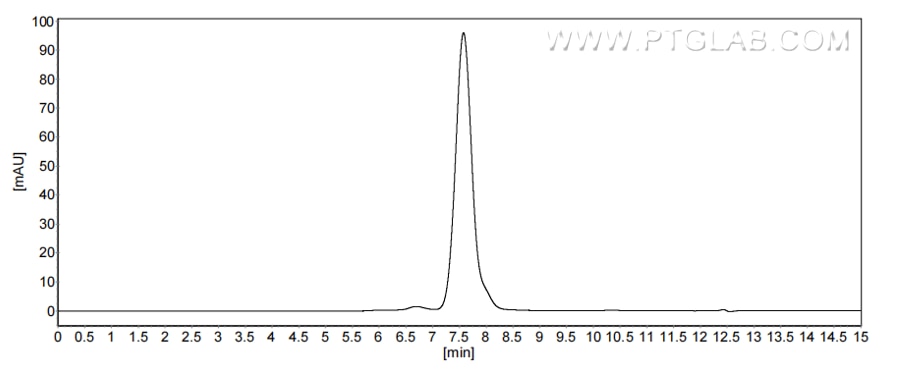
>90%, SEC-HPLC
Tag
rFc Tag
Activity
not tested
Cat no : Eg3134
Validation Data Gallery
Product Information
| Purity | >90 %, SDS-PAGE >90%, SEC-HPLC |
| Endotoxin | <0.1 EU/μg protein, LAL method |
| Activity |
Not tested |
| Expression | HEK293-derived Human CCL16 protein Gln24-Gln120 (Accession# O15467) with a rabbit IgG Fc tag at the C-terminus. |
| GeneID | 6360 |
| Accession | O15467 |
| PredictedSize | 37.2 kDa |
| SDS-PAGE | 38-48 kDa, reducing (R) conditions |
| Formulation | Lyophilized from 0.22 μm filtered solution in PBS, pH 7.4. Normally 5% trehalose and 5% mannitol are added as protectants before lyophilization. |
| Reconstitution | Briefly centrifuge the tube before opening. Reconstitute at 0.1-0.5 mg/mL in sterile water. |
| Storage Conditions |
It is recommended that the protein be aliquoted for optimal storage. Avoid repeated freeze-thaw cycles.
|
| Shipping | The product is shipped at ambient temperature. Upon receipt, store it immediately at the recommended temperature. |
Background
Chemokine (C-C motif) ligand 16 (CCL16), also known as LEC (Liver-expressed chemokine), Monotactin-1 (MTN-1), IL-10-inducible chemokine, etc., is a small-molecule cytokine that belongs to CC chemokine family. CCL16 is expressed predominantly in the liver, thymus and spleen and has chemotactic activity towards lymphocytes and monocytes, playing a role in immunity and inflammation. (PMID: 33500726) CCL16 affects cells by binding to cell surface chemokine receptors (i.e., CCR1, CCR2, CCR5, and CCR8), and is also of interest in the tumor microenvironment, where it may influence tumor progression by modulating the tumor immune microenvironment. Studies have shown that CCL16 is a prognostic biomarker for triple-negative breast and lung cancer metastases.
References:
1. Shen W, et al. Theranostics. 2021;11(5):2297-2317.
2. Weiergräber OH, et al. Biomolecules. 2022;12(11):1588.
3. Chi HC, et al. Am J Cancer Res. 2024;14(7):3600-3613.
4. Dai Z, et al. Front Immunol. 2024;14:1299953.