
Recombinant Human BTN2A1 protein (rFc Tag)
Species
Human
Purity
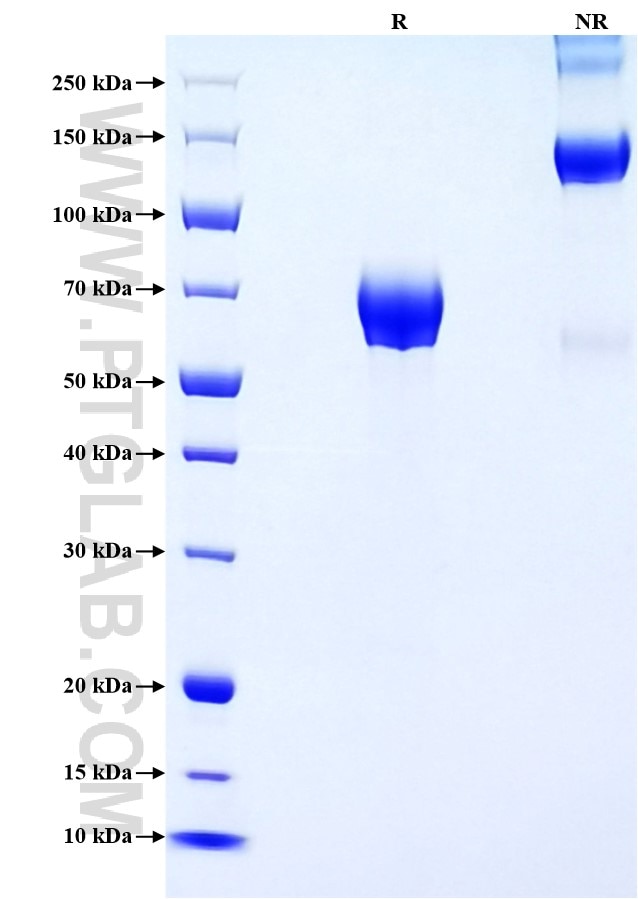
>90 %, SDS-PAGE
Tag
rFc Tag
Activity
not tested
Cat no : Eg2259
Validation Data Gallery
Product Information
| Purity | >90 %, SDS-PAGE |
| Endotoxin | <0.1 EU/μg protein, LAL method |
| Activity |
Not tested |
| Expression | HEK293-derived Human BTN2A1 protein Gln29-Ala248 (Accession# Q7KYR7-2) with a rabbit IgG Fc tag at the C-terminus. |
| GeneID | 11120 |
| Accession | Q7KYR7-2 |
| PredictedSize | 50.8 kDa |
| SDS-PAGE | 55-70 kDa, reducing (R) conditions |
| Formulation | Lyophilized from 0.22 μm filtered solution in PBS, pH 7.4. Normally 5% trehalose and 5% mannitol are added as protectants before lyophilization. |
| Reconstitution | Briefly centrifuge the tube before opening. Reconstitute at 0.1-0.5 mg/mL in sterile water. |
| Storage Conditions |
It is recommended that the protein be aliquoted for optimal storage. Avoid repeated freeze-thaw cycles.
|
| Shipping | The product is shipped at ambient temperature. Upon receipt, store it immediately at the recommended temperature. |
Background
BTN2A1, or butyrophilin subfamily 2 member A1, is a protein-coding gene that belongs to the immunoglobulin superfamily. It is located in a cluster of butyrophilin-like genes in the juxta-telomeric region of the major histocompatibility complex (MHC) on chromosome 6. The encoded protein is an integral plasma membrane protein that plays a role in lipid, fatty-acid, and sterol metabolism. The BTN2A1 gene is expressed ubiquitously, with particularly high expression in the spleen and appendix. BTN2A1 has been identified as a potential immune checkpoint that targets Vγ9Vδ2 T cell cytotoxicity against malignant cells, suggesting its involvement in immune responses.
References:
1. Carla E Cano. et al. (2021) Cell Rep. 36(2):109359.
2. Dieter Kabelitz. (2024) Cancer Immunol Res. 12(12):1662