
Recombinant Human Angiopoietin-1 protein (rFc Tag)
Species
Human
Purity
>90 %, SDS-PAGE
Tag
rFc Tag
Activity
not tested
Cat no : Eg3426
Validation Data Gallery
Product Information
| Purity | >90 %, SDS-PAGE |
| Endotoxin | <0.1 EU/μg protein, LAL method |
| Activity |
Not tested |
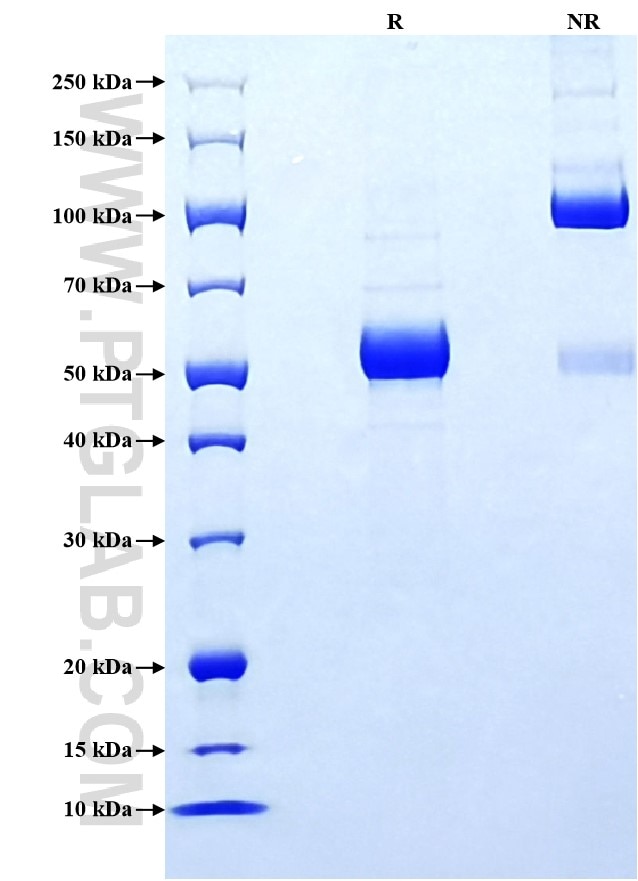
| Expression | HEK293-derived Human Angiopoietin-1 protein Arg277-Phe498 (Accession# Q15389-1) with a rabbit IgG Fc tag at the N-terminus. |
| GeneID | 284 |
| Accession | Q15389-1 |
| PredictedSize | 52.8 kDa |
| SDS-PAGE | 50-60 kDa, reducing (R) conditions |
| Formulation | Lyophilized from 0.22 μm filtered solution in PBS, pH 7.4. Normally 5% trehalose and 5% mannitol are added as protectants before lyophilization. |
| Reconstitution | Briefly centrifuge the tube before opening. Reconstitute at 0.1-0.5 mg/mL in sterile water. |
| Storage Conditions |
It is recommended that the protein be aliquoted for optimal storage. Avoid repeated freeze-thaw cycles.
|
| Shipping | The product is shipped at ambient temperature. Upon receipt, store it immediately at the recommended temperature. |
Background
Angiopoietin 1 is a 70-kDa secreted glycoprotein generated from vascular mural cells, pericytes, and certain other cells. Angiopoietin 1 participates in vascular differentiation through angiogenesis, which is the process of the growth and remodelling of existing vessels. Angiopoietin 1 is also involved in the maintenance and turnover of blood vessels in mature animals. Angiopoietin1 binds to and activates the TEK/TIE2 receptor by inducing its dimerization and tyrosine phosphorylation, playing an important role in the regulation of angiogenesis. Overexpression of Angiopoietin1 has been proven to occur in malignant glioblastoma, neuroblastoma, non-small cell lung cancer and other tumors.
References:
1. Brooke N Horton. et al. (2010) J Histochem Cytochem.58(1):53-60.
2. C Suri. et al. (1996) Cell. 87(7):1171-80.
3. Linda J Metheny-Barlow. et al.(2003) Cell Res. 13(5):309-17.
4. Marie Jeansson. et al. (2011)J Clin Invest. 121(6):2278-89.