
Recombinant Human ALCAM protein (rFc Tag)
Species
Human
Purity
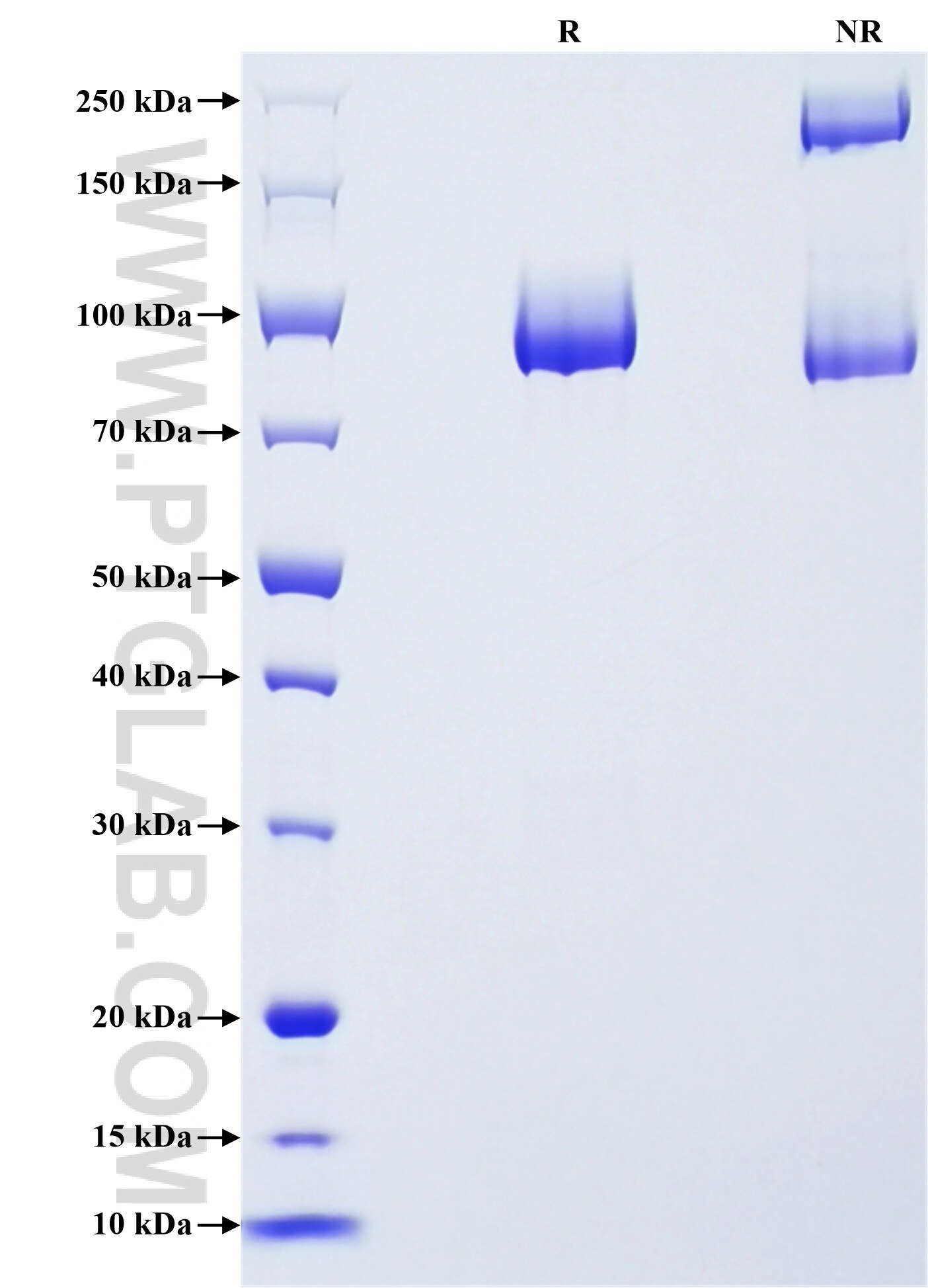
>90 %, SDS-PAGE
Tag
rFc Tag
Activity
not tested
Cat no : Eg5038
Validation Data Gallery
Product Information
| Purity | >90 %, SDS-PAGE |
| Endotoxin | <0.1 EU/μg protein, LAL method |
| Activity |
Not tested |
| Expression | HEK293-derived Human ALCAM protein Trp28-Lys527 (Accession# Q13740) with a rabbit IgG Fc tag at the C-terminus. |
| GeneID | 214 |
| Accession | Q13740 |
| PredictedSize | 82.1 kDa |
| SDS-PAGE | 88-100 kDa, reducing (R) conditions |
| Formulation | Lyophilized from 0.22 μm filtered solution in PBS, pH 7.4. Normally 5% trehalose and 5% mannitol are added as protectants before lyophilization. |
| Reconstitution | Briefly centrifuge the tube before opening. Reconstitute at 0.1-0.5 mg/mL in sterile water. |
| Storage Conditions |
It is recommended that the protein be aliquoted for optimal storage. Avoid repeated freeze-thaw cycles.
|
| Shipping | The product is shipped at ambient temperature. Upon receipt, store it immediately at the recommended temperature. |
Background
Activated leukocyte cell adhesion molecule (ALCAM, also known as CD166) is a cell adhesion molecule that belongs to the immunoglobulin superfamily. It is involved in cell-cell adhesion through homophilic and heterophilic (to CD6) interactions. ALCAM is widely expressed in a variety of normal tissues. Altered ALCAM expression has been associated with the differentiation state and progression in some neoplasms including melanoma, prostate, colorectal, and breast cancers.
References:
1. Hong X, et al. (2010) J Surg Oncol. 101(7):564-569.
2. Ihnen M, et al. (2008) Breast Cancer Res Treat. 112(3):419-427.
3. Xie Y, et al. (2024) Nat Commun. 15(1):10889.
4. Ferragut F, et al. (2021) Cytokine Growth Factor Rev. 61:27-37.
5. Weidle UH, et al. (2010) Cancer Genomics Proteomics. 7(5):231-243.