
Validation Data Gallery
Tested Applications
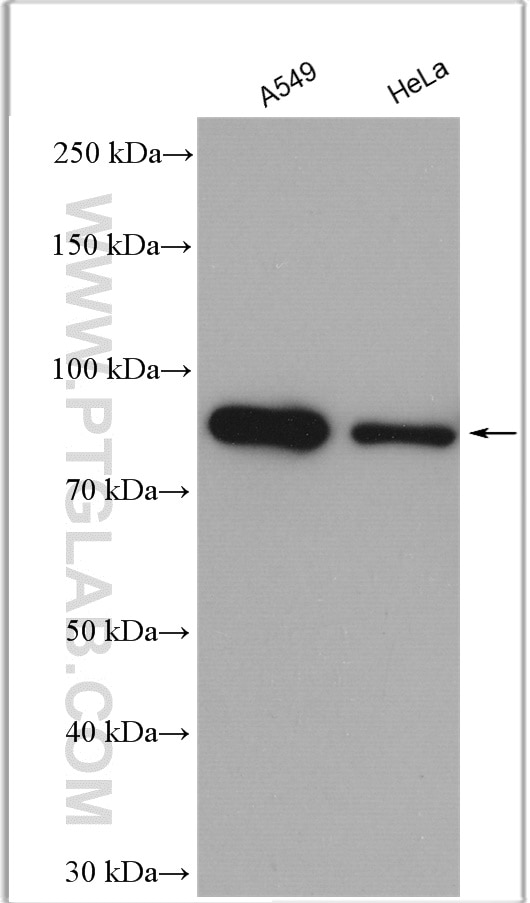
| Positive WB detected in | A549 cells, U2OS cells, HeLa cells |
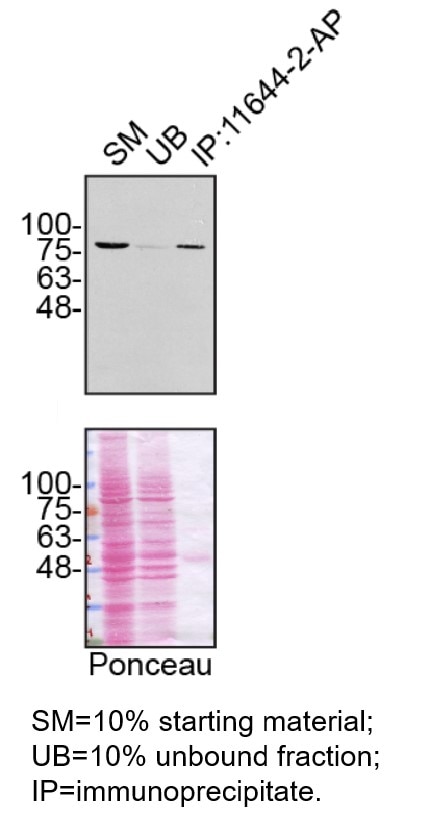
| Positive IP detected in | U2OS cells |
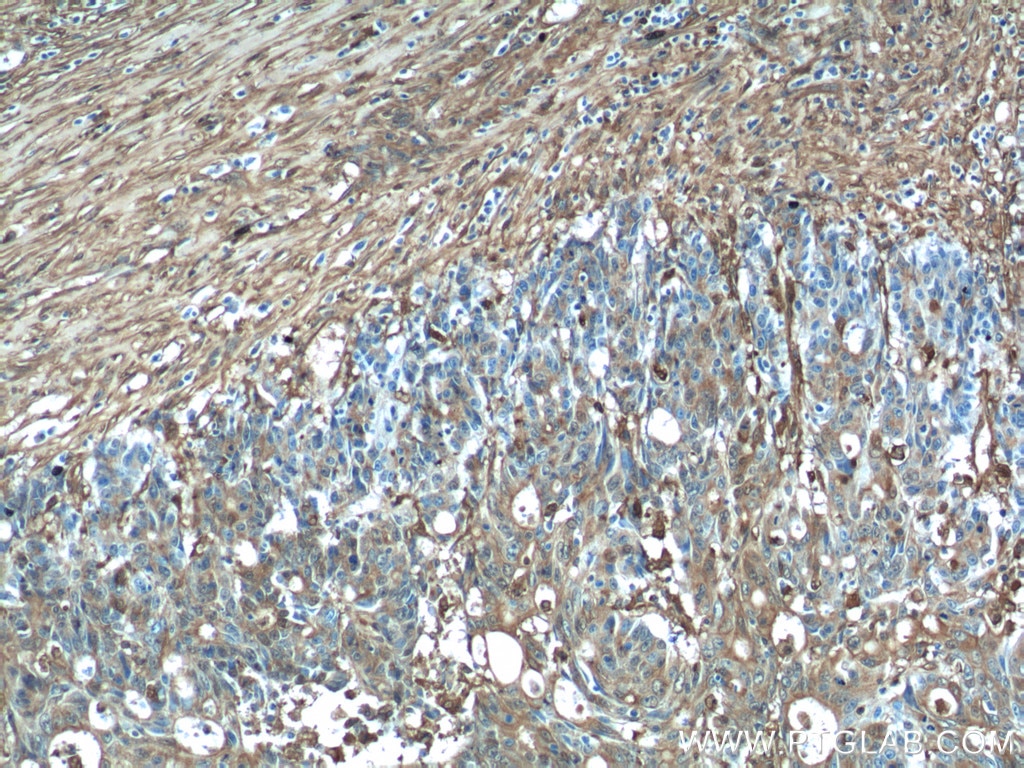
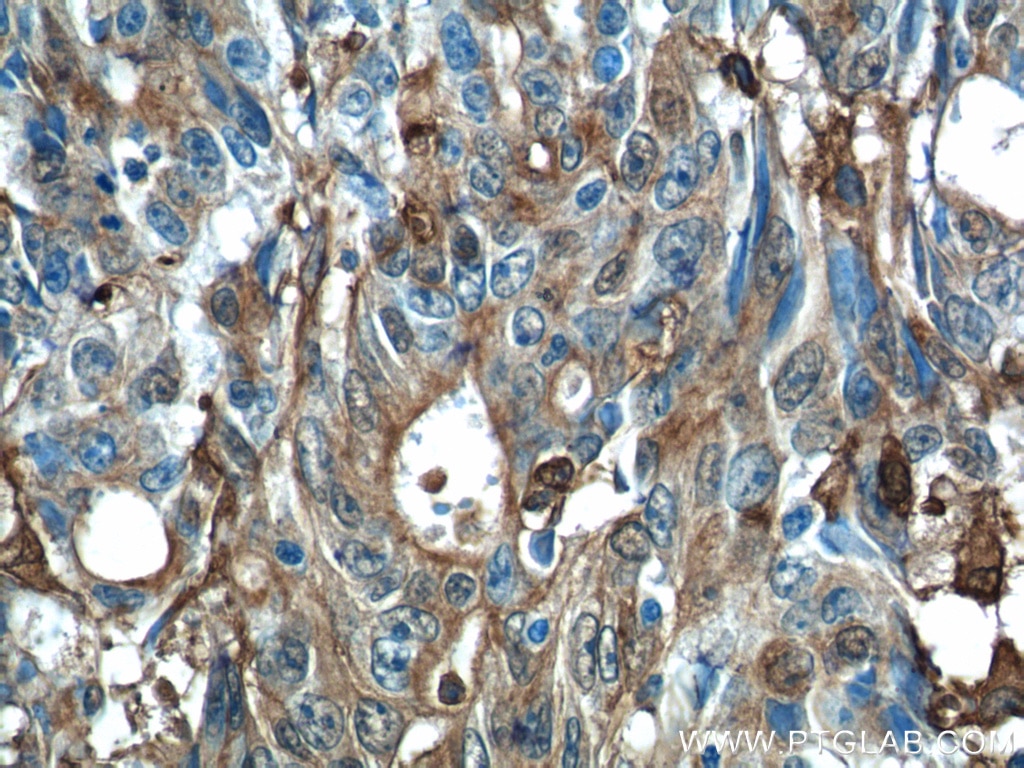
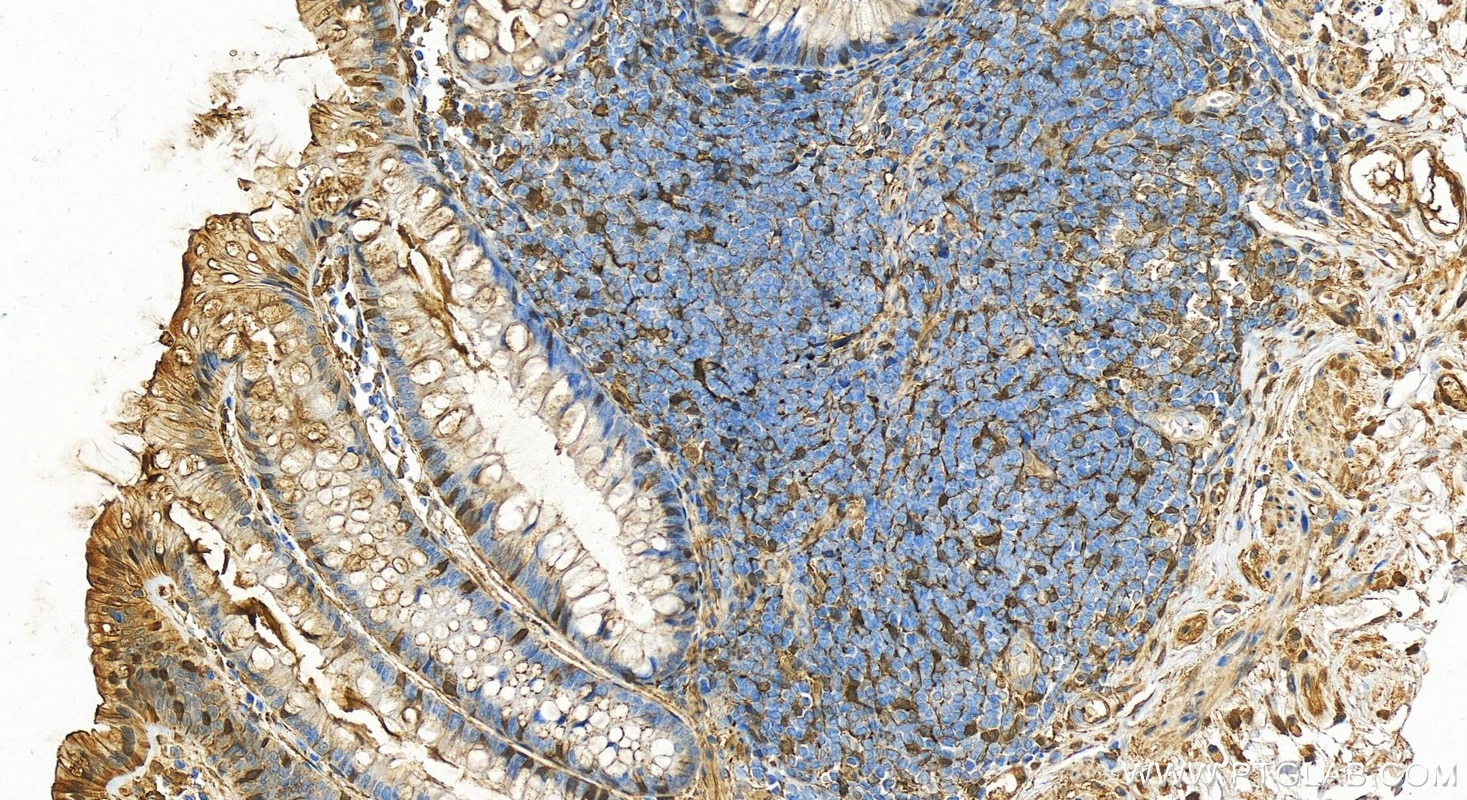
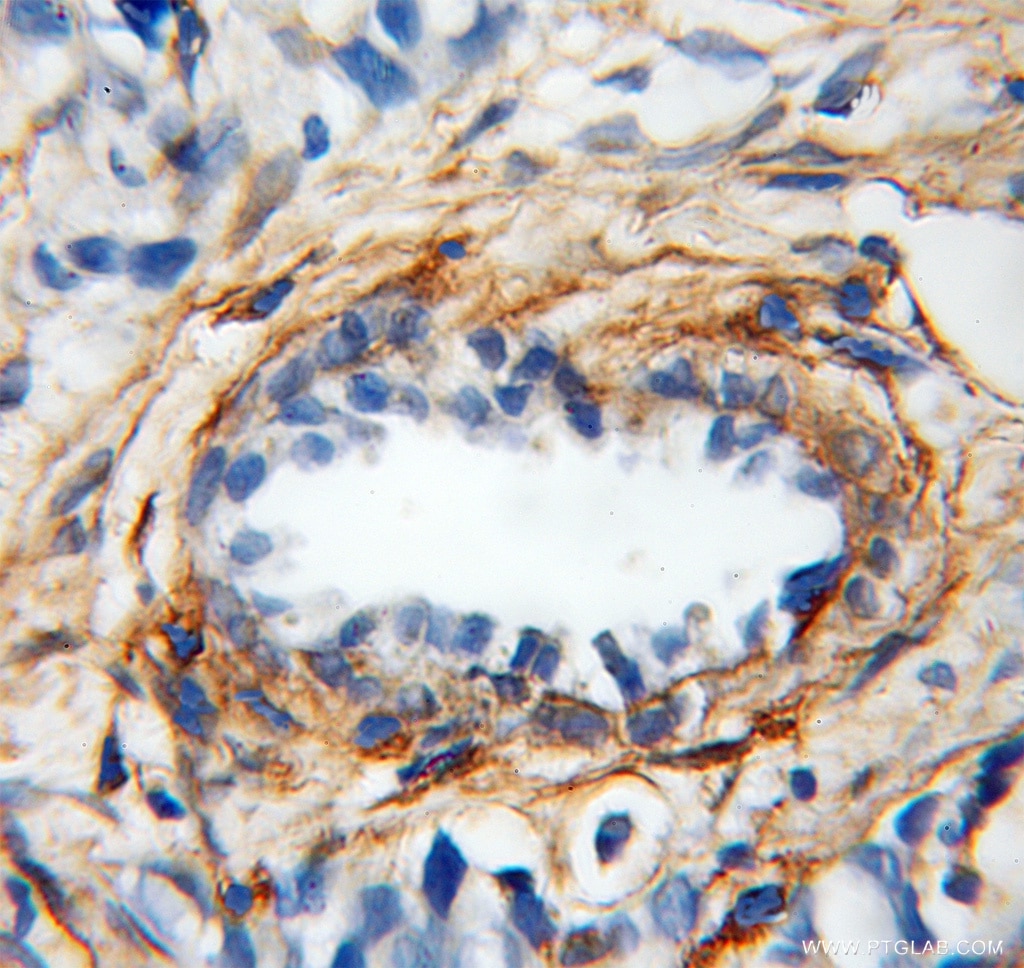
| Positive IHC detected in | human colon cancer tissue, human colon tissue, human prostate cancer tissue Note: suggested antigen retrieval with TE buffer pH 9.0; (*) Alternatively, antigen retrieval may be performed with citrate buffer pH 6.0 |
Recommended dilution
| Application | Dilution |
|---|---|
| Western Blot (WB) | WB : 1:2000-1:16000 |
| Immunoprecipitation (IP) | IP : 0.5-4.0 ug for 1.0-3.0 mg of total protein lysate |
| Immunohistochemistry (IHC) | IHC : 1:50-1:500 |
| It is recommended that this reagent should be titrated in each testing system to obtain optimal results. | |
| Sample-dependent, Check data in validation data gallery. | |
Published Applications
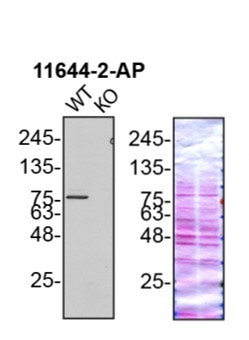
| KD/KO | See 1 publications below |
| WB | See 9 publications below |
| IHC | See 4 publications below |
| IF | See 4 publications below |
Product Information
11644-2-AP targets Gelsolin in WB, IHC, IF, IP, ELISA applications and shows reactivity with human, mouse, rat samples.
| Tested Reactivity | human, mouse, rat |
| Cited Reactivity | human, mouse |
| Host / Isotype | Rabbit / IgG |
| Class | Polyclonal |
| Type | Antibody |
| Immunogen |
CatNo: Ag2239 Product name: Recombinant human Gelsolin protein Source: e coli.-derived, PGEX-4T Tag: GST Domain: 433-782 aa of BC026033 Sequence: MAAQHGMDDDGTGQKQIWRIEGSNKVPVDPATYGQFYGGDSYIILYNYRHGGRQGQIIYNWQGAQSTQDEVAASAILTAQLDEELGGTPVQSRVVQGKEPAHLMSLFGGKPMIIYKGGTSREGGQTAPASTRLFQVRANSAGATRAVEVLPKAGALNSNDAFVLKTPSAAYLWVGTGASEAEKTGAQELLRVLRAQPVQVAEGSEPDGFWEALGGKAAYRTSPRLKDKKMDAHPPRLFACSNKIGRFVIEEVPGELMQEDLATDDVMLLDTWDQVFVWVGKDSQEEEKTEALTSAKRYIETDPANRDRRTPITVVKQGFEPPSFVGWFLGWDDDYWSVDPLDRAMAELAA 相同性解析による交差性が予測される生物種 |
| Full Name | gelsolin (amyloidosis, Finnish type) |
| Calculated molecular weight | 782 aa, 86 kDa |
| Observed molecular weight | 87-93 kDa |
| GenBank accession number | BC026033 |
| Gene Symbol | Gelsolin |
| Gene ID (NCBI) | 2934 |
| RRID | AB_2295090 |
| Conjugate | Unconjugated |
| Form | |
| Form | Liquid |
| Purification Method | Antigen affinity purification |
| UNIPROT ID | P06396 |
| Storage Buffer | PBS with 0.02% sodium azide and 50% glycerol{{ptg:BufferTemp}}7.3 |
| Storage Conditions | Store at -20°C. Stable for one year after shipment. Aliquoting is unnecessary for -20oC storage. |
Background Information
Gelsolin (GSN) is an actin binding protein that regulates actin-severing/depolymerizing in a calcium dependent manner, and acts as a multifunctional regulator for cell metabolism and survival. Gelsolin exists in two isoforms: a cytoplasmic gelsolin (cGSN; 80-90 kDa) and a plasma gelsolin (pGSN; 93 kDa), differing at N terminal residues. Decreased levels of pGSN are strongly associated with human diseases, such as, acute liver injury, major trauma, myocardial infarction, inflammation, lung injury, rheumatoid arthritis, hemodialysis, multiple sclerosis, Alzheimer's disease. Plasma gelsolin can interact with actin and form a complex of 130 kDa (PMID: 6330060, 3030756).
Protocols
| Product Specific Protocols | |
|---|---|
| IHC protocol for Gelsolin antibody 11644-2-AP | Download protocol |
| WB protocol for Gelsolin antibody 11644-2-AP | Download protocol |
| Standard Protocols | |
|---|---|
| Click here to view our Standard Protocols |
Publications
| Species | Application | Title |
|---|---|---|
Cell Peripheral cancer attenuates amyloid pathology in Alzheimer's disease via cystatin-c activation of TREM2. | ||
Mol Cell Noncanonical Modulation of the eIF2 Pathway Controls an Increase in Local Translation during Neural Wiring. | ||
J Clin Invest Loss of RPGR disrupts motile cilia and causes primary ciliary dyskinesia by affecting F-actin dynamics. | ||
Sci Adv Cytoskeletal remodeling promotes tunneling nanotube formation and drives cardiac resident cell mitochondrial transfer in sepsis. | ||
Adv Healthc Mater Modification of PLGA Scaffold by MSC-Derived Extracellular Matrix Combats Macrophage Inflammation to Initiate Bone Regeneration via TGF-β-Induced Protein. | ||
Cell Rep Greater epithelial ridge cells are the principal organoid-forming progenitors of the mouse cochlea. |