
Validation Data Gallery
Tested Applications
Recommended dilution
| Application | Dilution |
|---|---|
| It is recommended that this reagent should be titrated in each testing system to obtain optimal results. | |
Product Information
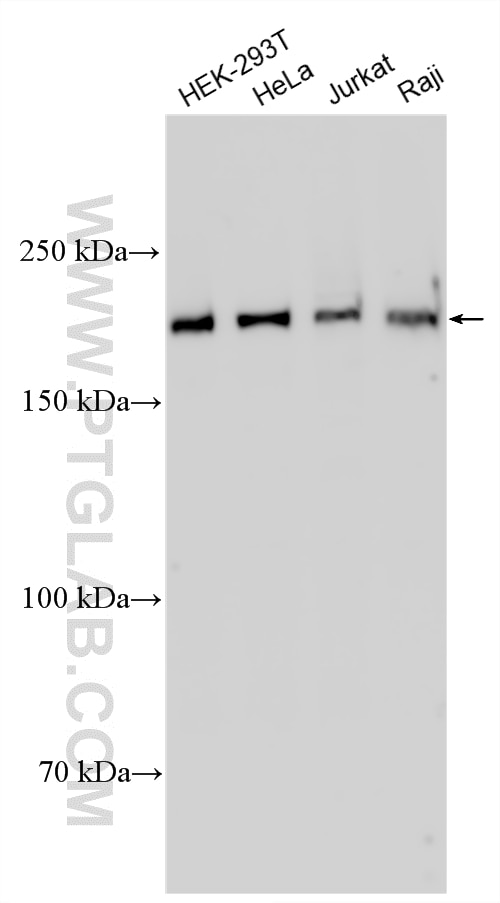
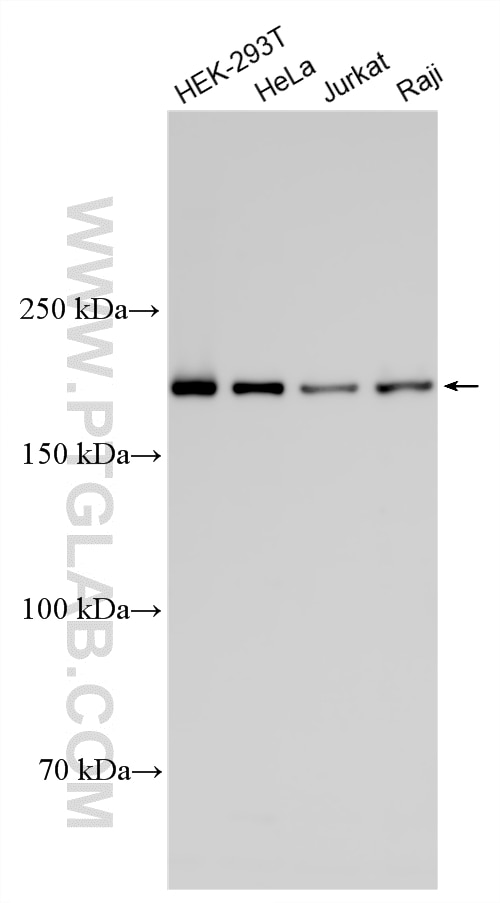
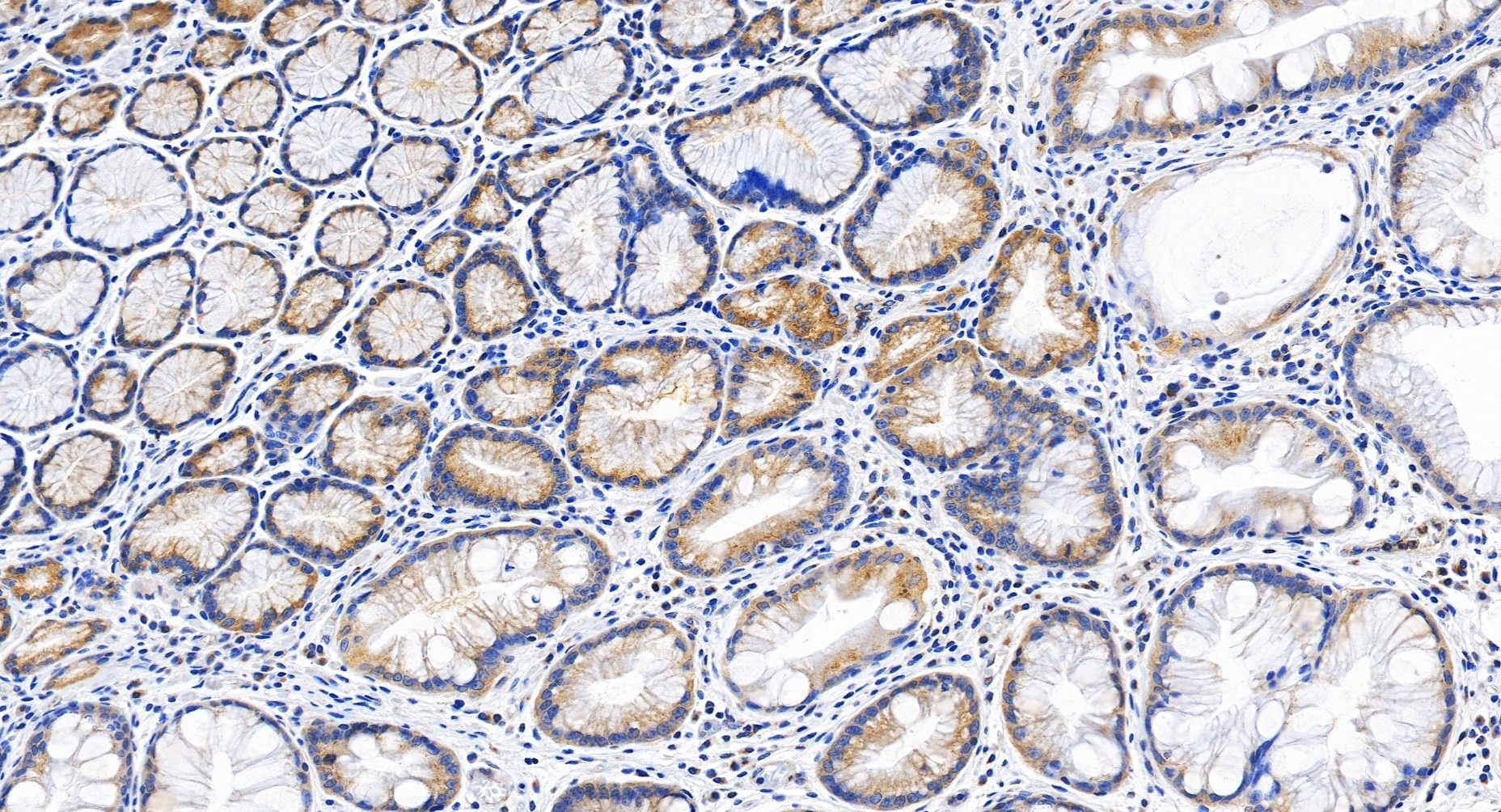
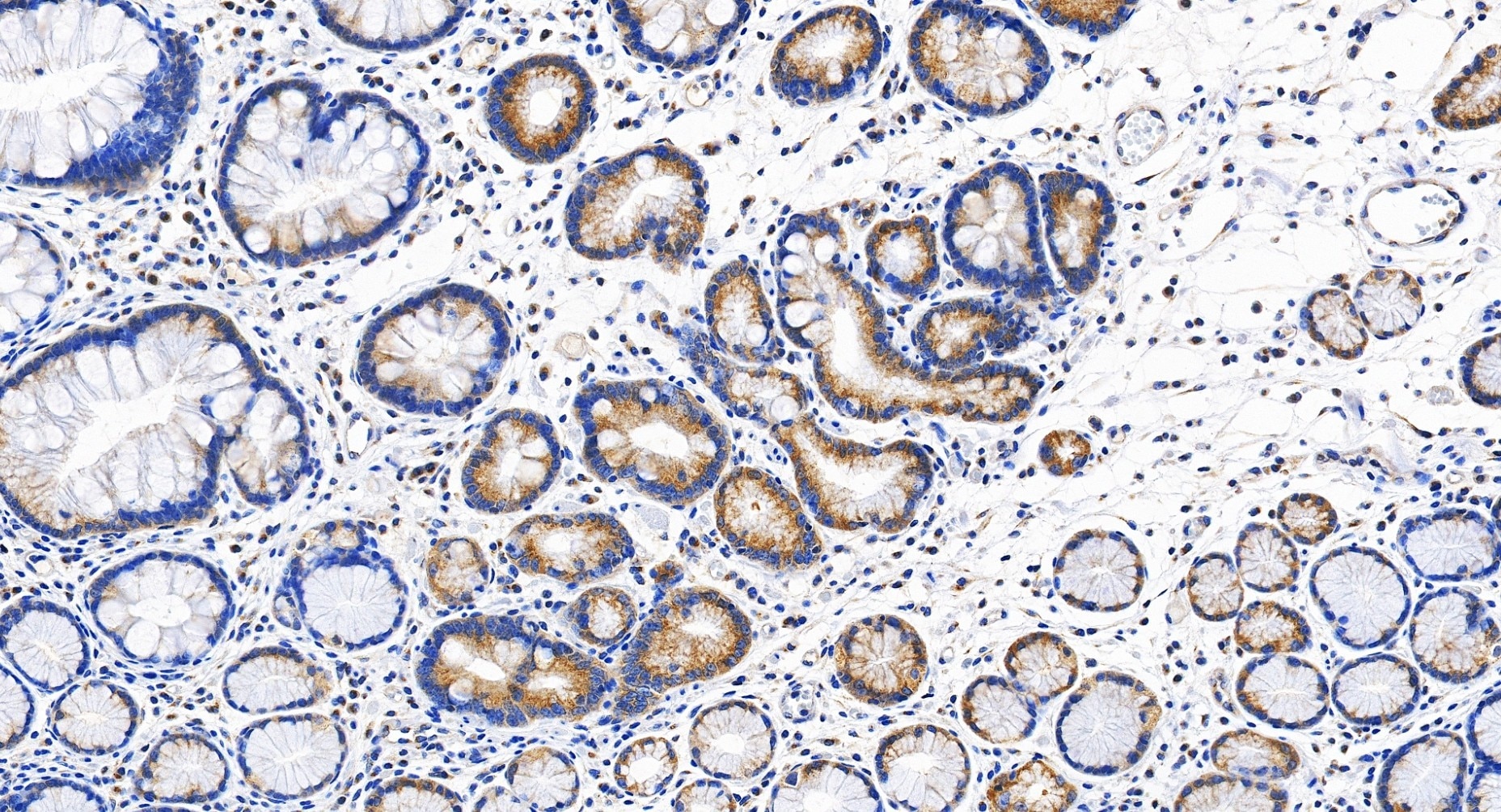
32217-1-PBS targets GCC2 in WB, IHC, Indirect ELISA applications and shows reactivity with human samples.
| Tested Reactivity | human |
| Host / Isotype | Rabbit / IgG |
| Class | Polyclonal |
| Type | Antibody |
| Immunogen |
CatNo: Ag17535 Product name: Recombinant human GCC2 protein Source: e coli.-derived, PGEX-4T Tag: GST Domain: 1-343 aa of BC146789 Sequence: MKQEVEDSVTKMGDAHKELEQSHINYVKEIENLKNELMAVRSKYSEDKANLQKQLEEAMNTQLELSEQLKFQNNSEDNVKKLQEEIEKIRPGFEEQILYLQKQLDATTDEKKETVTQLQNIIEANSQHYQKNINSLQEELLQLKAIHQEEVKELMCQIEASAKEHEAEINKLNELKENLVKQCEASEKNIQKKYECELENLRKATSNANQDNQICSILLQENTFVEQVVNEKVKHLEDTLKELESQHSILKDEVTYMNNLKLKLEMDAQHIKDEFFHEREDLEFKINELLLAKEEQGCVIEKLKSELAGLNKQFCYTVEQHNREVQSLKEQHQKEISELNETF 相同性解析による交差性が予測される生物種 |
| Full Name | GRIP and coiled-coil domain containing 2 |
| Calculated molecular weight | 1583 aa, 185 kDa |
| Observed molecular weight | 200 kDa |
| GenBank accession number | BC146789 |
| Gene Symbol | GCC2 |
| Gene ID (NCBI) | 9648 |
| RRID | AB_3742546 |
| Conjugate | Unconjugated |
| Form | |
| Form | Liquid |
| Purification Method | Antigen affinity Purification |
| UNIPROT ID | Q8IWJ2 |
| Storage Buffer | PBS only{{ptg:BufferTemp}}7.3 |
| Storage Conditions | Store at -80°C. |
Background Information
The GCC2 protein, fully named GRIP and Coiled-Coil Domain-Containing Protein 2, is a key adaptor protein in the intracellular Golgi-endosomal membrane transport system. It specifically anchors to the Golgi membrane via its GRIP domain and is primarily responsible for mediating retrograde vesicular transport from endosomes to the Golgi apparatus, participating in the recycling and sorting of various cargo proteins, such as the mannose-6-phosphate receptor. Recent studies have revealed that GCC2 regulates the subcellular localization of the GATOR complex, thereby acting as an important upstream regulator of the mTORC1 signaling pathway, which influences cell growth, metabolism, and autophagy. Dysfunction of GCC2 is closely associated with neurodevelopmental disorders and tumorigenesis, underscoring its significance in cell biology and disease research.