
Validation Data Gallery
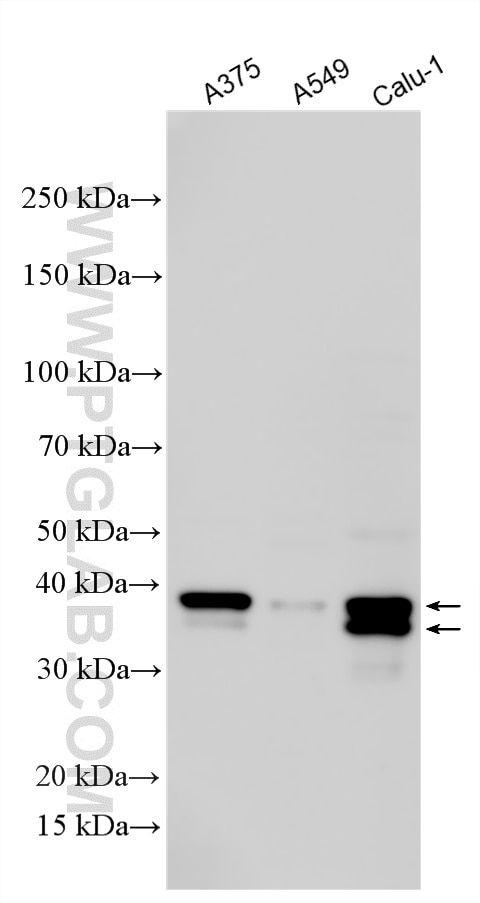
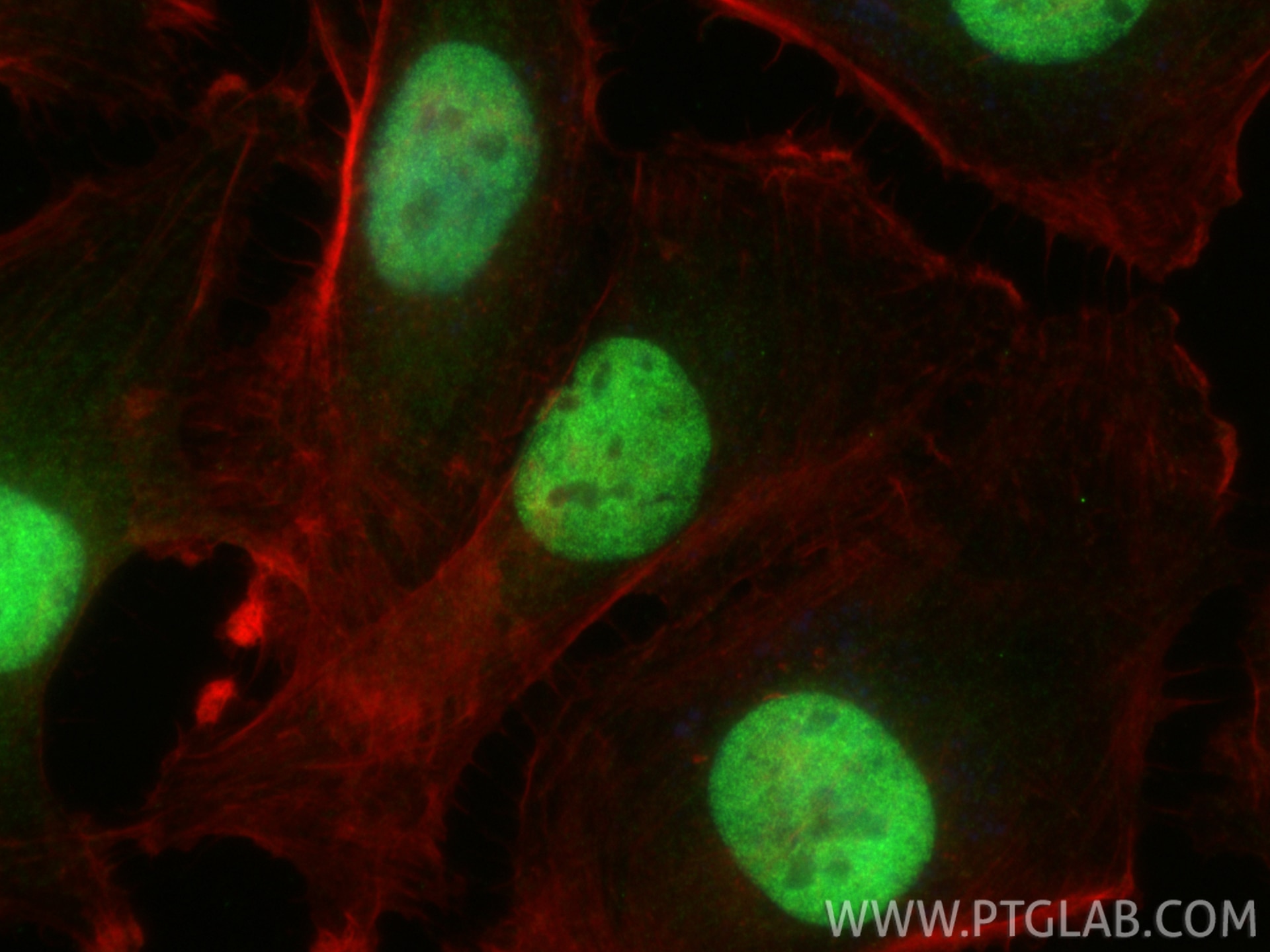
Tested Applications
Recommended dilution
| Application | Dilution |
|---|---|
| It is recommended that this reagent should be titrated in each testing system to obtain optimal results. | |
Product Information
12663-1-PBS targets FOSL1 in WB, IF/ICC, Indirect ELISA applications and shows reactivity with human samples.
| Tested Reactivity | human |
| Host / Isotype | Rabbit / IgG |
| Class | Polyclonal |
| Type | Antibody |
| Immunogen |
CatNo: Ag3344 Product name: Recombinant human FOSL1 protein Source: e coli.-derived, PGEX-4T Tag: GST Domain: 1-271 aa of BC016648 Sequence: MFRDFGEPGPSSGNGGGYGGPAQPPAAAQAAQQKFHLVPSINTMSGSQELQWMVQPHFLGPSSYPRPLTYPQYSPPQPRPGVIRALGPPPGVRRRPCEQISPEEEERRRVRRERNKLAAAKCRNRRKELTDFLQAETDKLEDEKSGLQREIEELQKQKERLELVLEAHRPICKIPEGAKEGDTGSTSGTSSPPAPCRPVPCISLSPGPVLEPEALHTPTLMTTPSLTPFTPSLVFTYPSTPEPCASAHRKSSSSSGDPSSDPLGSPTLLAL 相同性解析による交差性が予測される生物種 |
| Full Name | FOS-like antigen 1 |
| Calculated molecular weight | 271 aa, 29 kDa |
| Observed molecular weight | 30-40 kDa |
| GenBank accession number | BC016648 |
| Gene Symbol | FOSL1 |
| Gene ID (NCBI) | 8061 |
| RRID | AB_3741834 |
| Conjugate | Unconjugated |
| Form | |
| Form | Liquid |
| Purification Method | Antigen affinity purification |
| UNIPROT ID | P15407 |
| Storage Buffer | PBS only{{ptg:BufferTemp}}7.3 |
| Storage Conditions | Store at -80°C. |
Background Information
FOSL1 (FOS Like 1, AP-1 Transcription Factor Subunit) is a protein-coding gene that produces the Fos-related antigen 1 (FRA1) protein, a key component of the AP-1 transcription factor complex. It is heavily involved in regulating cell proliferation, differentiation, tumorigenesis, and metastasis, particularly in cancers like lung, pancreatic, and breast cancer. FOSL1 forms heterodimers with JUN family proteins to form the AP-1 complex, which binds to DNA to regulate gene expression. It is considered an oncologist in many solid tumors, driving metastasis, EMT, and resistance to chemotherapy and radiotherapy. High expression of FOSL1 is associated with poor prognosis and tumor aggressiveness. It is often found in the stroma of reproductive tissues, cartilage, and in tumor microenvironments.