
Validation Data Gallery
Tested Applications
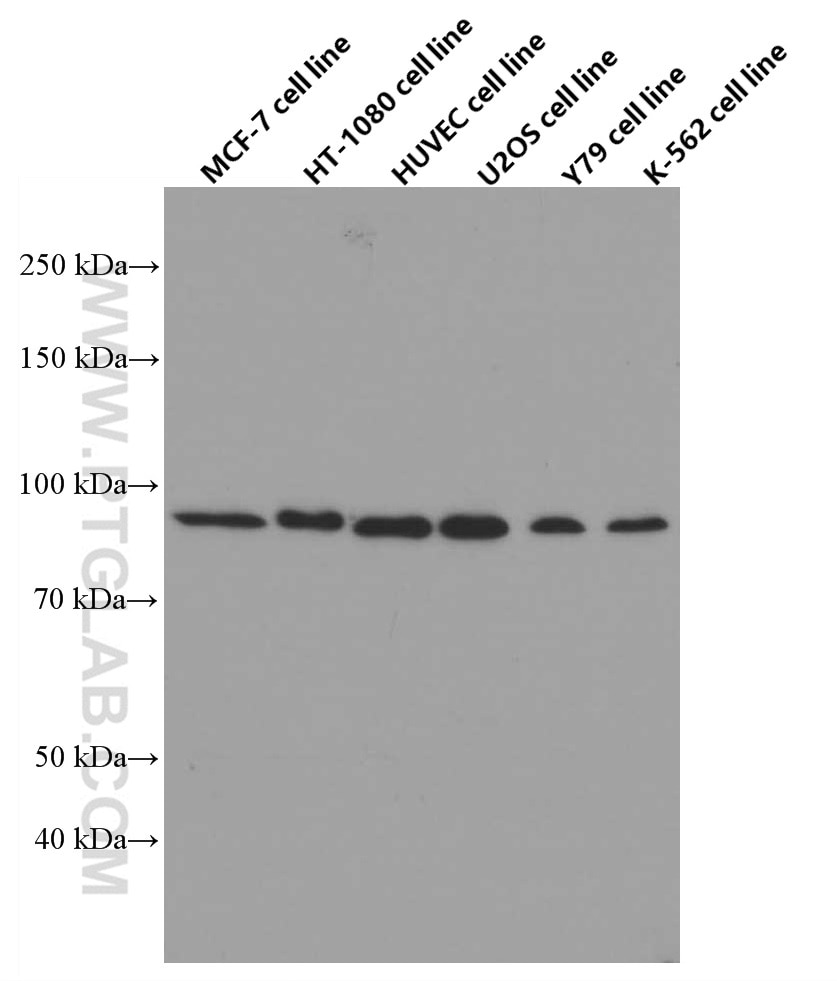
| Positive WB detected in | MCF-7 cells, HT-1080 cells, HUVEC cells, U2OS cells, Y79 cells, K-562 cells |
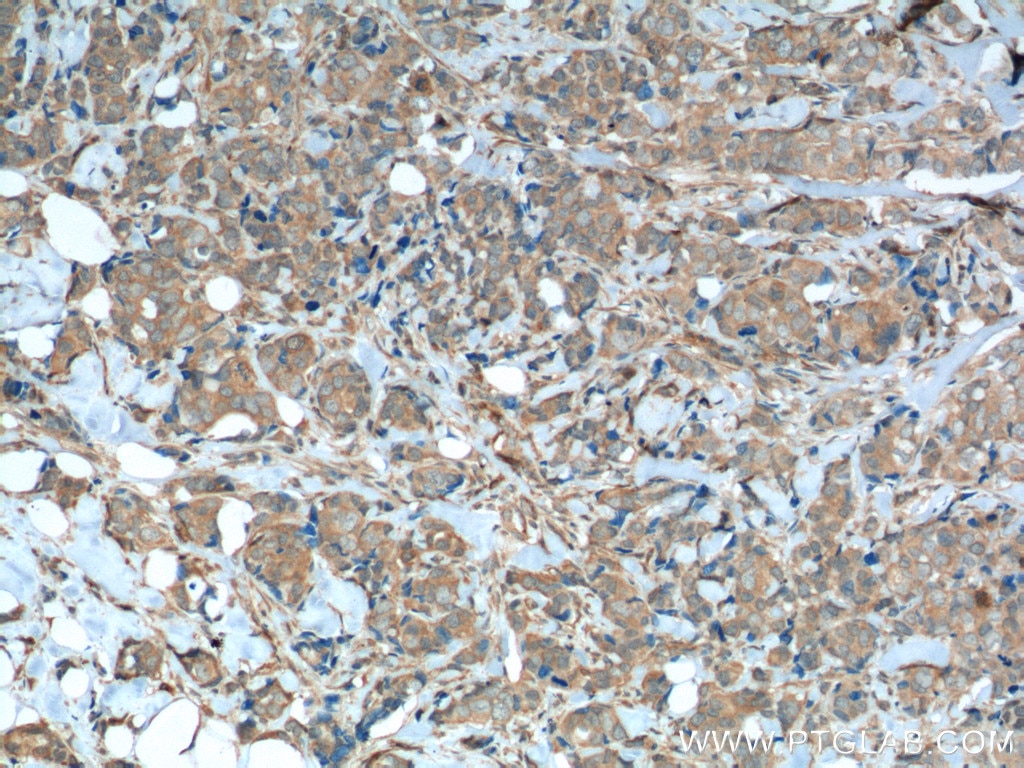
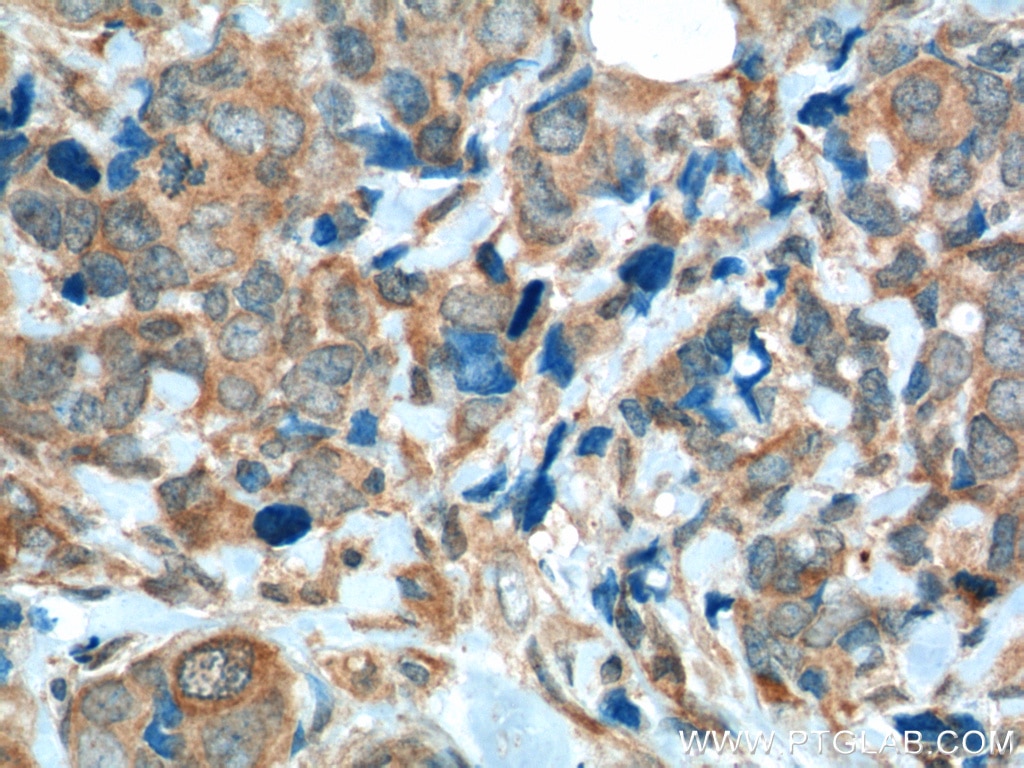
| Positive IHC detected in | human breast cancer tissue Note: suggested antigen retrieval with TE buffer pH 9.0; (*) Alternatively, antigen retrieval may be performed with citrate buffer pH 6.0 |
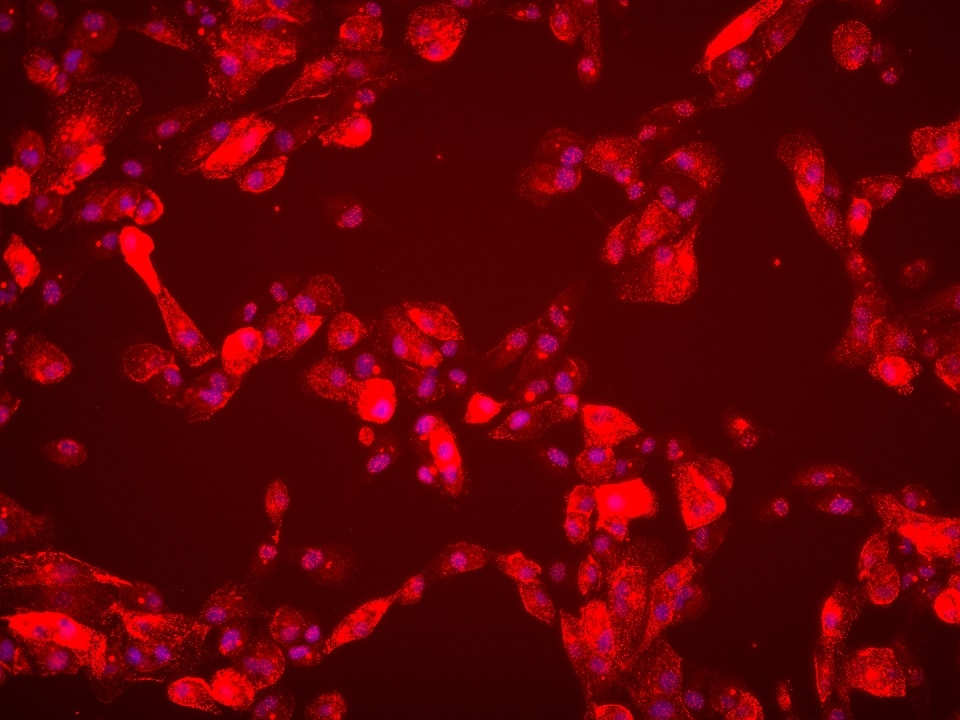
| Positive IF/ICC detected in | ACHN cells |
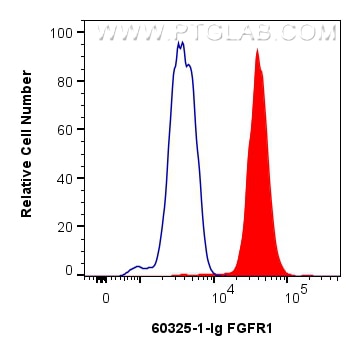
| Positive FC (Intra) detected in | K-562 cells |
Recommended dilution
| Application | Dilution |
|---|---|
| Western Blot (WB) | WB : 1:1000-1:3000 |
| Immunohistochemistry (IHC) | IHC : 1:50-1:500 |
| Immunofluorescence (IF)/ICC | IF/ICC : 1:500-1:2000 |
| Flow Cytometry (FC) (INTRA) | FC (INTRA) : 0.20 ug per 10^6 cells in a 100 µl suspension |
| It is recommended that this reagent should be titrated in each testing system to obtain optimal results. | |
| Sample-dependent, Check data in validation data gallery. | |
Published Applications
| WB | See 43 publications below |
| IHC | See 17 publications below |
| IF | See 5 publications below |
Product Information
60325-1-Ig targets FGFR1 in WB, IHC, IF/ICC, FC (Intra), ELISA applications and shows reactivity with human samples.
| Tested Reactivity | human |
| Cited Reactivity | human |
| Host / Isotype | Mouse / IgG2c |
| Class | Monoclonal |
| Type | Antibody |
| Immunogen |
CatNo: Ag3646 Product name: Recombinant human FGFR1 protein Source: e coli.-derived, PGEX-4T Tag: GST Domain: 471-821 aa of BC018128 Sequence: LPRDRLVLGKPLGEGCFGQVVLAEAIGLDKDKPNRVTKVAVKMLKSDATEKDLSDLISEMEMMKMIGKHKNIINLLGACTQDGPLYVIVEYASKGNLREYLQARRPPGLEYCYNPSHNPEEQLSSKDLVSCAYQVARGMEYLASKKCIHRDLAARNVLVTEDNVMKIADFGLARDIHHIDYYKKTTNGRLPVKWMAPEALFDRIYTHQSDVWSFGVLLWEIFTLGGSPYPGVPVEELFKLLKEGHRMDKPSNCTNELYMMMRDCWHAVPSQRPTFKQLVEDLDRIVALTSNQEYLDLSMPLDQYSPSFPDTRSSTCSSGEDSVFSHEPLPEEPCLPRHPAQLANGGLKRR 相同性解析による交差性が予測される生物種 |
| Full Name | fibroblast growth factor receptor 1 |
| Calculated molecular weight | 820 aa, 91 kDa |
| Observed molecular weight | 91 kDa |
| GenBank accession number | BC018128 |
| Gene Symbol | FGFR1 |
| Gene ID (NCBI) | 2260 |
| RRID | AB_2881435 |
| Conjugate | Unconjugated |
| Form | |
| Form | Liquid |
| Purification Method | Protein A purification |
| UNIPROT ID | P11362 |
| Storage Buffer | PBS with 0.02% sodium azide and 50% glycerol{{ptg:BufferTemp}}7.3 |
| Storage Conditions | Store at -20°C. Stable for one year after shipment. Aliquoting is unnecessary for -20oC storage. |
Background Information
Fibroblast growth factor receptor 1 (FGFR1) is a tyrosine-protein kinase that acts as a cell-surface receptor for fibroblast growth factors. FGFR1 has been implicated in diverse biological processes including embryonic development, cell proliferation, differentiation, migration, and tumorigenesis. Mutations in the FGFR1 gene have been associated with Pfeiffer syndrome, Jackson-Weiss syndrome, Antley-Bixler syndrome, osteoglophonic dysplasia, squamous cell lung cancer, and autosomal dominant Kallmann syndrome. Alternatively spliced variants that encode different protein isoforms have been described.
Protocols
| Product Specific Protocols | |
|---|---|
| FC protocol for FGFR1 antibody 60325-1-Ig | Download protocol |
| IF protocol for FGFR1 antibody 60325-1-Ig | Download protocol |
| IHC protocol for FGFR1 antibody 60325-1-Ig | Download protocol |
| WB protocol for FGFR1 antibody 60325-1-Ig | Download protocol |
| Standard Protocols | |
|---|---|
| Click here to view our Standard Protocols |
Publications
| Species | Application | Title |
|---|---|---|
Nat Commun FGF4-FGFR1 signaling promotes podocyte survival and glomerular function to ameliorate diabetic kidney disease in male mice | ||
Nat Commun Interactome analysis reveals that lncRNA HULC promotes aerobic glycolysis through LDHA and PKM2. | ||
J Adv Res Synergistic Antitumor Activity and Neuroprotective Effects of FGF1/FGFR Inhibition with Oxaliplatin Chemotherapy. | ||
Theranostics Blockade of phosphotyrosine pathways suggesting SH2 superbinder as a novel therapy for pulmonary fibrosis. | ||
Biomark Res Deep proteogenomic characterization of pancreatic solid pseudopapillary neoplasm reveals unique features distinct from other pancreatic tumors. |