
Validation Data Gallery
Tested Applications
Recommended dilution
| Application | Dilution |
|---|---|
| It is recommended that this reagent should be titrated in each testing system to obtain optimal results. | |
Product Information
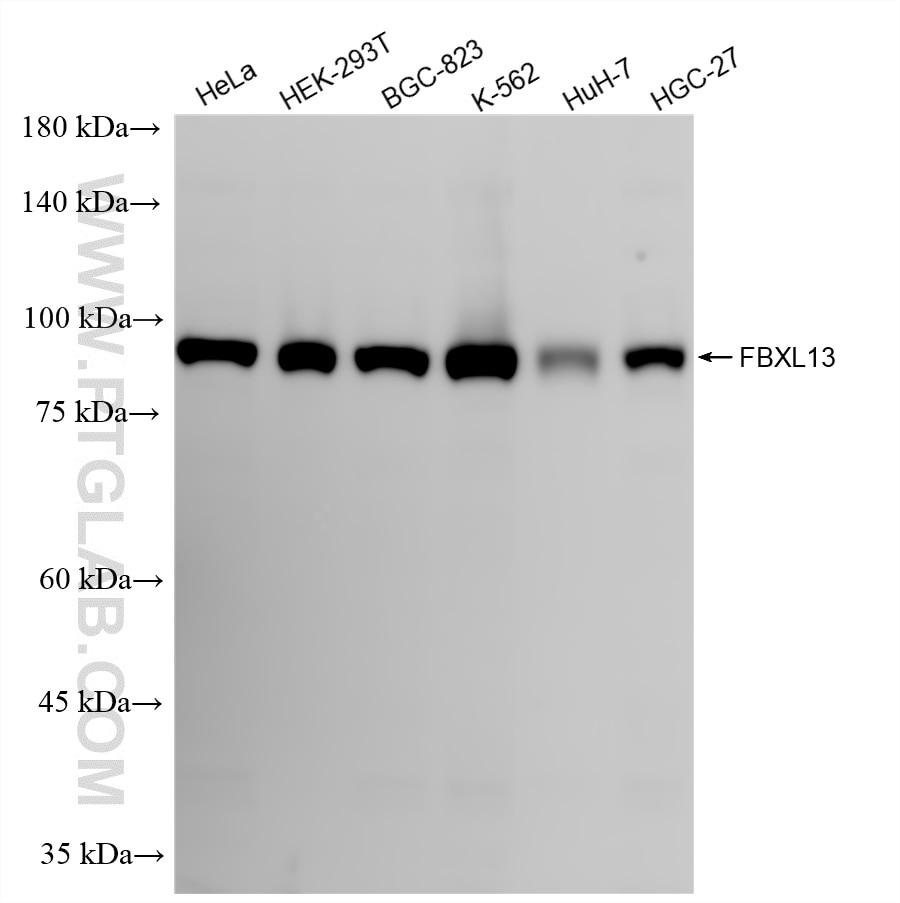
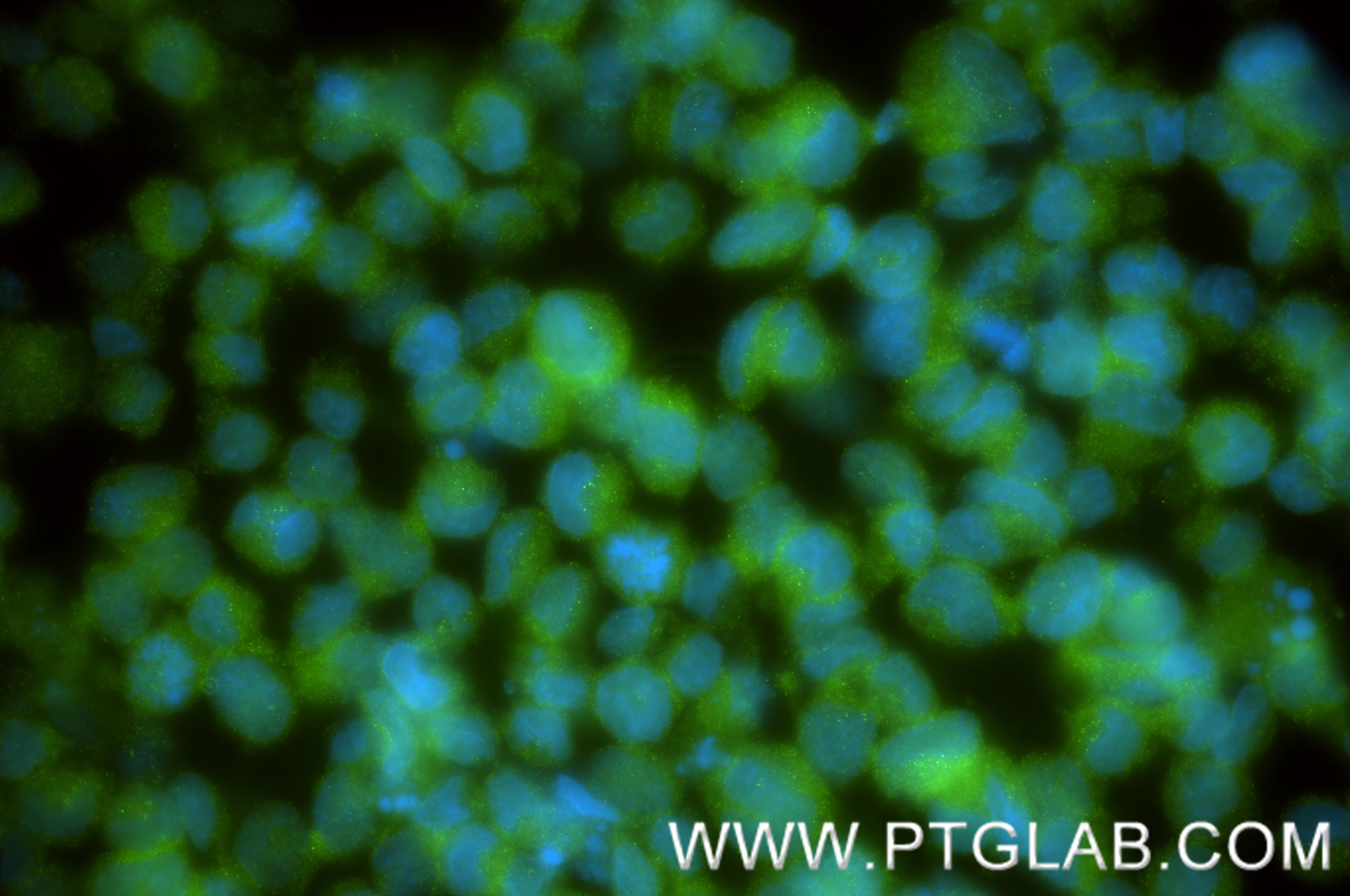
86857-1-PBS targets FBXL13 in WB, IF/ICC, Indirect ELISA applications and shows reactivity with human samples.
| Tested Reactivity | human |
| Host / Isotype | Rabbit / IgG |
| Class | Recombinant |
| Type | Antibody |
| Immunogen |
CatNo: Ag10903 Product name: Recombinant human FBXL13 protein Source: e coli.-derived, PGEX-4T Tag: GST Domain: 358-707 aa of BC031285 Sequence: NDMPTLTDNCVKALVEKCSRITSLVFTGAPHISDCTFRALSACKLRKIRFEGNKRVTDASFKFIDKNYPNLSHIYMADCKGITDSSLRSLSPLKQLTVLNLANCVRIGDMGLKQFLDGPASMRIRELNLSNCVRLSDASVMKLSERCPNLNYLSLRNCEHLTAQGIGYIVNIFSLVSIDLSGTDISNEAFCKSSLILEHLDVSYCSQLSDMIIKALAIYCINLTSLSIAGCPKITDSAMEMLSAKCHYLHILDISGCVLLTDQILEDLQIGCKQLRILKMQYCTNISKKAAQRMSSKVQQQEYNTNGPPRWFGYDREGNPVTELDNITSSKGALELTVKKSTYSSEDQAA 相同性解析による交差性が予測される生物種 |
| Full Name | F-box and leucine-rich repeat protein 13 |
| Calculated molecular weight | 707 aa, 81 kDa |
| Observed molecular weight | 84 kDa |
| GenBank accession number | BC031285 |
| Gene Symbol | FBXL13 |
| Gene ID (NCBI) | 222235 |
| RRID | AB_3745168 |
| Conjugate | Unconjugated |
| Form | |
| Form | Liquid |
| Purification Method | Protein A purification |
| UNIPROT ID | Q8NEE6 |
| Storage Buffer | PBS only{{ptg:BufferTemp}}7.3 |
| Storage Conditions | Store at -80°C. |
Background Information
FBXL13, also known as F-box and leucine-rich repeat protein 13, is a human protein-coding gene located on chromosome 7q22.1. It is a member of the F-box protein family, characterized by an approximately 40-amino acid F-box motif. FBXL13 is part of the SCF-type E3 ubiquitin ligase complex, which plays a role in protein ubiquitination and degradation. The gene has multiple isoforms, including 84 kDa, 81 kDa, 79 kDa, and 53 kDa variants. While its specific function within the complex is not fully understood, FBXL13 has been implicated in regulating centrosome homeostasis and cell migration by directing the proteolysis of CEP192. Additionally, it may play a role in circadian rhythms by ubiquitinating and mediating the degradation of cryptochrome proteins.