
Validation Data Gallery
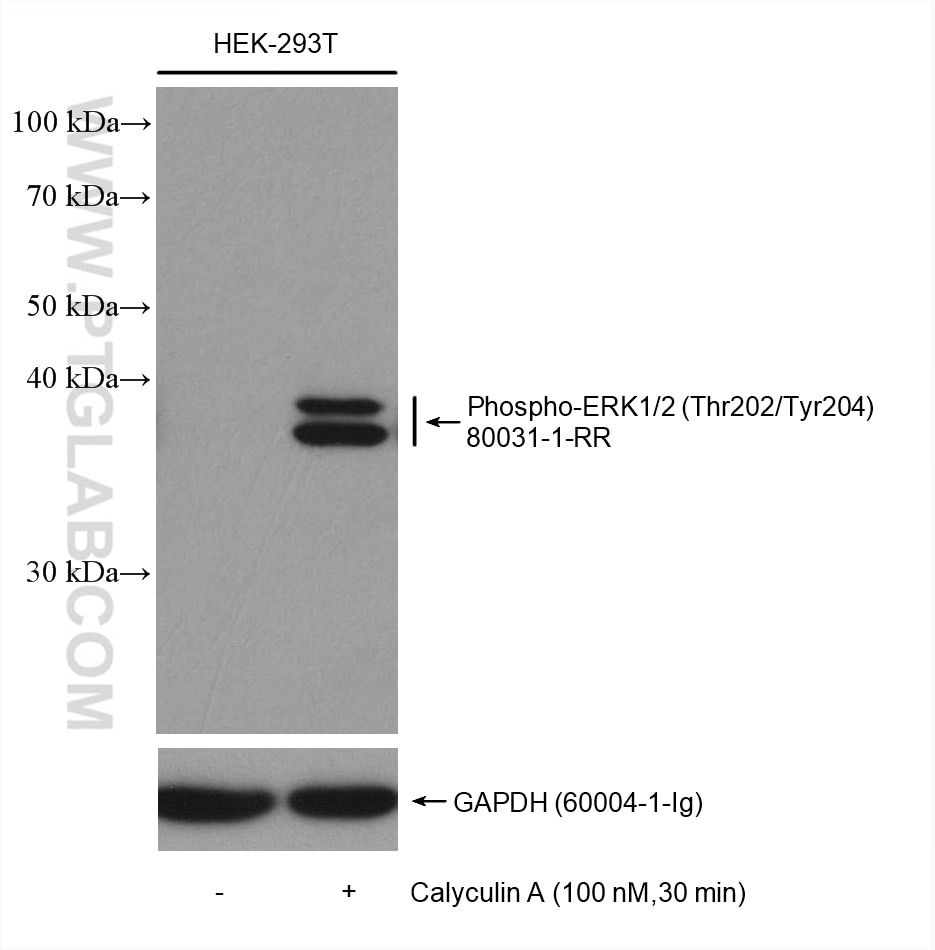
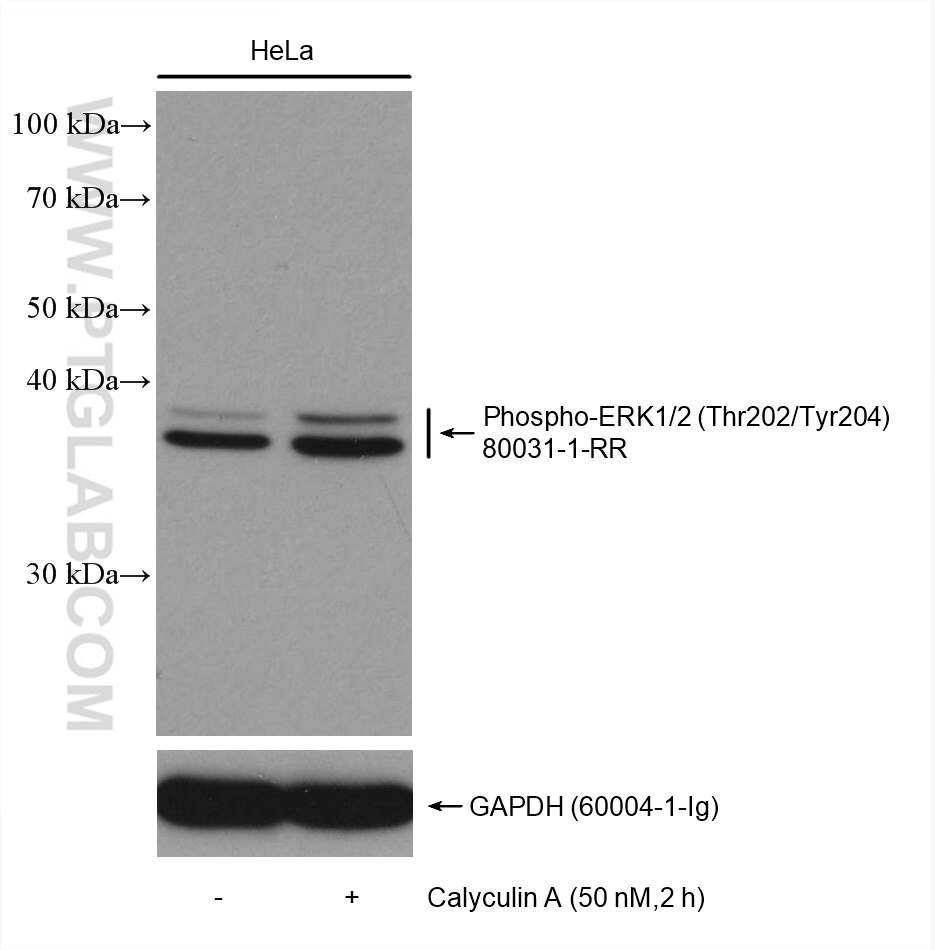
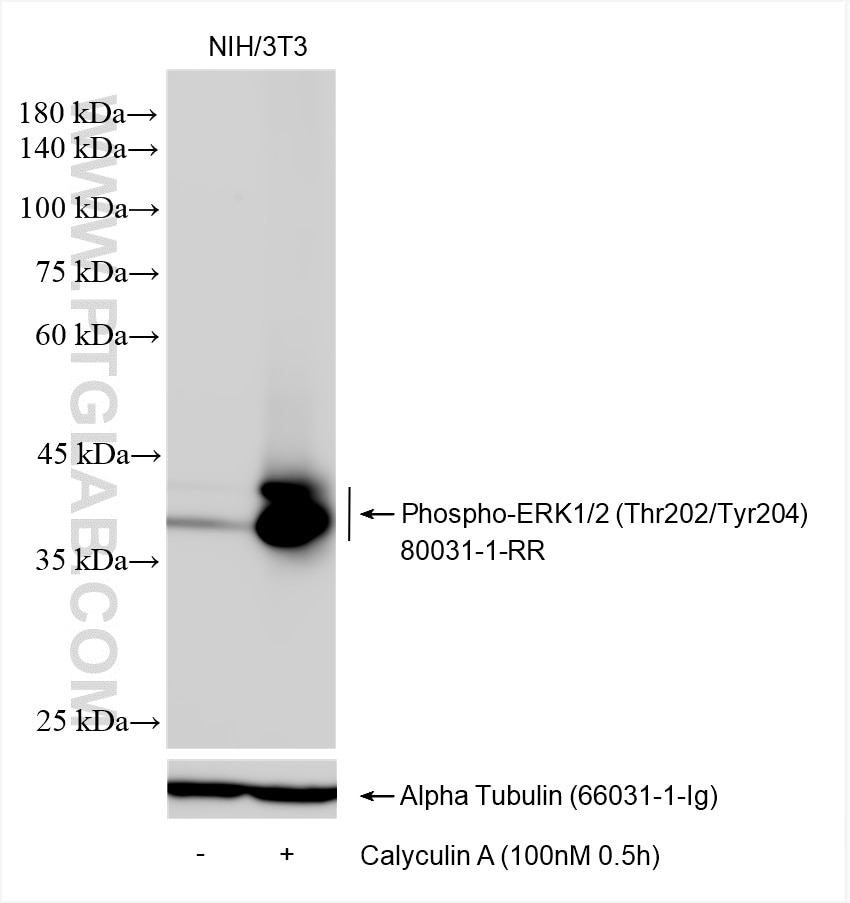
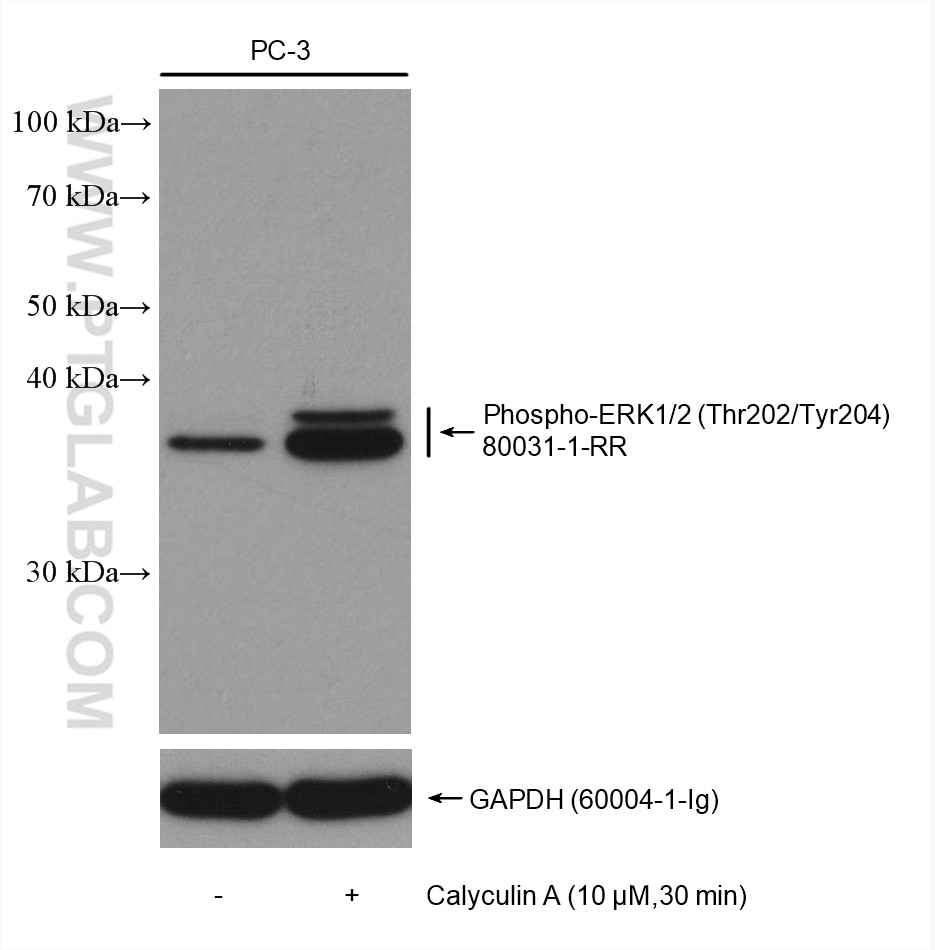
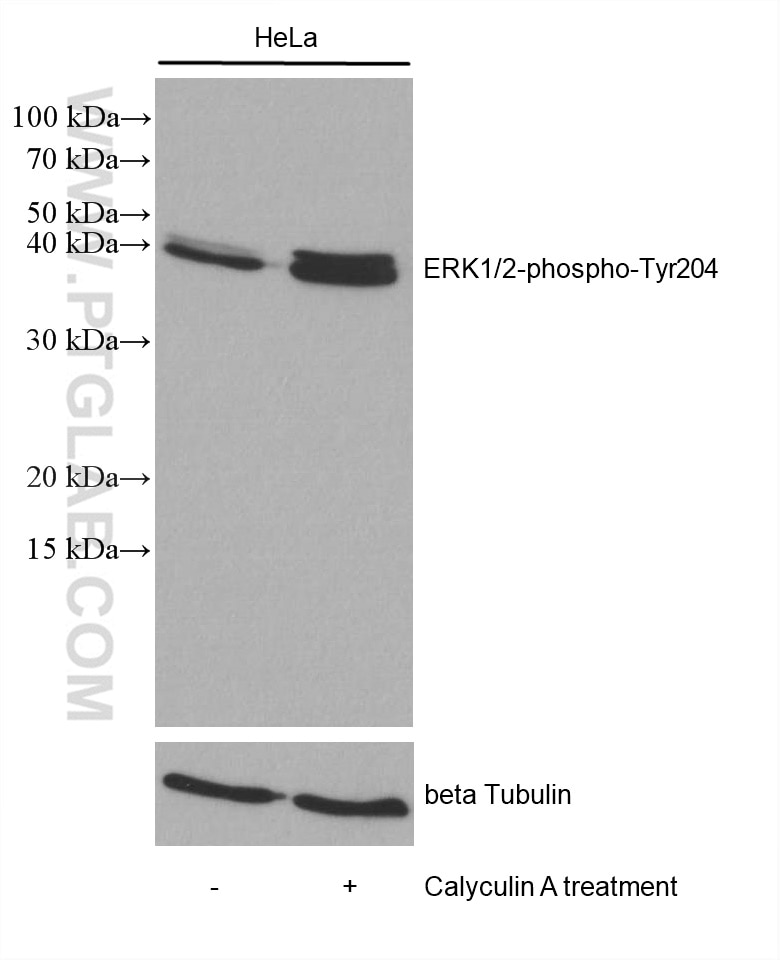
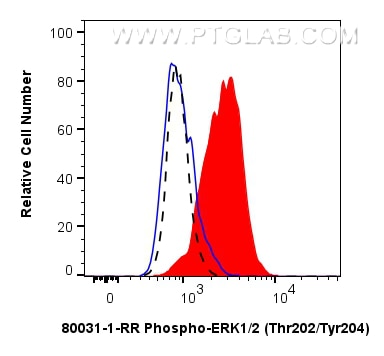
Tested Applications
| Positive WB detected in | HEK-293T cells, HeLa cells, Calyculin A treated NIH/3T3 cells, PC-3 cells, Calyculin A treated HeLa cells, Calyculin A treated PC-3 cells |
| Positive FC (Intra) detected in | Calyculin A treated HepG2 cells |
Recommended dilution
| Application | Dilution |
|---|---|
| Western Blot (WB) | WB : 1:2000-1:10000 |
| Flow Cytometry (FC) (INTRA) | FC (INTRA) : 0.06 ug per 10^6 cells in a 100 µl suspension |
| It is recommended that this reagent should be titrated in each testing system to obtain optimal results. | |
| Sample-dependent, Check data in validation data gallery. | |
Published Applications
| KD/KO | See 2 publications below |
| WB | See 84 publications below |
| IHC | See 3 publications below |
| IF | See 4 publications below |
Product Information
80031-1-RR targets Phospho-ERK1/2 (Thr202/Tyr204) in WB, IHC, IF, FC (Intra), ELISA applications and shows reactivity with human, mouse samples.
| Tested Reactivity | human, mouse |
| Cited Reactivity | human, mouse, rat, pig |
| Host / Isotype | Rabbit / IgG |
| Class | Recombinant |
| Type | Antibody |
| Immunogen |
Peptide 相同性解析による交差性が予測される生物種 |
| Full Name | mitogen-activated protein kinase 3 |
| Calculated molecular weight | 38-43 kDa |
| Observed molecular weight | 38-40 kDa |
| GenBank accession number | NM_002746 |
| Gene Symbol | ERK1 |
| Gene ID (NCBI) | 5595 |
| RRID | AB_2918858 |
| Conjugate | Unconjugated |
| Form | |
| Form | Liquid |
| Purification Method | Protein A purification |
| UNIPROT ID | P27361 |
| Storage Buffer | PBS with 0.02% sodium azide and 50% glycerol{{ptg:BufferTemp}}7.3 |
| Storage Conditions | Store at -20°C. Stable for one year after shipment. Aliquoting is unnecessary for -20oC storage. |
Background Information
Serine/threonine kinase which acts as an essential component of the MAP kinase signal transduction pathway. MAPK1/ERK2 and MAPK3/ERK1 are the 2 MAPKs which play an important role in the MAPK/ERK cascade. They participate also in a signaling cascade initiated by activated KIT and KITLG/SCF. Depending on the cellular context, the MAPK/ERK cascade mediates diverse biological functions such as cell growth, adhesion, survival and differentiation through the regulation of transcription, translation, cytoskeletal rearrangements. The MAPK/ERK cascade plays also a role in initiation and regulation of meiosis, mitosis, and postmitotic functions in differentiated cells by phosphorylating a number of transcription factors. MEK1 and MEK2 activate p44 and p42 through phosphorylation of activation loop residues Thr202/Tyr204 and Thr185/Tyr187, respectively. Several downstream targets of p44/42 have been identified, including p90RSK and the transcription factor Elk-1. This antibody simultaneously recognizes the phosphorylation of ERK1 at Thr202 and Tyr204, as well as the phosphorylation of ERK2 at Thr185 and Tyr187.
Protocols
| Product Specific Protocols | |
|---|---|
| WB protocol for Phospho-ERK1/2 (Thr202/Tyr204) antibody 80031-1-RR | Download protocol |
| Standard Protocols | |
|---|---|
| Click here to view our Standard Protocols |
Publications
| Species | Application | Title |
|---|---|---|
Signal Transduct Target Ther Chimeric antigen receptor with novel intracellular modules improves antitumor performance of T cells | ||
Mol Cancer Hsa_circ_0125356 promotes gemcitabine resistance by modulating WNT canonical and non-canonical pathways via miR-582-5p/FGF9 axis in non-small cell lung cancer | ||
Mil Med Res D-mannose alleviates intervertebral disc degeneration through glutamine metabolism | ||
Bioact Mater Bioengineered titanium implants functionalized with aptamer-valproic acid conjugates orchestrate macrophage programming and mesenchymal stem cell homing for improved osseointegration. | ||
Autophagy Secretory autophagy mediates SLC16A3/MCT4-dependent lactate secretion to drive metastatic progression in triple-negative breast cancer. | ||
J Adv Res Integrated stress response activation induced by usnic acid alleviates BCL-2 inhibitor ABT-199 resistance in acute myeloid leukemia |