
Product Information
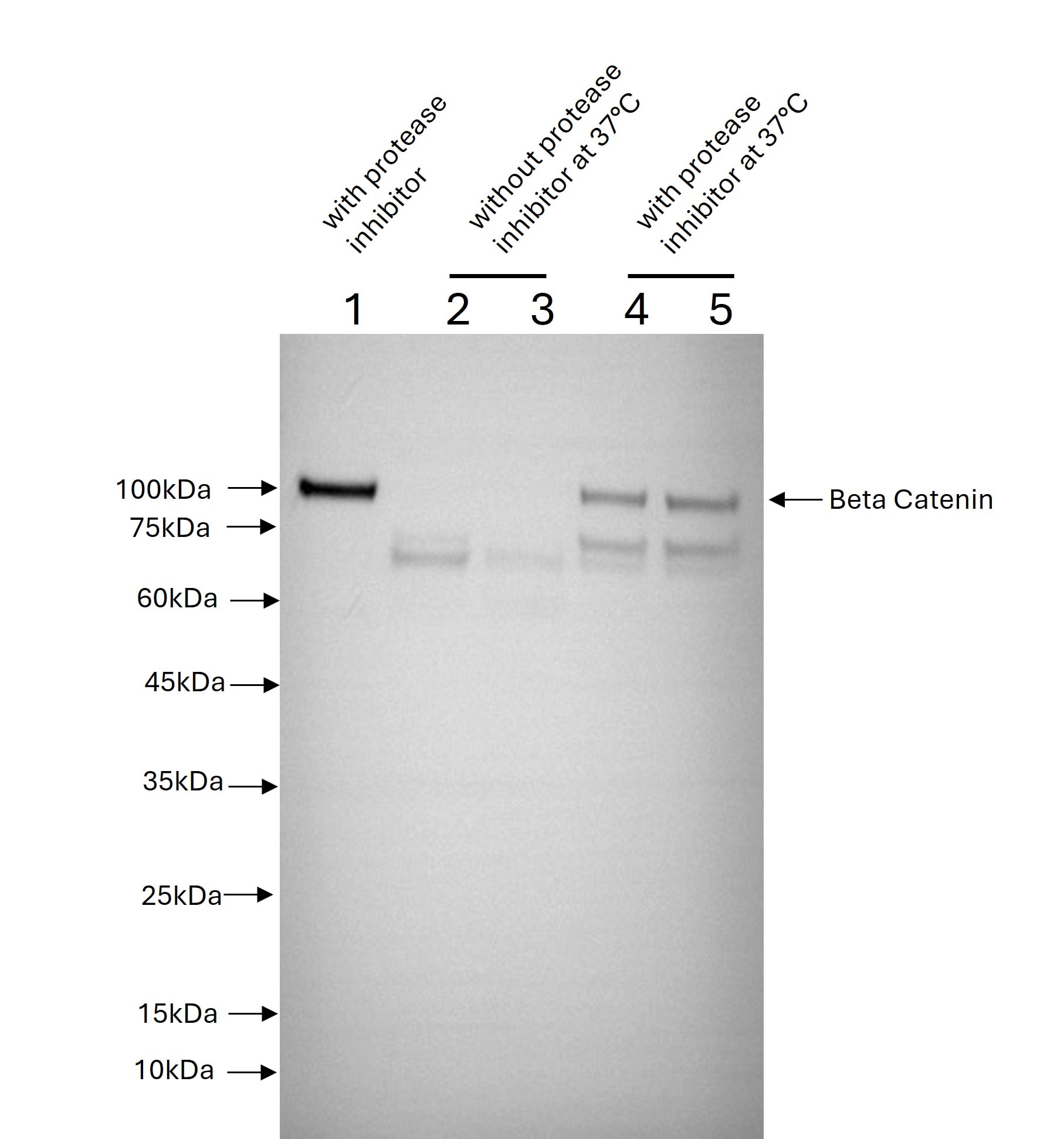
Proteintech's Protease Inhibitor Cocktail contains a mixture of protease inhibitors including PMSF, E-64, Aprotinin, Bestatin, Leuptin, and Pepstatin. It mainly inhibits aminopeptidase, cysteine and serine proteases, serine/threonine and tyrosine proteases, aspartate proteases, thermophils, and other metalloendopeptidases. The cocktail can effectively prevent protein degredation during extraction or lysis of primary cells, mammalian cultured cells, animal tissues, plant tissues, yeast, or bacteria. It can be used for multiple applications including protein purification, western blotting, immunoprecipitation, immunofluoresence, immunohistochemistry and other studies.
Components
It contains a mixture of protease inhibitors including PMSF, E-64, Aprotinin, Bestatin, Leuptin, and Pepstatin.
Storage
Store at -20°C for up to one year.
Usage
Dissolve well at room temperature and add to the lysate or sample solution at a dilution ratio of 1:100 or according to the needs of the experiment.
Notes
1. The protease content can differ across samples. Therefore, the amount of protease inhibitor cocktail can be adjusted according to the experimental situation.
2. This product is a highly concentrated solution. A small amount of precipitation may occur and, therefore, needs to be fully dissolved before use.
3. PMSF is very unstable in aqueous solution, so the cocktail should be added right before use.
4. For your safety and health, please wear a lab coat and disposable gloves.
Cited in Article as
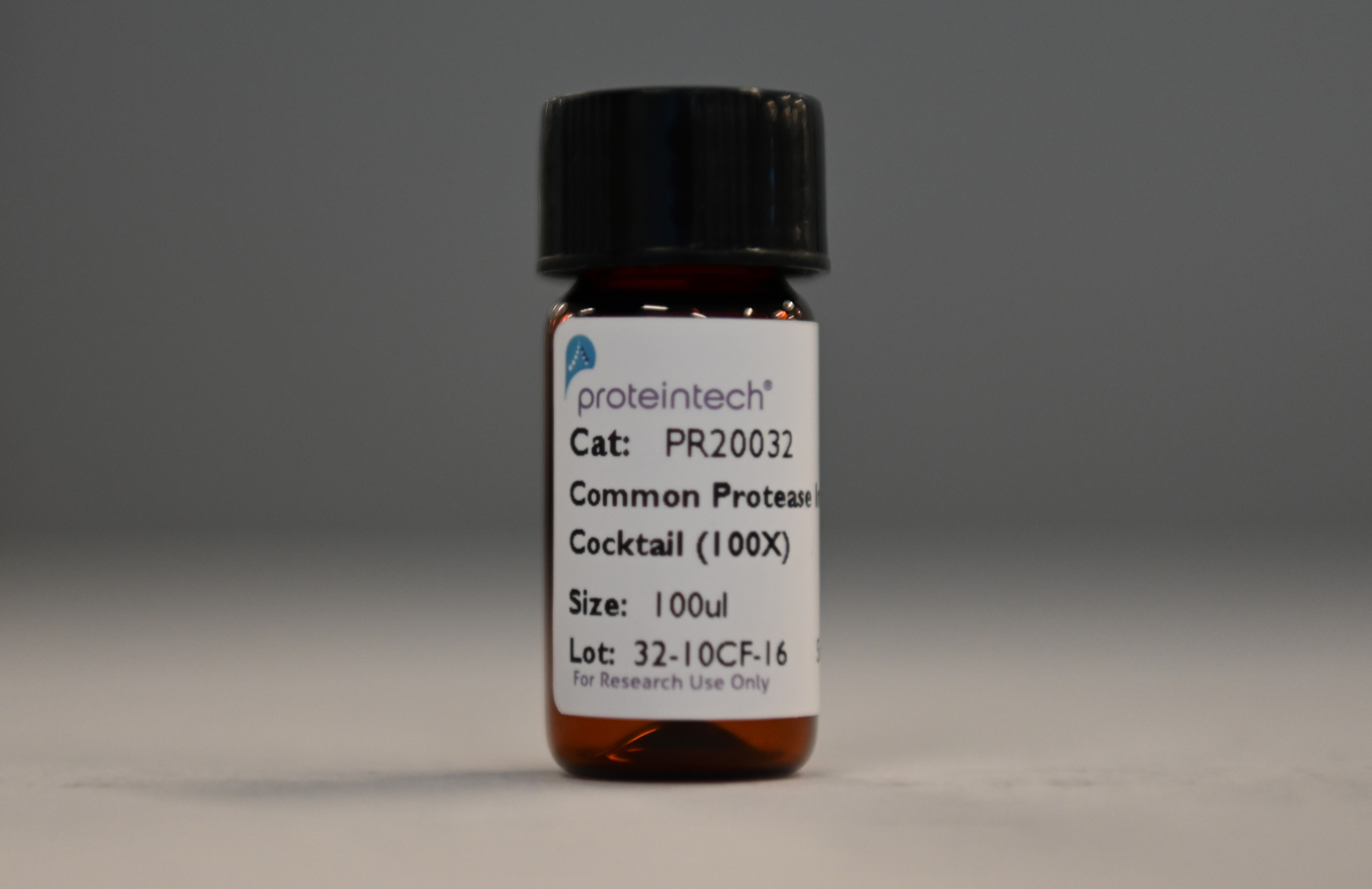
pr20032, Common Protease Inhibitor Cocktail (100X), Proteintech, IL, USA
Documentation
| SDS |
|---|
| Common Protease Inhibitor Cocktail (100X) |
| Datasheet |
|---|
| Common Protease Inhibitor Cocktail (100X) Datasheet |
Publications
| Application | Title |
|---|---|
Cancer Cell Mapping cell type-resolved transcriptomic profiles to patient survival in pancreatic cancer. | |
Autophagy The PI4K2A-OSBPL6/ORP6-PS axis mediates lysosomal membrane repair to restore neuronal lipid homeostasis and promote neuronal survival after spinal cord injury. | |
J Adv Res SUMOylation modulates the dual functions of Krüppel homolog 1 in transcriptional regulation of Broad-Complex expression | |
J Nanobiotechnology Poria cocos-derived exosome-like nanoparticles ameliorate lymphedema by reprogramming fibroblast metabolism via enhanced TCA cycle flux. | |
Adv Sci (Weinh) TRIM56 Modulates YBX1 Degradation to Ameliorate ZBP1-Mediated Neuronal PANoptosis in Spinal Cord Injury | |
Adv Sci (Weinh) Extracellular Vesicles Derived from Ligament Tissue Transport Interleukin-17A to Mediate Ligament-To-Bone Crosstalk in Ankylosing Spondylitis |