
Validation Data Gallery
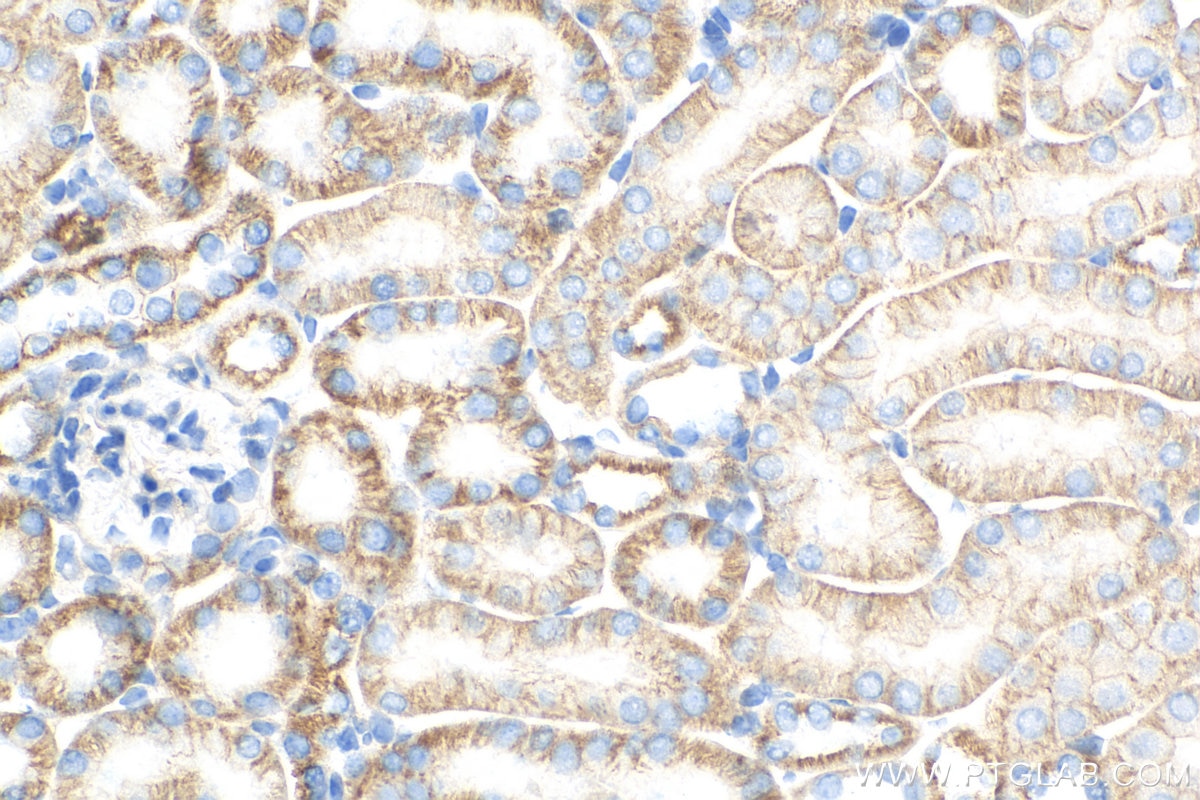
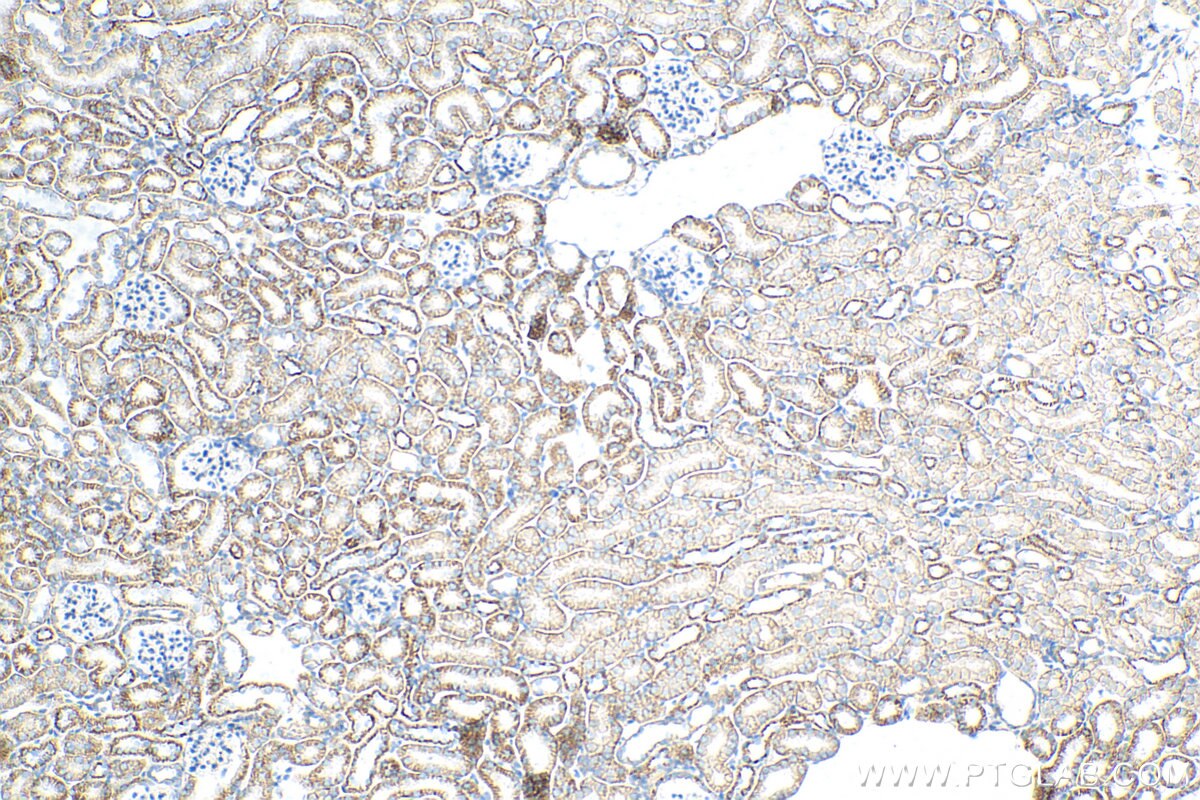
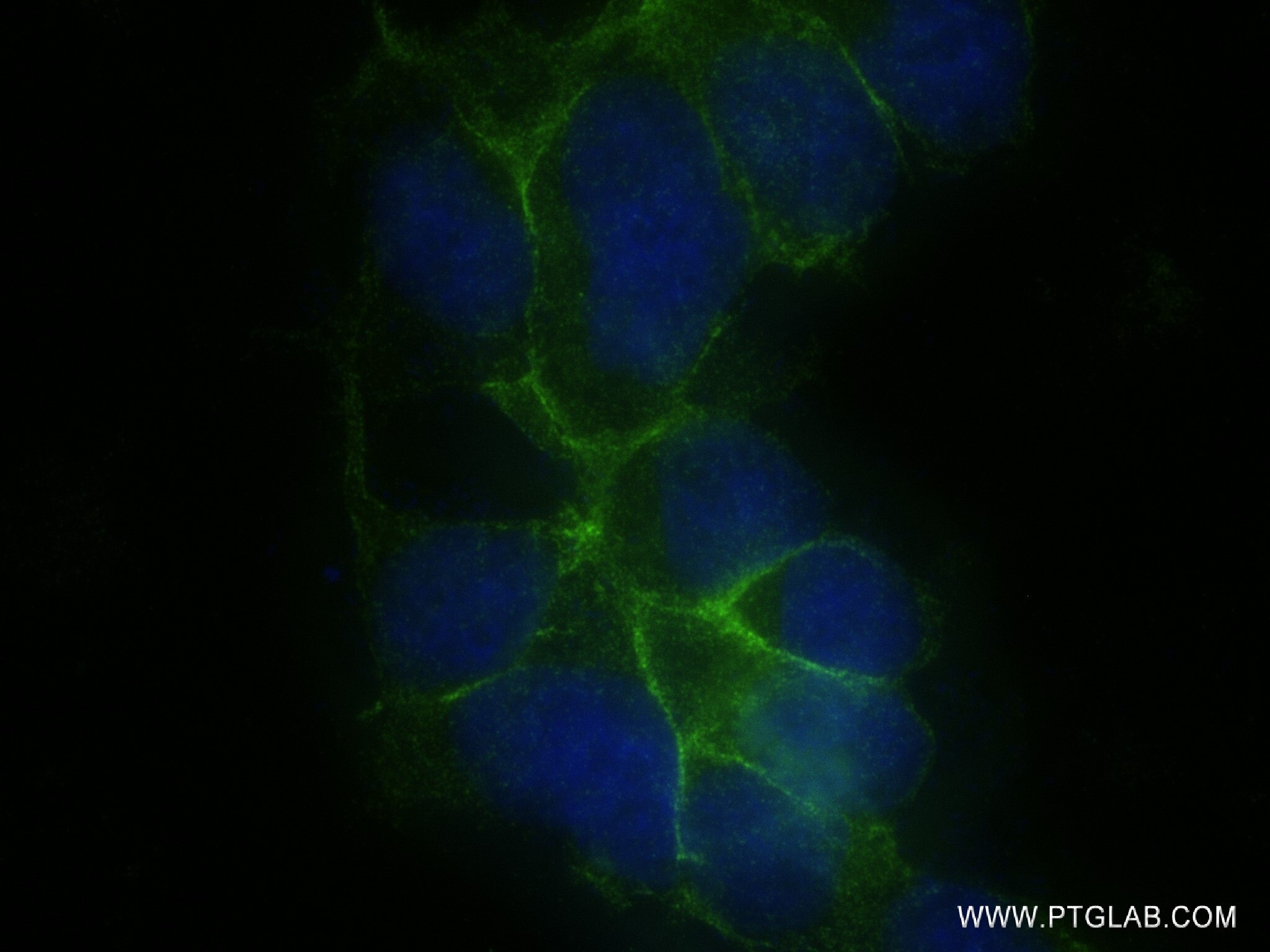

Tested Applications
| Positive IF/ICC detected in | HEK-293 cells |
Recommended dilution
| Application | Dilution |
|---|---|
| Immunofluorescence (IF)/ICC | IF/ICC : 1:125-1:500 |
| It is recommended that this reagent should be titrated in each testing system to obtain optimal results. | |
Product Information
82954-1-PBS targets Claudin 16 in IHC, IF/ICC, Indirect ELISA applications and shows reactivity with human, mouse samples.
| Tested Reactivity | human, mouse |
| Host / Isotype | Rabbit / IgG |
| Class | Recombinant |
| Type | Antibody |
| Immunogen |
CatNo: Ag26531 Product name: Recombinant human CLDN16 protein Source: e coli.-derived, PGEX-4T Tag: GST Domain: 1-73 aa of BC069682 Sequence: MTSRTPLLVTACLYYSYCNSRHLQQGVRKSKRPVFSHCQVPETQKTDTRHLSGARAGVCPCCHPDGLLATMRD 相同性解析による交差性が予測される生物種 |
| Full Name | claudin 16 |
| Calculated molecular weight | 305 aa, 34 kDa |
| GenBank accession number | BC069682 |
| Gene Symbol | CLDN16 |
| Gene ID (NCBI) | 10686 |
| RRID | AB_3670698 |
| Conjugate | Unconjugated |
| Form | |
| Form | Liquid |
| Purification Method | Protein A purification |
| UNIPROT ID | Q9Y5I7 |
| Storage Buffer | PBS only{{ptg:BufferTemp}}7.3 |
| Storage Conditions | Store at -80°C. |
Background Information
Claudins are a family of proteins that are the most important components of the tight junctions, where they establish the paracellular barrier that controls the flow of molecules in the intercellular space between the cells of an epithelium. They have similar structures with four transmembrane domains, with the N-terminus and the C-terminus in the cytoplasm. Claudin-16 is primarily found in the kidneys and is responsible for regulating the reabsorption of magnesium and calcium ions. Mutations in the Claudin-16 gene can lead to a rare genetic disorder called familial hypomagnesemia with hypercalciuria and nephrocalcinosis (FHHNC).
Protocols
| Product Specific Protocols | |
|---|---|
| IF protocol for Claudin 16 antibody 82954-1-PBS | Download protocol |
| Standard Protocols | |
|---|---|
| Click here to view our Standard Protocols |