
Validation Data Gallery
Tested Applications
Recommended dilution
| Application | Dilution |
|---|---|
| It is recommended that this reagent should be titrated in each testing system to obtain optimal results. | |
Product Information
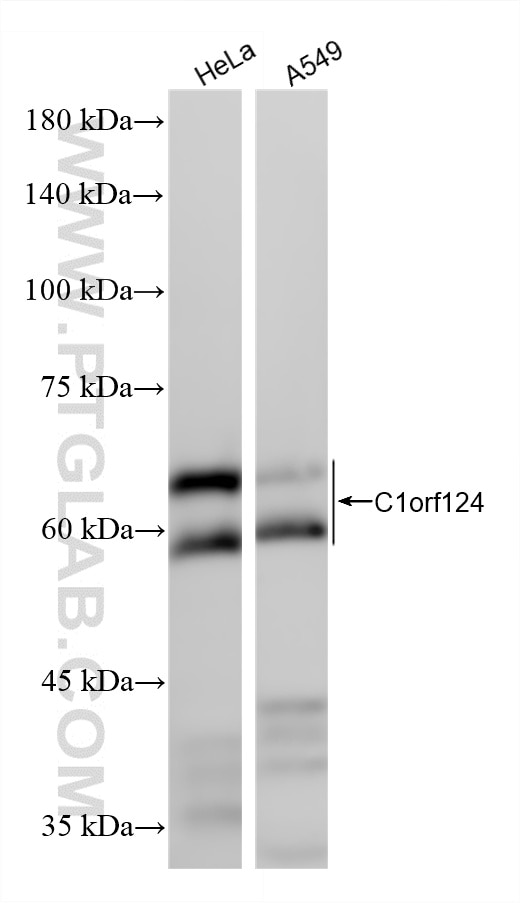
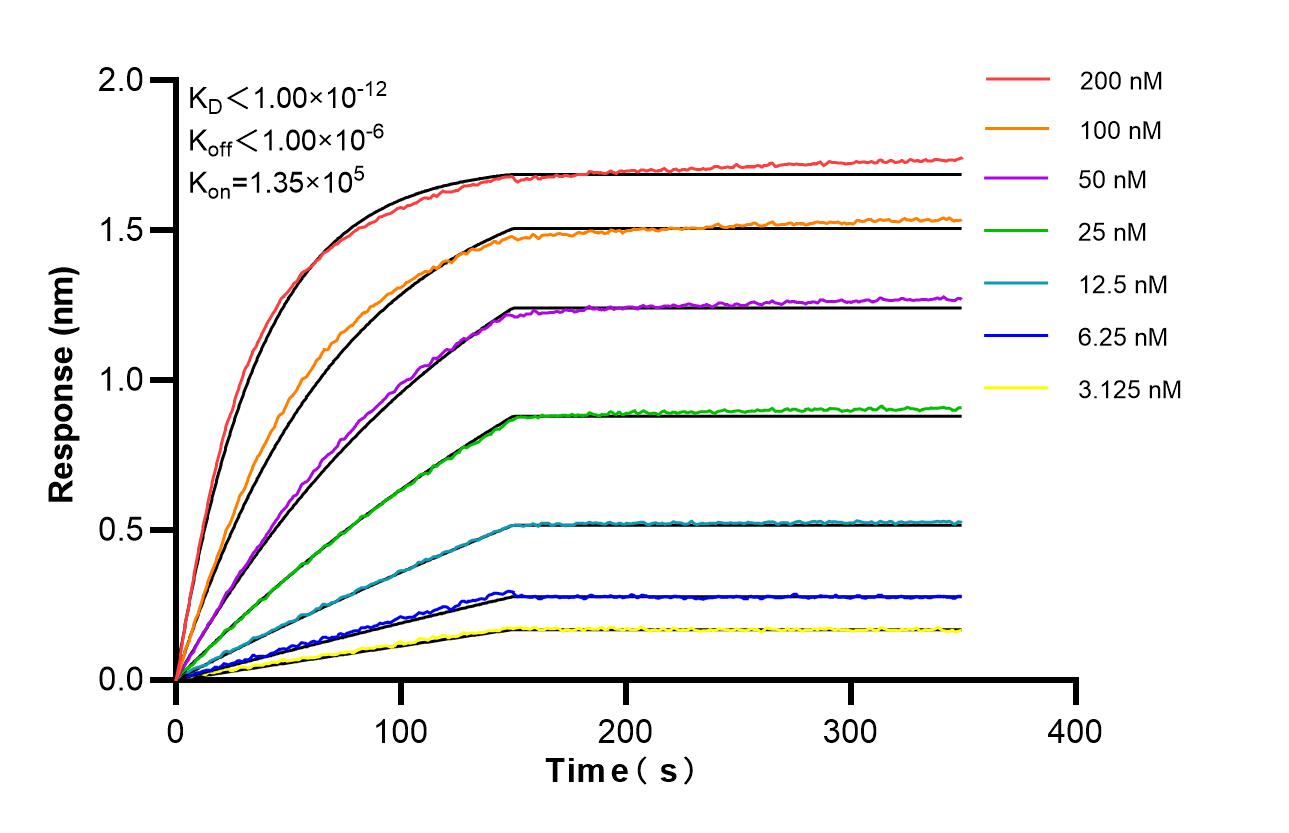
86895-1-PBS targets C1orf124 in WB, Indirect ELISA applications and shows reactivity with human samples.
| Tested Reactivity | human |
| Host / Isotype | Rabbit / IgG |
| Class | Recombinant |
| Type | Antibody |
| Immunogen |
CatNo: Ag20586 Product name: Recombinant human C1orf124 protein Source: e coli.-derived, PGEX-4T Tag: GST Domain: 1-243 aa of BC015740 Sequence: MDDDLMLALRLQEEWNLQEAERDHAQESLSLVDASWELVDPTPDLQALFVQFNDQFFWGQLEAVEVKWSVRMTLCAGICSYEGKGGMCSIRLSEPLLKLRPRKDLVETLLHEMIHAYLFVTNNDKDREGHGPEFCKHMHRINSLTGANITVYHTFHDEVDEYRRHWWRCNGPCQHRPPYYGYVKRATNREPSAHDYWWAEHQKTCGGTYIKIKEPENYSKKGKGKAKLGKEPVLAAENKGTFV 相同性解析による交差性が予測される生物種 |
| Full Name | DNA-dependent metalloprotease SPRTN |
| Calculated molecular weight | 489 aa, 55 kDa |
| Observed molecular weight | 55/65 kDa |
| GenBank accession number | BC015740 |
| Gene Symbol | Spartan |
| Gene ID (NCBI) | 83932 |
| RRID | AB_3745194 |
| Conjugate | Unconjugated |
| Form | |
| Form | Liquid |
| Purification Method | Protein A purification |
| UNIPROT ID | Q9H040 |
| Storage Buffer | PBS only{{ptg:BufferTemp}}7.3 |
| Storage Conditions | Store at -80°C. |
Background Information
Spartan (Protein with SprT-like domain at the N terminus), also known as DVC1 or C1orf124, is a replication-coupled DNA-dependent metalloprotease that cleaves proteins cross-linked to DNA to promote DPC repair (PMID: 38600235). Spartan protease activity is stimulated by DNA binding, while posttranslational modification of Spartan governs both its protease activity and recruitment to the DPC on chromatin (PMID: 27871366). The regulation of Spartan includes a ubiquitin switch (where deubiquitination activates its proteolytic activity), and acetylation and phosphorylation switches (which facilitate DNA binding). The calculated molecular weight of Spartan is 55 kDa, while the 65-kDa band could be due to posttranslational modification (PMID: 33567341, 31316063).