
Validation Data Gallery
Tested Applications
Recommended dilution
| Application | Dilution |
|---|---|
| It is recommended that this reagent should be titrated in each testing system to obtain optimal results. | |
Product Information
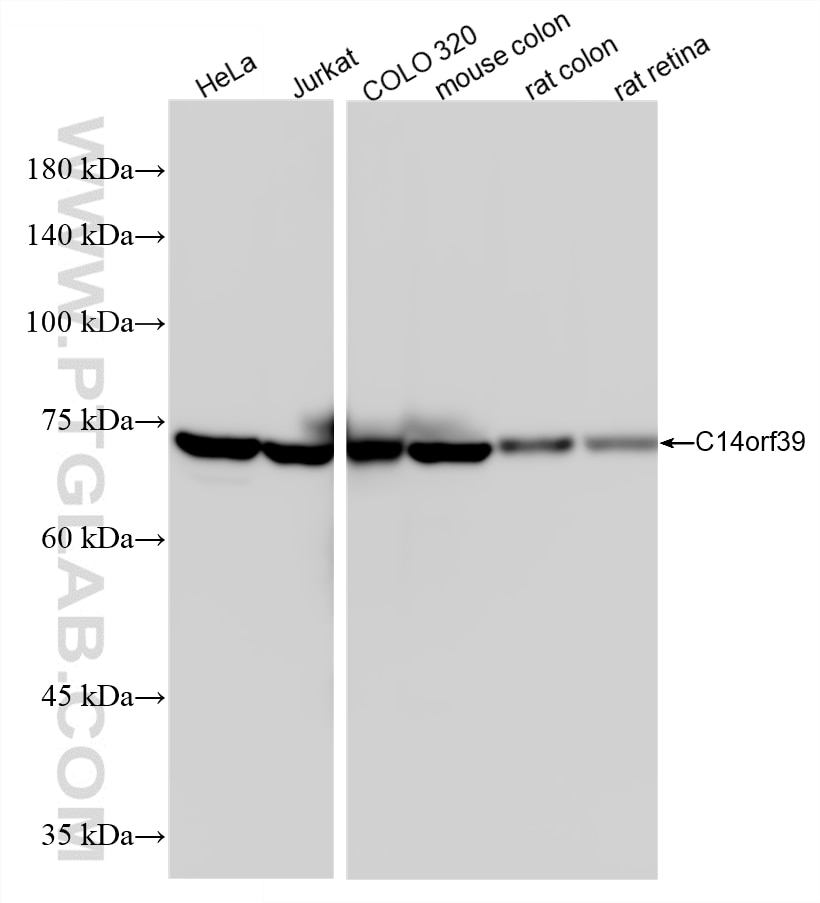
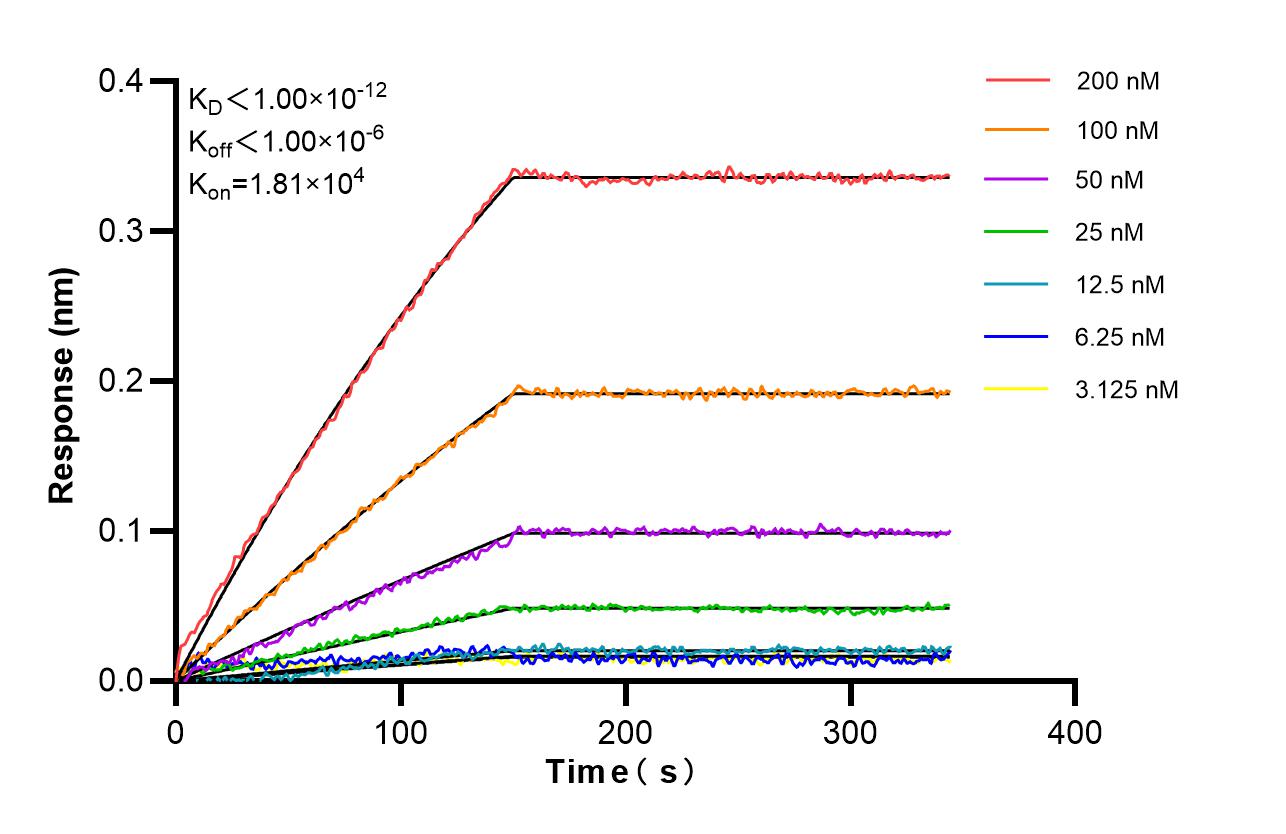
87498-1-PBS targets C14orf39 in WB, Indirect ELISA applications and shows reactivity with human, mouse, rat samples.
| Tested Reactivity | human, mouse, rat |
| Host / Isotype | Rabbit / IgG |
| Class | Recombinant |
| Type | Antibody |
| Immunogen |
CatNo: Ag33548 Product name: Recombinant human C14orf39 protein Source: e coli.-derived, PGEX-4T Tag: GST Domain: 200-420 aa of BC125070 Sequence: SNLTKSSSELKKEVDEMEIEINYLNQQISRHNETKALSETLEEKNKNTENRKELKERIFGKDEHVLTLNKTQSSQLFLPYESQKLVRPIKMHSSEPRVADIKEESSAKQSKLANIDFRQKENDTQIFNDSAVDNHSKCSHITTITSSQKFMQVRLLTPQKQSNSNQWSEKGDKDAEYGDKGTVRQVRESKCTSQAIYTEHFGKSIENDSDEVEERAENFPR 相同性解析による交差性が予測される生物種 |
| Full Name | chromosome 14 open reading frame 39 |
| Calculated molecular weight | 587 aa, 68 kDa |
| Observed molecular weight | 70 kDa |
| GenBank accession number | BC125070 |
| Gene Symbol | C14orf39 |
| Gene ID (NCBI) | 317761 |
| RRID | AB_3745583 |
| Conjugate | Unconjugated |
| Form | |
| Form | Liquid |
| Purification Method | Protein A purification |
| UNIPROT ID | Q8N1H7 |
| Storage Buffer | PBS only{{ptg:BufferTemp}}7.3 |
| Storage Conditions | Store at -80°C. |
Background Information
SIX6OS1 (SIX6 Opposite Strand 1) is a nuclear protein that plays a core role in the process of meiosis. It is a key scaffold protein that constitutes the central element of the synaptonemal complex, directly interacting with proteins such as SYCE1 to ensure the proper pairing, synapsis, and genetic recombination of homologous chromosomes. Its function is crucial for the formation of stable chiasmata, which are the basis for genetic diversity and the accurate segregation of chromosomes. Mutations in the SIX6OS1 gene can disrupt this process, leading to errors in chromosome separation and are one of the important genetic factors causing primary ovarian insufficiency in humans and non-obstructive azoospermia in males, directly associated with reproductive disorders.