
Validation Data Gallery
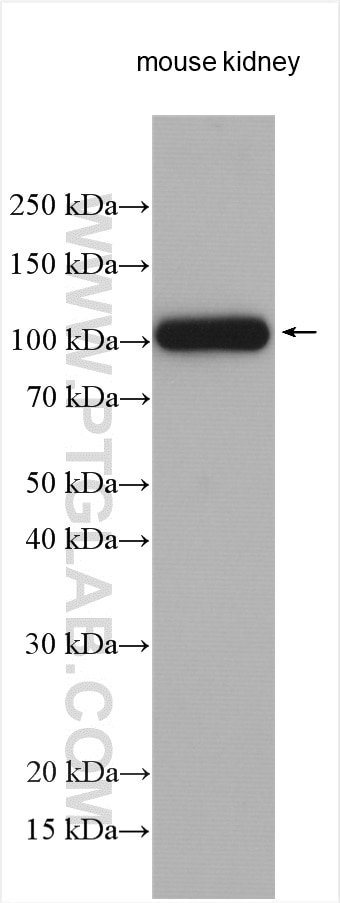
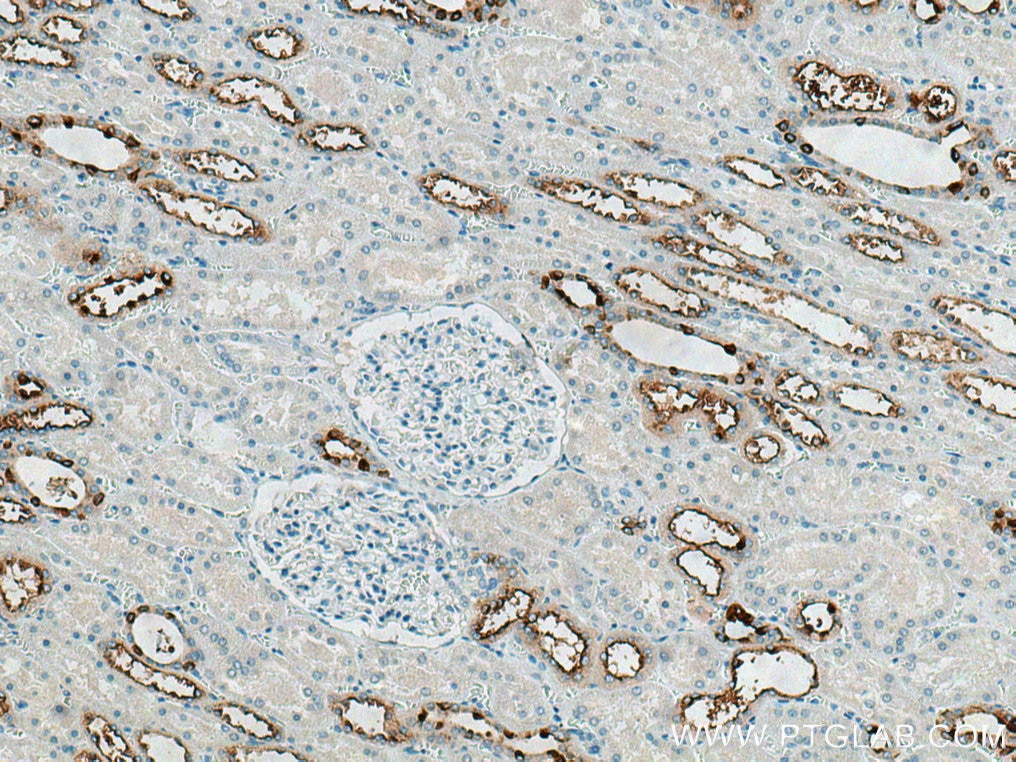
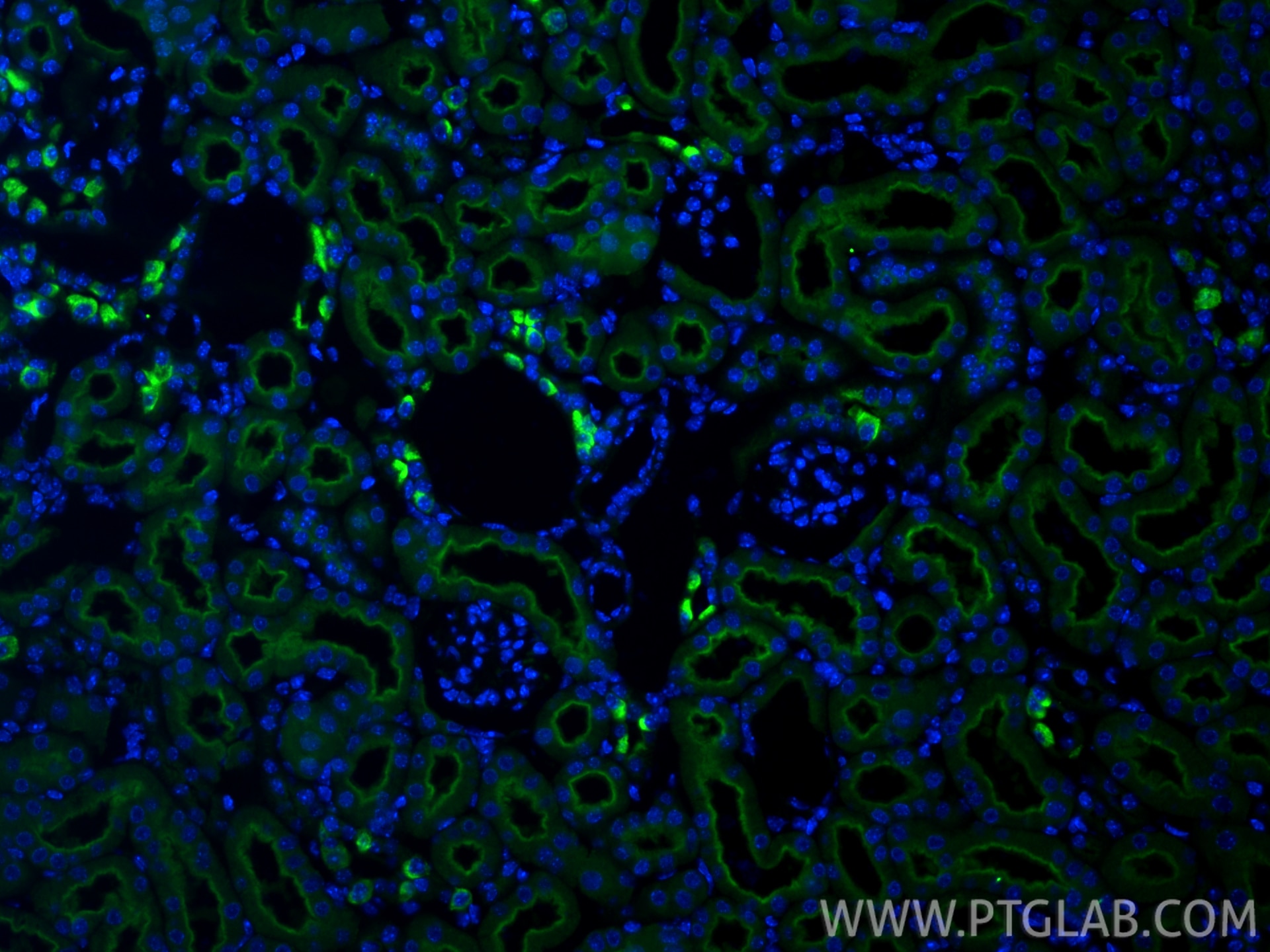
Tested Applications
Recommended dilution
| Application | Dilution |
|---|---|
| It is recommended that this reagent should be titrated in each testing system to obtain optimal results. | |
Product Information
21570-1-PBS targets ATP6V0A4 in WB, IHC, IF-P, Indirect ELISA applications and shows reactivity with human, mouse samples.
| Tested Reactivity | human, mouse |
| Host / Isotype | Rabbit / IgG |
| Class | Polyclonal |
| Type | Antibody |
| Immunogen |
CatNo: Ag16095 Product name: Recombinant human ATP6V0A4 protein Source: e coli.-derived, PGEX-4T Tag: GST Domain: 190-375 aa of BC109305 Sequence: ERMASFERLLWRICRGNVYLKFSEMDAPLEDPVTKEEIQKNIFIIFYQGEQLRQKIKKICDGFRATVYPCPERAVERREMLESVNVRLEDLITVITQTESHRQRLLQEAAANWHSWLIKVQKMKAVYHILNMCNIDVTQQCVIAEIWFPVADATRIKRALEQGMELSGSSMAPIMTTVQSKTAPPTFNRTNKFTAG 相同性解析による交差性が予測される生物種 |
| Full Name | ATPase, H+ transporting, lysosomal V0 subunit a4 |
| Calculated molecular weight | 840 aa, 96 kDa |
| Observed molecular weight | 100 kDa |
| GenBank accession number | BC109305 |
| Gene Symbol | ATP6V0A4 |
| Gene ID (NCBI) | 50617 |
| RRID | AB_2918072 |
| Conjugate | Unconjugated |
| Form | |
| Form | Liquid |
| Purification Method | Antigen affinity purification |
| UNIPROT ID | Q9HBG4 |
| Storage Buffer | PBS only{{ptg:BufferTemp}}7.3 |
| Storage Conditions | Store at -80°C. |
Background Information
The ATP6V0A4 is a component of vacuolar-H+ATPase (V-ATPase) which is a multi-subunit enzyme that couples ATP hydrolysis to proton pumping across membranes. The V-ATPases are comprised of two major parts, the cytosolic V1 domain involved in ATP-binding and subsequent hydrolysis, and the membrane-associated V0 domain responsible for proton translocation. The V0 domain is composed of five subunits: a, c, c', c'' and d. The 'a' subunit of V0 domain has four isoforms : a1-a4. It has been found that mutations in ATP6V0A4(a4) are associated with distal renal tubular acidosis(dRTA) combined in some cases with progressive hearing loss leading to sensorineural deafness. This antibody was generated against the internal region of human ATP6V0A4 and is predicted to detect the a4 isoform only.