
Validation Data Gallery
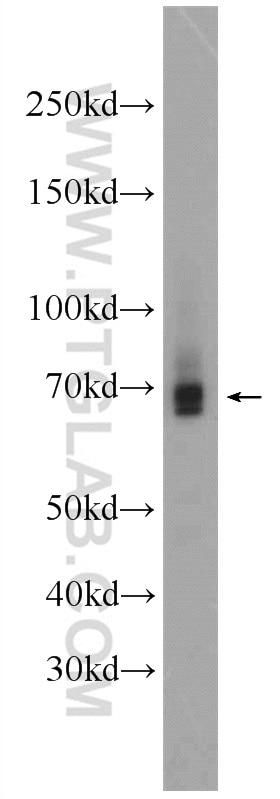
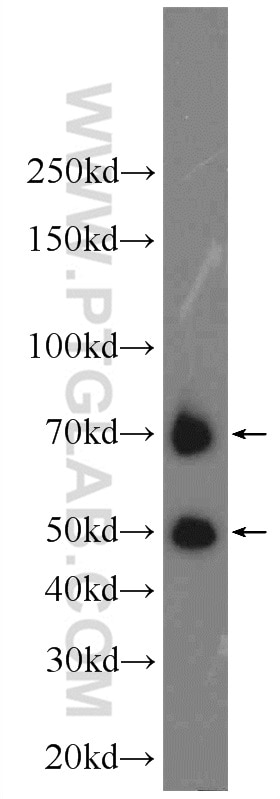
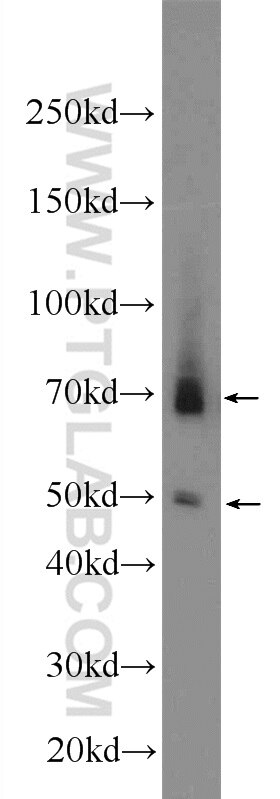
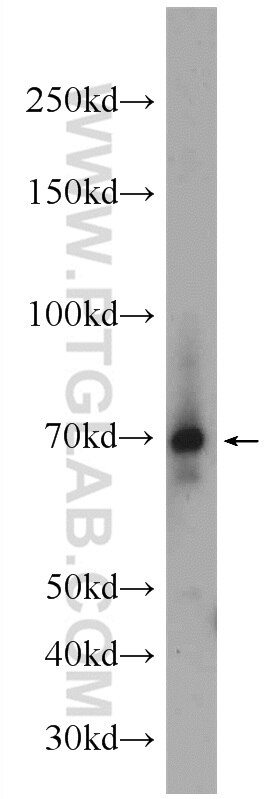
Tested Applications
Recommended dilution
| Application | Dilution |
|---|---|
| It is recommended that this reagent should be titrated in each testing system to obtain optimal results. | |
Product Information
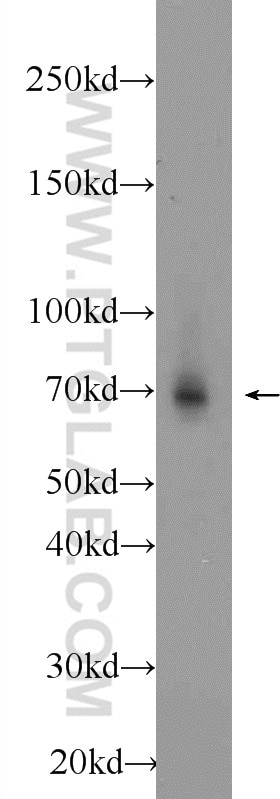
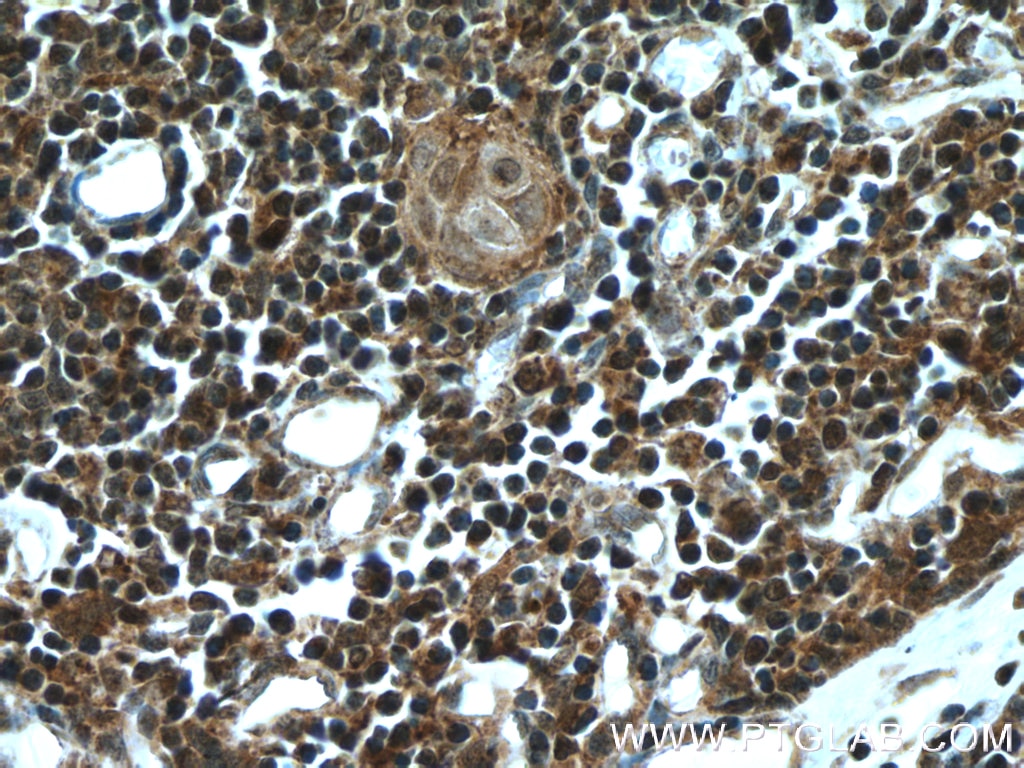
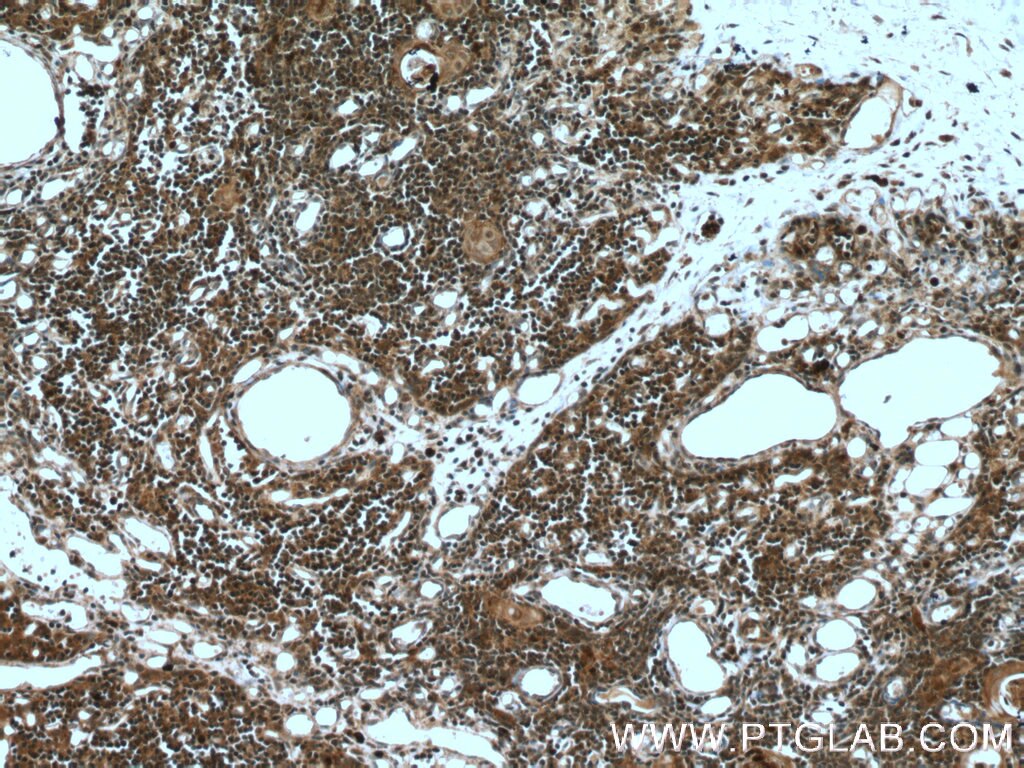
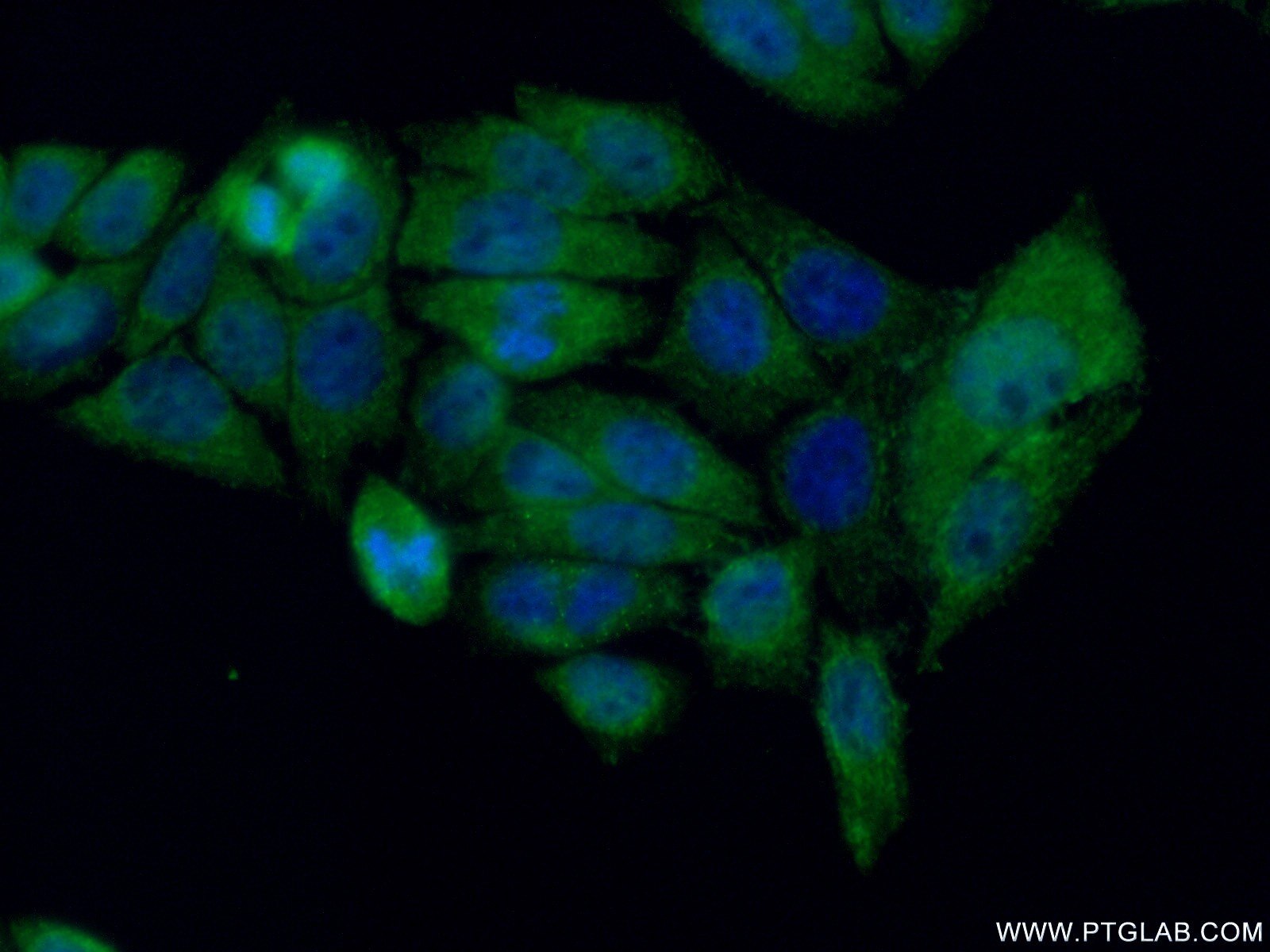
22517-1-PBS targets AIRE in WB, IHC, IF/ICC, Indirect ELISA applications and shows reactivity with human, mouse samples.
| Tested Reactivity | human, mouse |
| Host / Isotype | Rabbit / IgG |
| Class | Polyclonal |
| Type | Antibody |
| Immunogen |
CatNo: Ag18249 Product name: Recombinant human AIRE protein Source: e coli.-derived, PGEX-4T Tag: GST Domain: 96-348 aa of BC137270 Sequence: QKNEDECAVCRDGGELICCDGCPRAFHLACLSPPLREIPSGTWRCSSCLQATVQEVQPRAEEPRPQEPPVETPLPPGLRSAGEEVRGPPGEPLAGMDTTLVYKHLPAPPSAAPLPGLDSSALHPLLCVGPEGQQNLAPGARCGVCGDGTDVLRCTHCAAAFHWRCHFPAGTSRPGTGLRCRSCSGDVTPAPVEGVLAPSPARLAPGPAKDDTASHEPALHRDDLESLLSEHTFDGILQWAIQSMARPAAPFPS 相同性解析による交差性が予測される生物種 |
| Full Name | autoimmune regulator |
| Calculated molecular weight | 545 aa, 58 kDa |
| Observed molecular weight | 58-69 kDa |
| GenBank accession number | BC137270 |
| Gene Symbol | AIRE |
| Gene ID (NCBI) | 326 |
| RRID | AB_2879113 |
| Conjugate | Unconjugated |
| Form | |
| Form | Liquid |
| Purification Method | Antigen Affinity purified |
| UNIPROT ID | O43918 |
| Storage Buffer | PBS only{{ptg:BufferTemp}}7.3 |
| Storage Conditions | Store at -80°C. |
Background Information
The function of the protein is not well defined, however it contains zinc finger motifs suggestive of a transcription factor. The protein (isoform 1) is localized to both the nucleus and cytoplasm. Three splice variant mRNAs products have been described [1]. The longer AIRE1 mRNA appears to be more abundant and includes exons 1 through 14. Splice variant AIRE2 includes a portion of the non-coding region of exon 1, an alternatively spliced longer exon 8, plus exons 9 through 14. Variant AIRE3 includes the same exon 1-8-9 sequences as found in AIRE2 but utilizes additional alternative splicing in exon 10 that shifts the reading frame such that a stop codon in exon 12 is utilized. The resulting protein products of these splice variants differ significantly. Defects in this gene cause the autosomal-recessive systemic autoimmune disease termed autoimmune polyendocrinopathy-candidiasis-ectodermal dystrophy (APECED).