
Validation Data Gallery
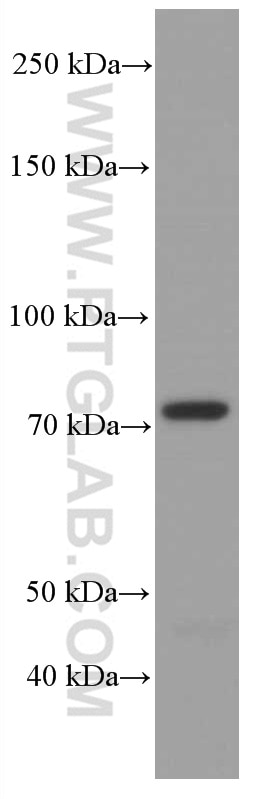
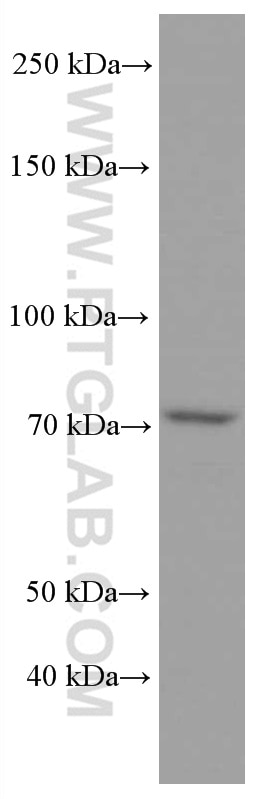
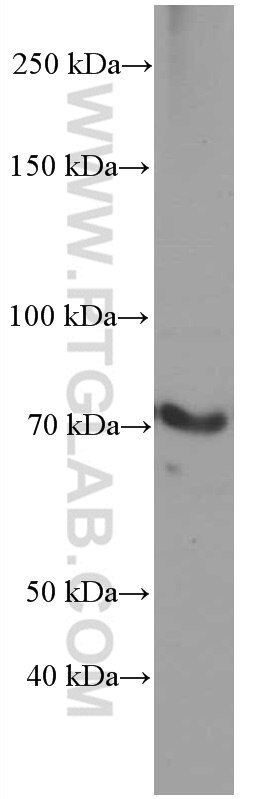
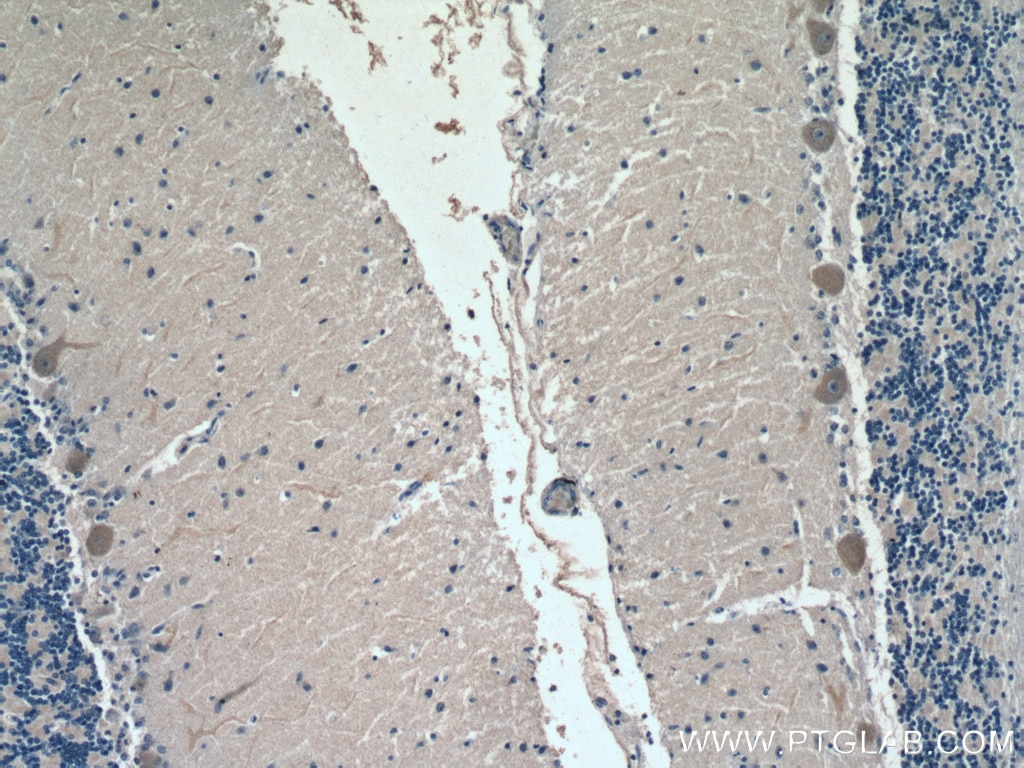
Tested Applications
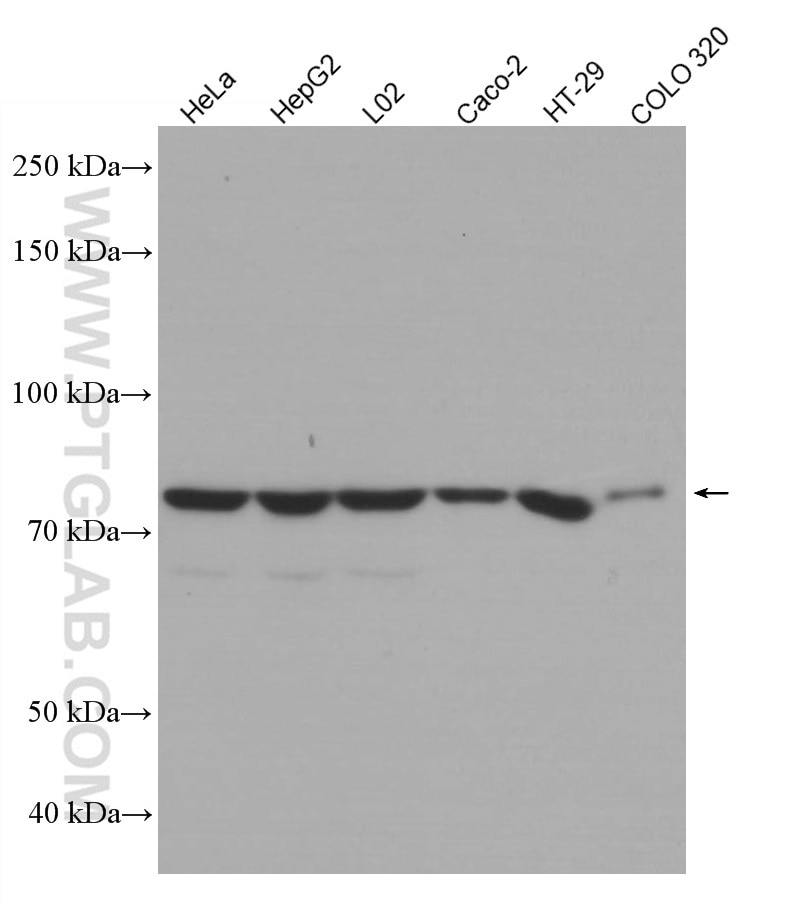
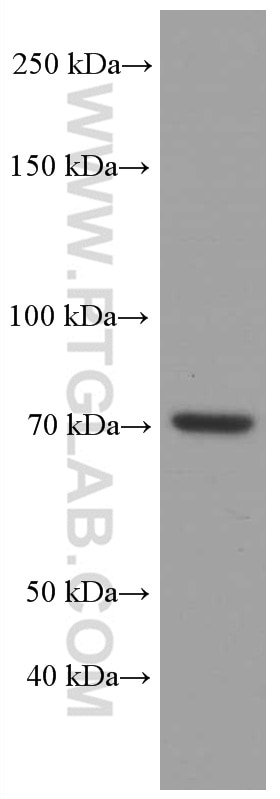
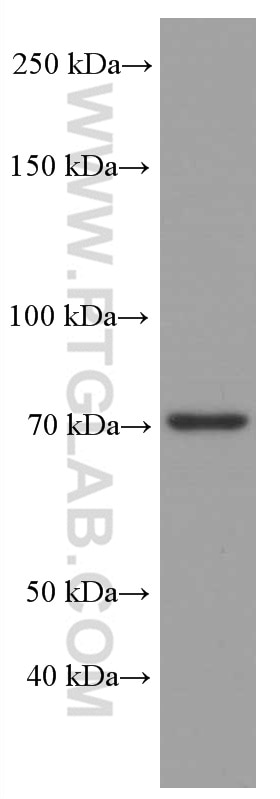
| Positive WB detected in | HeLa cells, HepG2 cells, Caco-2 cells, COLO 320 cells, L02 cells, HT-29 cells |
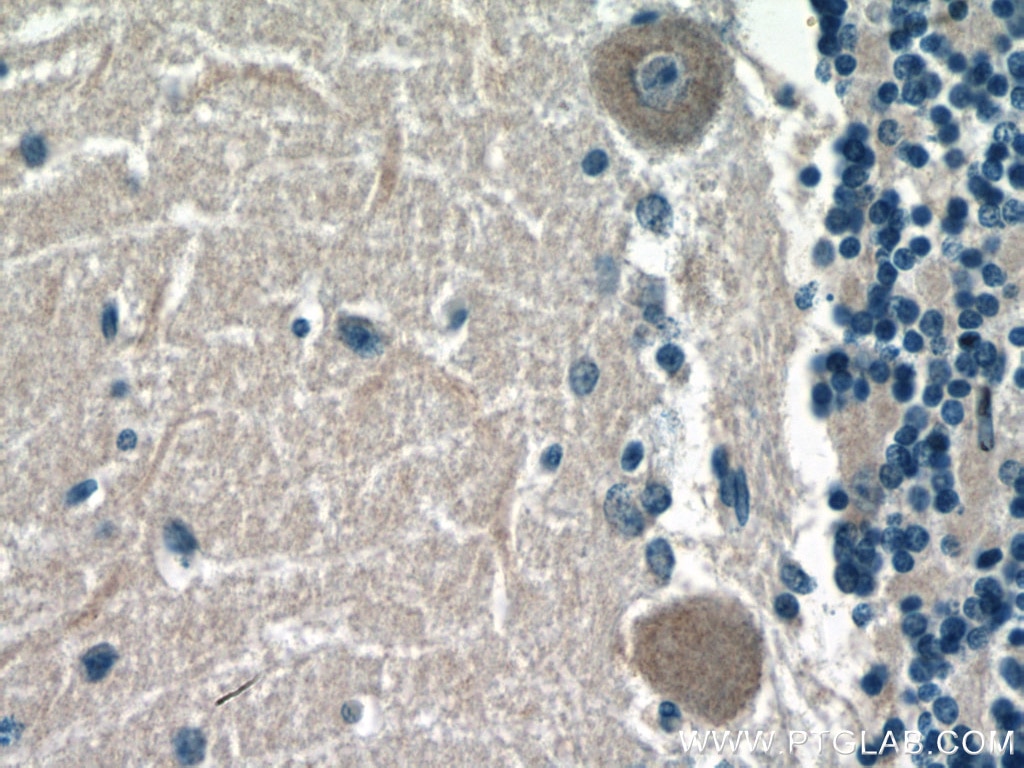
| Positive IHC detected in | human cerebellum tissue Note: suggested antigen retrieval with TE buffer pH 9.0; (*) Alternatively, antigen retrieval may be performed with citrate buffer pH 6.0 |
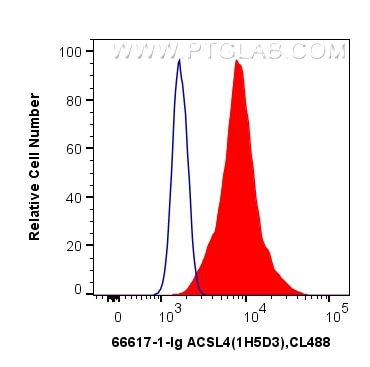
| Positive FC (Intra) detected in | HEK-293T cells |
Recommended dilution
| Application | Dilution |
|---|---|
| Western Blot (WB) | WB : 1:3000-1:10000 |
| Immunohistochemistry (IHC) | IHC : 1:250-1:1000 |
| Flow Cytometry (FC) (INTRA) | FC (INTRA) : 0.40 ug per 10^6 cells in a 100 µl suspension |
| It is recommended that this reagent should be titrated in each testing system to obtain optimal results. | |
| Sample-dependent, Check data in validation data gallery. | |
Published Applications
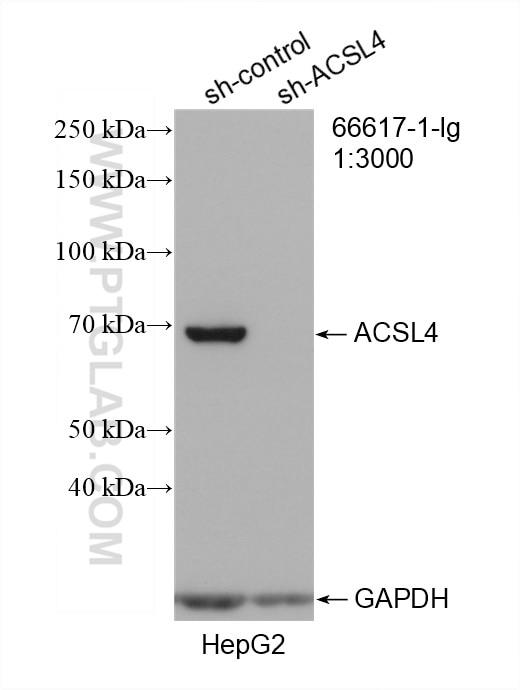
| KD/KO | See 3 publications below |
| WB | See 51 publications below |
| IHC | See 3 publications below |
| IF | See 11 publications below |
| IP | See 1 publications below |
Product Information
66617-1-Ig targets ACSL4/FACL4 in WB, IHC, IF, FC (Intra), IP, ELISA applications and shows reactivity with human samples.
| Tested Reactivity | human |
| Cited Reactivity | human, rat, bovine, sheep |
| Host / Isotype | Mouse / IgG1 |
| Class | Monoclonal |
| Type | Antibody |
| Immunogen |
CatNo: Ag18085 Product name: Recombinant human ACSL4 protein Source: e coli.-derived, PET28a Tag: 6*His Domain: 143-236 aa of BC034959 Sequence: LGKEAVVHGLNESEASYLITSVELLESKLKTALLDISCVKHIIYVDNKAINKAEYPEGFEIHSMQSVEELGSNPENLGIPPSRPTPSDMAIVMY 相同性解析による交差性が予測される生物種 |
| Full Name | acyl-CoA synthetase long-chain family member 4 |
| Calculated molecular weight | 711 aa, 79 kDa |
| Observed molecular weight | 74 kDa |
| GenBank accession number | BC034959 |
| Gene Symbol | ACSL4 |
| Gene ID (NCBI) | 2182 |
| RRID | AB_2881977 |
| Conjugate | Unconjugated |
| Form | |
| Form | Liquid |
| Purification Method | Protein G purification |
| UNIPROT ID | O60488 |
| Storage Buffer | PBS with 0.02% sodium azide and 50% glycerol{{ptg:BufferTemp}}7.3 |
| Storage Conditions | Store at -20°C. Stable for one year after shipment. Aliquoting is unnecessary for -20oC storage. |
Background Information
Acyl-CoA synthetase long-chain family 4 (ACSL4) is a key enzyme that catalyzes long-chain fatty acids activation, and abnormal expression of ACSL4 is closely related to various biological responses, including steroidogenesis, inflammation response, cell death, immune activation response, and so on. Specifically, ACSL4 participates in ferroptosis, a promising target for tumor therapeutics.
Protocols
| Product Specific Protocols | |
|---|---|
| FC protocol for ACSL4/FACL4 antibody 66617-1-Ig | Download protocol |
| IHC protocol for ACSL4/FACL4 antibody 66617-1-Ig | Download protocol |
| WB protocol for ACSL4/FACL4 antibody 66617-1-Ig | Download protocol |
| Standard Protocols | |
|---|---|
| Click here to view our Standard Protocols |
Publications
| Species | Application | Title |
|---|---|---|
J Hepatol eIF3f promotes tumour malignancy by remodelling fatty acid biosynthesis in hepatocellular carcinoma | ||
Nat Cancer ENO1 suppresses cancer cell ferroptosis by degrading the mRNA of iron regulatory protein 1. | ||
Cell Discov Ferroptosis-induced SUMO2 lactylation counteracts ferroptosis by enhancing ACSL4 degradation in lung adenocarcinoma. | ||
Redox Biol Quercetin alleviates LPS/iE-DAP-induced liver injury by suppressing ferroptosis via regulating ferritinophagy and intracellular iron efflux | ||
Acta Pharm Sin B Vitamin A and its analogues modulate MUFAs metabolism to improve ferroptosis and aging by direct targeting of ACSL3. | ||
Adv Sci (Weinh) PP1A Modulates the Efficacy of Lenvatinib Plus ICIs Therapy by Inhibiting Ferroptosis in Hepatocellular Carcinoma |