
Validation Data Gallery
Tested Applications
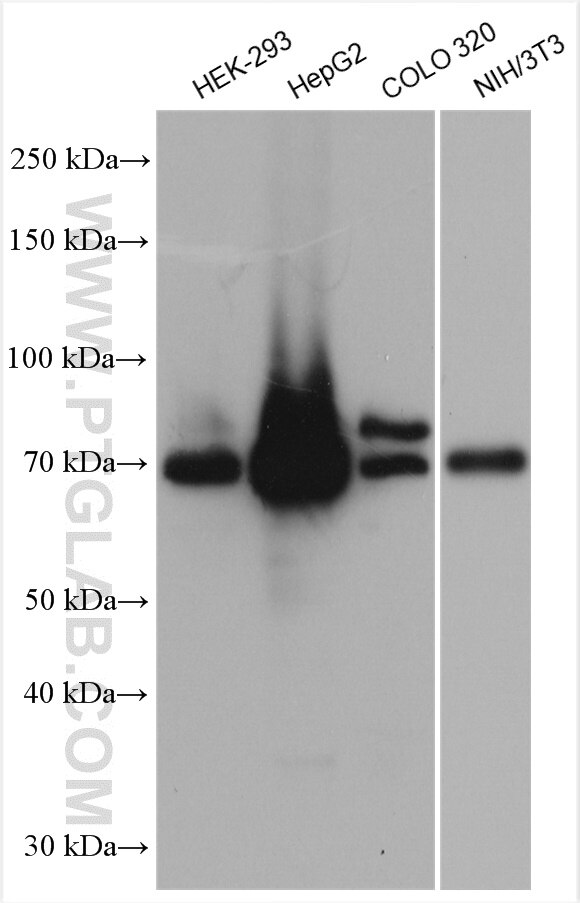
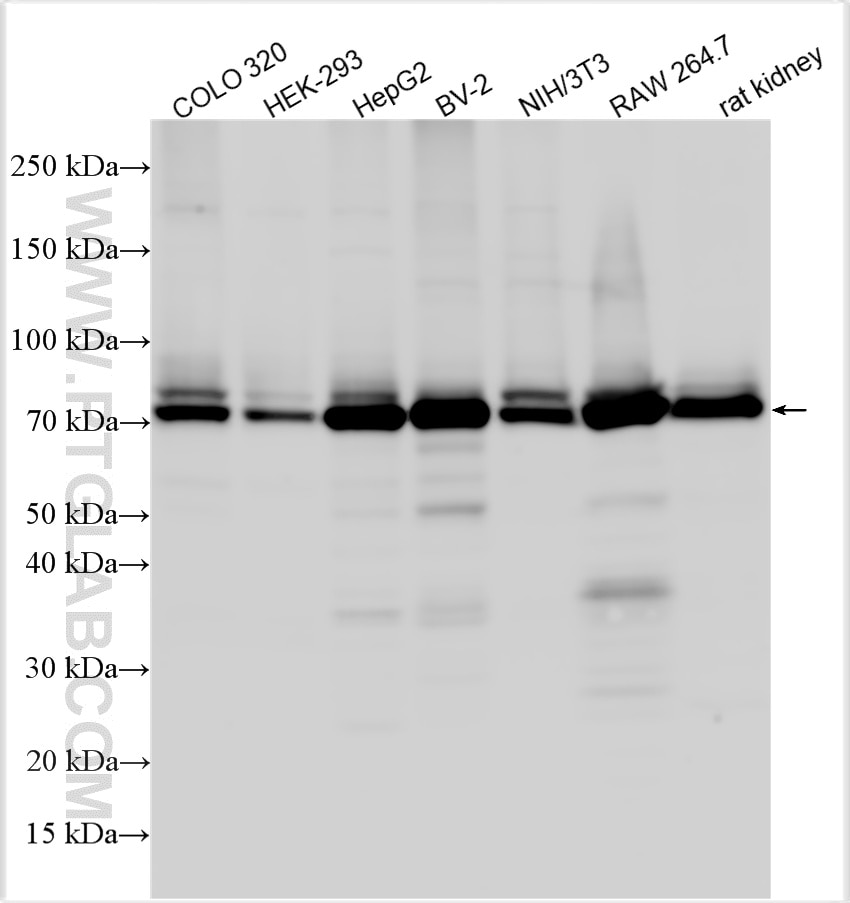
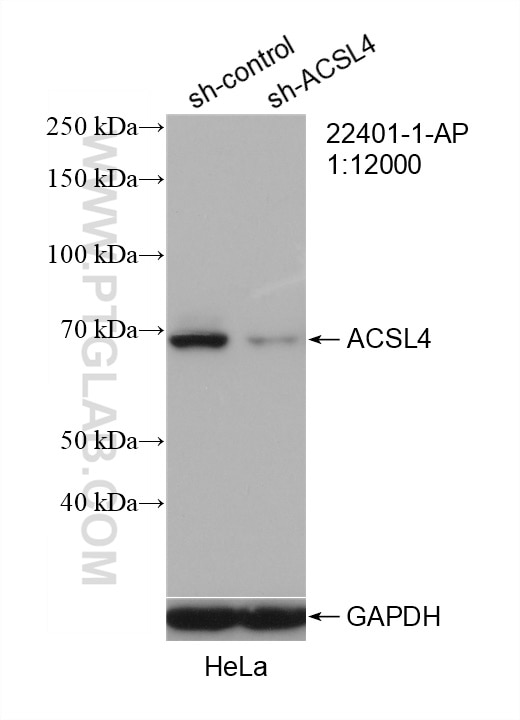
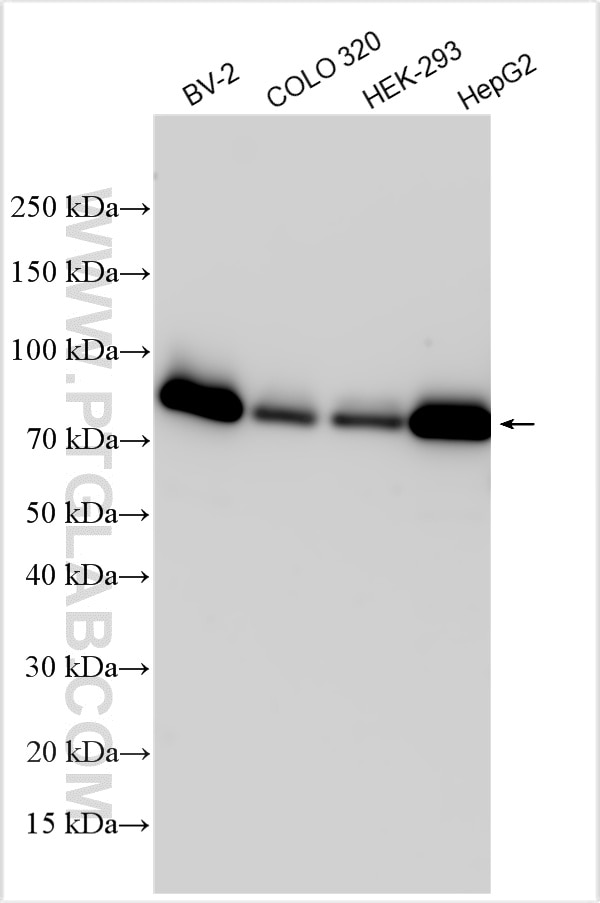
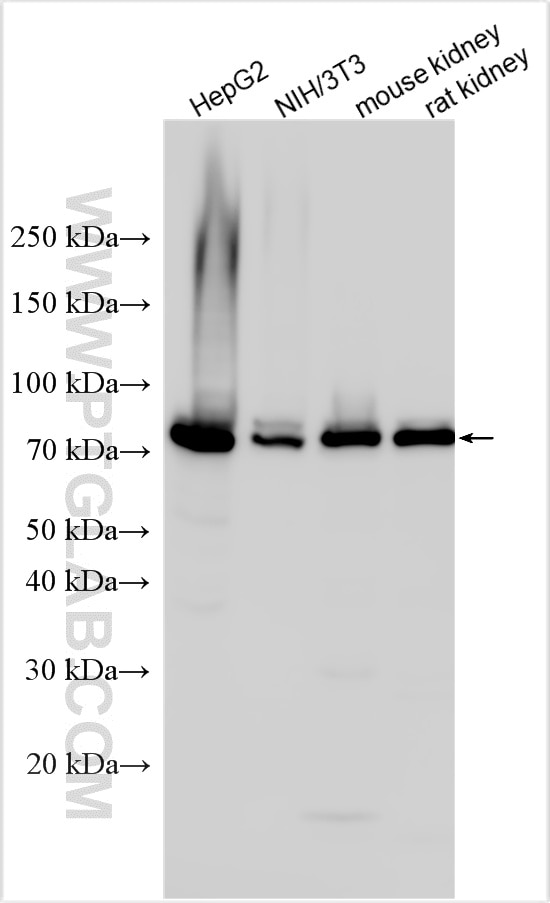
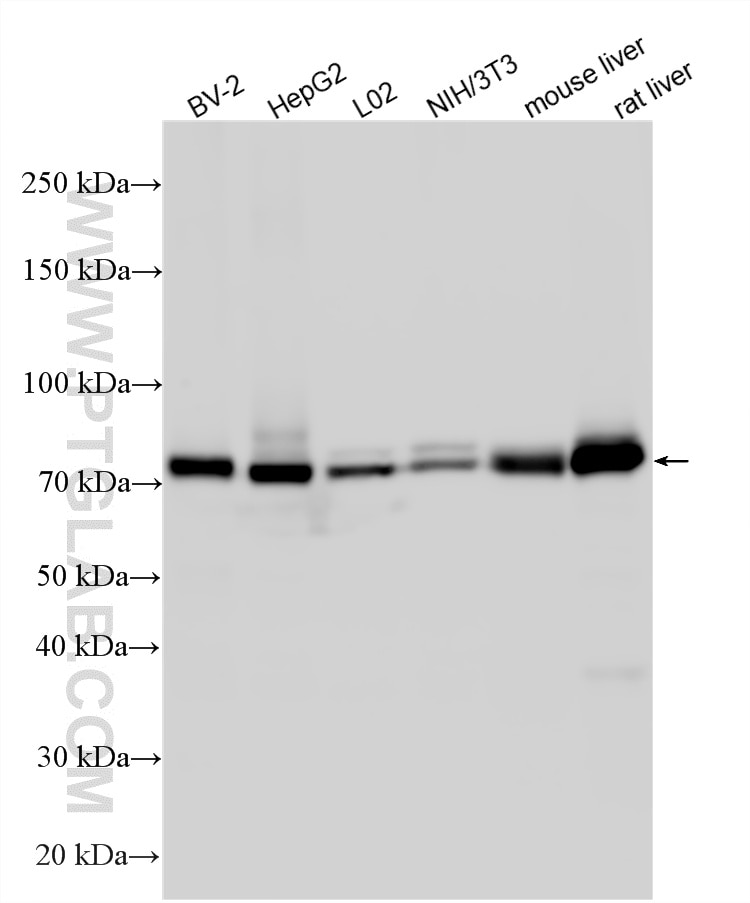
| Positive WB detected in | BV-2 cells, HEK-293 cells, HeLa cells, HepG2 cells, COLO 320 cells, NIH/3T3 cells, mouse kidney tissue, rat kidney tissue, RAW 264.7 cells |
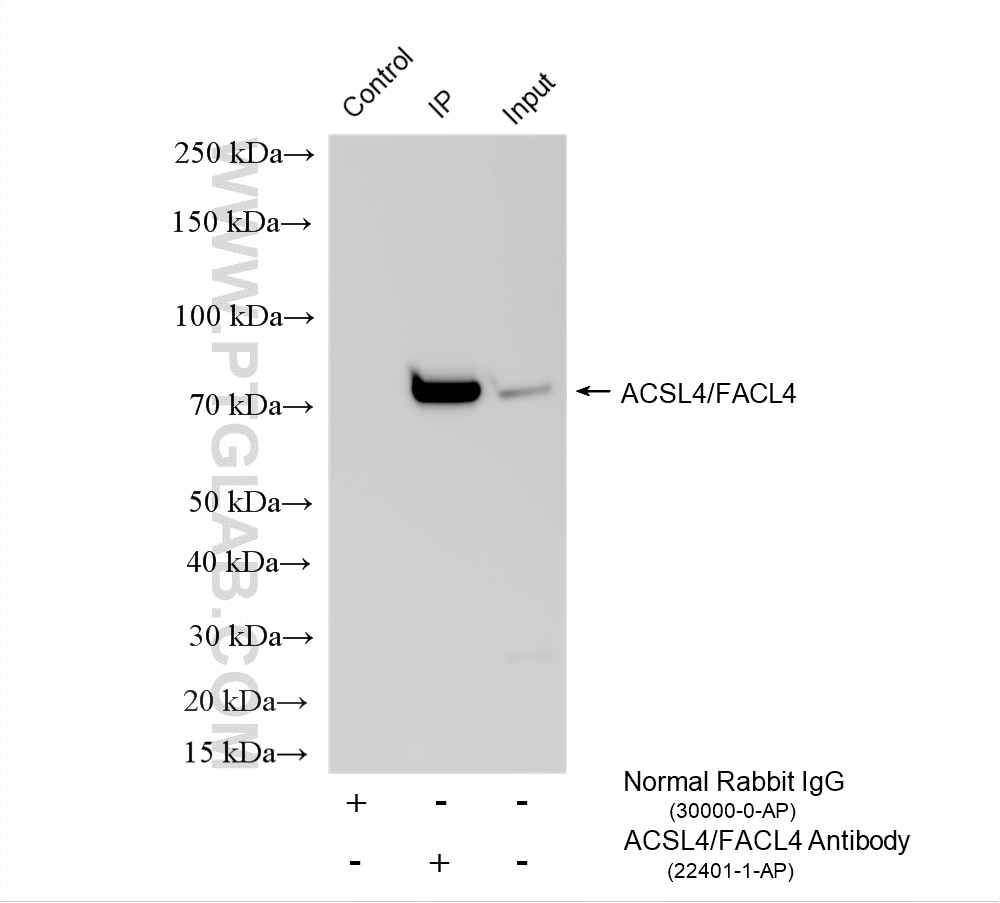
| Positive IP detected in | mouse liver tissue |
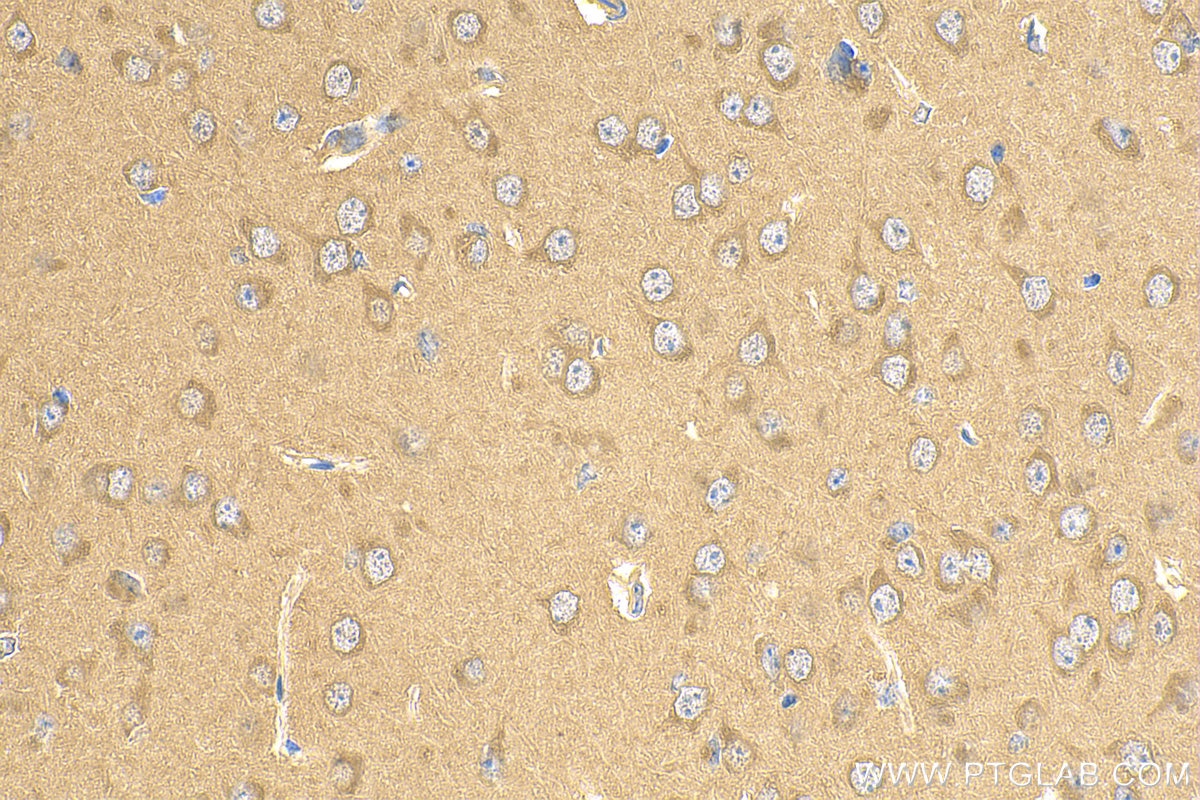
| Positive IHC detected in | mouse brain tissue Note: suggested antigen retrieval with TE buffer pH 9.0; (*) Alternatively, antigen retrieval may be performed with citrate buffer pH 6.0 |
Recommended dilution
| Application | Dilution |
|---|---|
| Western Blot (WB) | WB : 1:5000-1:50000 |
| Immunoprecipitation (IP) | IP : 0.5-4.0 ug for 1.0-3.0 mg of total protein lysate |
| Immunohistochemistry (IHC) | IHC : 1:50-1:500 |
| It is recommended that this reagent should be titrated in each testing system to obtain optimal results. | |
| Sample-dependent, Check data in validation data gallery. | |
Published Applications
| KD/KO | See 18 publications below |
| WB | See 586 publications below |
| IHC | See 91 publications below |
| IF | See 58 publications below |
| IP | See 12 publications below |
| CoIP | See 6 publications below |
Product Information
22401-1-AP targets ACSL4/FACL4 in WB, IHC, IF, IP, CoIP, ELISA applications and shows reactivity with human, mouse, rat samples.
| Tested Reactivity | human, mouse, rat |
| Cited Reactivity | human, mouse, rat, pig, chicken, zebrafish, hamster, duck |
| Host / Isotype | Rabbit / IgG |
| Class | Polyclonal |
| Type | Antibody |
| Immunogen |
CatNo: Ag18085 Product name: Recombinant human ACSL4 protein Source: e coli.-derived, PET28a Tag: 6*His Domain: 143-236 aa of BC034959 Sequence: LGKEAVVHGLNESEASYLITSVELLESKLKTALLDISCVKHIIYVDNKAINKAEYPEGFEIHSMQSVEELGSNPENLGIPPSRPTPSDMAIVMY 相同性解析による交差性が予測される生物種 |
| Full Name | acyl-CoA synthetase long-chain family member 4 |
| Calculated molecular weight | 711 aa, 79 kDa |
| Observed molecular weight | 79 kDa, 74 kDa |
| GenBank accession number | BC034959 |
| Gene Symbol | ACSL4 |
| Gene ID (NCBI) | 2182 |
| RRID | AB_2832995 |
| Conjugate | Unconjugated |
| Form | |
| Form | Liquid |
| Purification Method | Antigen affinity purification |
| UNIPROT ID | O60488 |
| Storage Buffer | PBS with 0.02% sodium azide and 50% glycerol{{ptg:BufferTemp}}7.3 |
| Storage Conditions | Store at -20°C. Stable for one year after shipment. Aliquoting is unnecessary for -20oC storage. |
Background Information
Acyl-CoA synthetase long-chain family member 4 (Acsl4), an important enzyme involved in lipid metabolism, participates in ferroptosis by converting free AA into arachidonoyl-CoA to generate lipid hydroperoxides. Recent studies revealed that ACSL4 is involved in biological responses including inflammation, steroidogenesis, cell death, female fertility, and cancer. Acsl4 has two isoforms: 79 kDa and 75 kDa. ACSL4 also can be detected in 70 kDa(PMID:35326233).
Protocols
| Product Specific Protocols | |
|---|---|
| IHC protocol for ACSL4/FACL4 antibody 22401-1-AP | Download protocol |
| IP protocol for ACSL4/FACL4 antibody 22401-1-AP | Download protocol |
| WB protocol for ACSL4/FACL4 antibody 22401-1-AP | Download protocol |
| Standard Protocols | |
|---|---|
| Click here to view our Standard Protocols |
Publications
| Species | Application | Title |
|---|---|---|
Signal Transduct Target Ther Bio-barrier-adaptable biomimetic nanomedicines combined with ultrasound for enhanced cancer therapy | ||
J Hematol Oncol METTL16-SENP3-LTF axis confers ferroptosis resistance and facilitates tumorigenesis in hepatocellular carcinoma | ||
Cell Res Mitochondria-localized cGAS suppresses ferroptosis to promote cancer progression | ||
Exploration (Beijing) A pH responsive nanocomposite for combination sonodynamic-immunotherapy with ferroptosis and calcium ion overload via SLC7A11/ACSL4/LPCAT3 pathway | ||