
Recombinant Human NPC2 protein (rFc Tag)
Species
Human
Purity
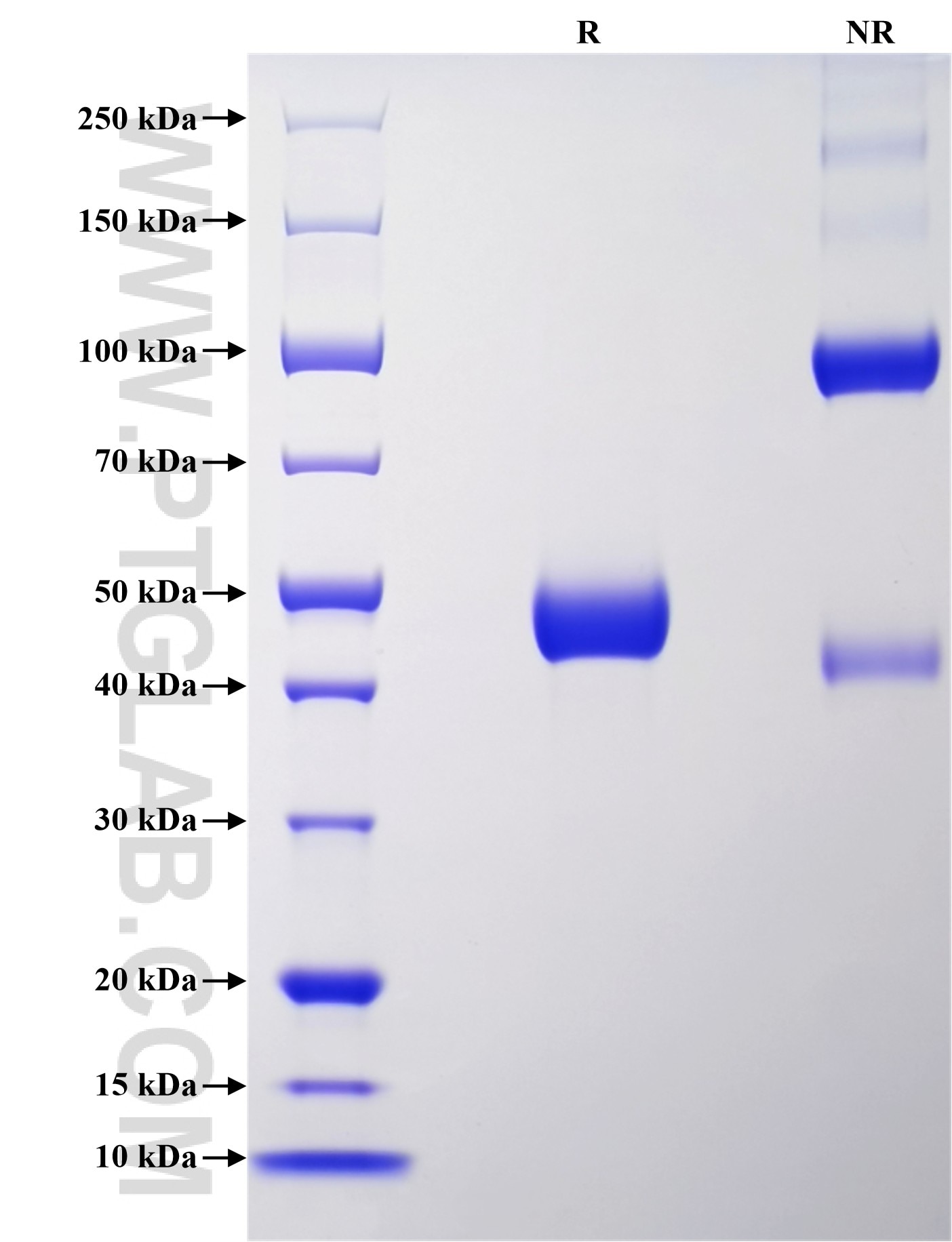
>90 %, SDS-PAGE
Tag
rFc Tag
Activity
EC50: /
Cat no : Eg9493
Validation Data Gallery
Product Information
| Purity | >90 %, SDS-PAGE |
| Endotoxin | <0.1 EU/μg protein, LAL method |
| Activity |
Not tested. |
| Expression | HEK293-derived Human NPC2 protein Glu20-Leu151 (Accession# P61916-1) with a rabbit IgG Fc tag at the C-terminus. |
| GeneID | 10577 |
| Accession | P61916-1 |
| PredictedSize | 40.2 kDa |
| SDS-PAGE | 43-51 kDa, reducing (R) conditions |
| Formulation | Lyophilized from 0.22 μm filtered solution in PBS, pH 7.4. Normally 5% trehalose and 5% mannitol are added as protectants before lyophilization. |
| Reconstitution | Briefly centrifuge the tube before opening. Reconstitute at 0.1-0.5 mg/mL in sterile water. |
| Storage Conditions |
It is recommended that the protein be aliquoted for optimal storage. Avoid repeated freeze-thaw cycles.
|
| Shipping | The product is shipped at ambient temperature. Upon receipt, store it immediately at the recommended temperature. |
Background
Niemann-Pick Type C (NPC) disease is a lysosomal storage disorder characterized by accumulation of unesterified cholesterol and other lipids in the endolysosomal system. NPC disease results from a defect in either of two distinct cholesterol-binding proteins: a transmembrane protein, NPC1, and a small soluble protein, NPC2. NPC1 or NPC2 deficiency models showed that the function of these two proteins within lysosomes are linked closely. NPC2 is also named human epididymis-specific protein 1 (HE1), defects of which are the cause of Niemann-Pick disease type C2, characterized as a lysosomal storage disorder that affects the viscera and the central nervous system. Recent finding suggests that NPC2 may serve as a novel intracrine/autocrine factor that controls adipocyte differentiation and function as well as potential therapeutic target for the treatment of type 2 diabetes and related metabolic disorders.
References:
1. Dixit, Sayali S et al. PloS one vol. 6,8 (2011): e23677.
2. Boadu, Emmanuel et al. Biochimica et biophysica acta vol. 1821,3 (2012): 396-404.
3. Csepeggi, Chad et al. The Journal of biological chemistry vol. 285,39 (2010): 30347-54.