
Recombinant Mouse SOD1 protein (rFc Tag)
Species
Mouse
Purity
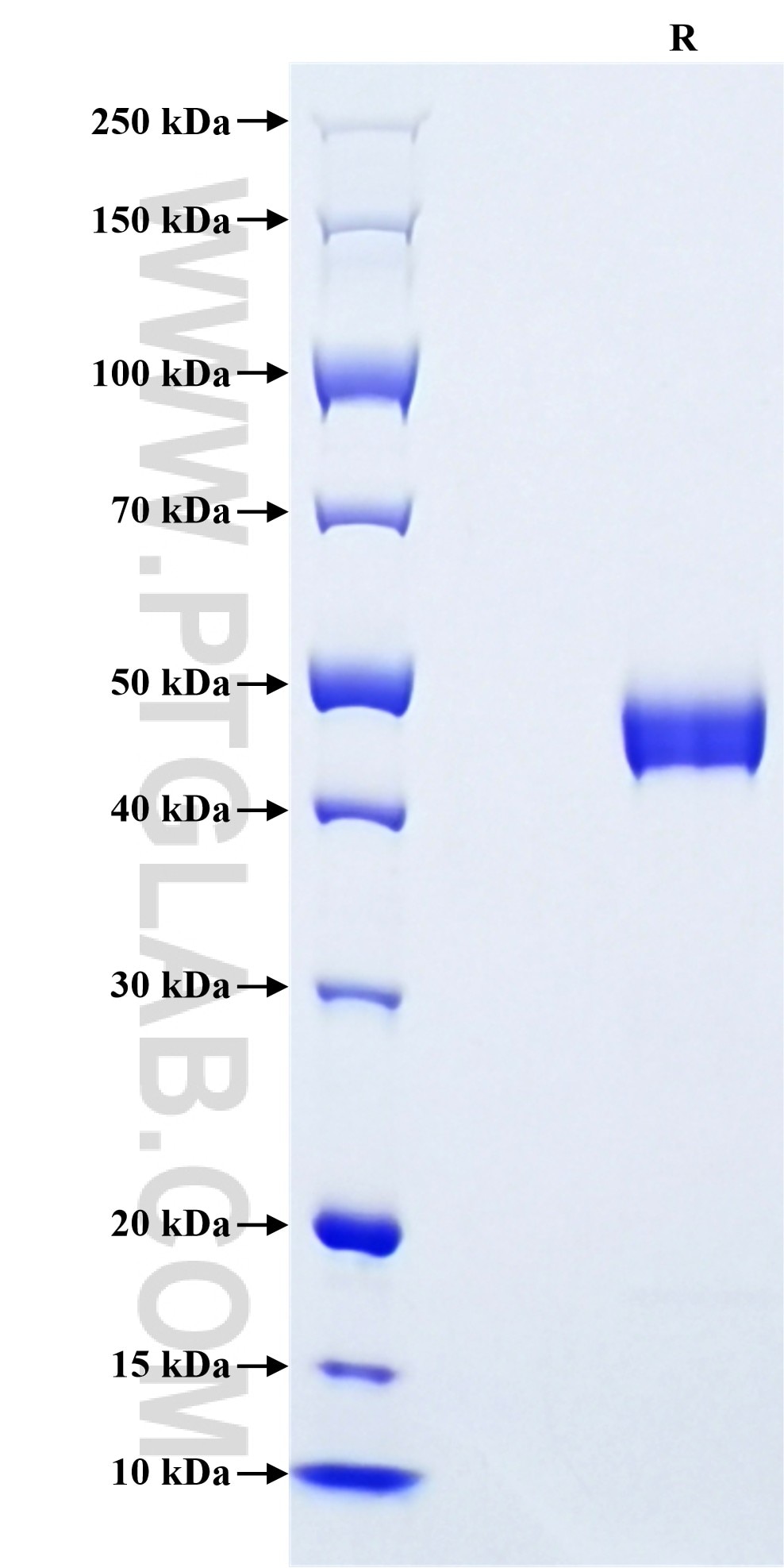
>90 %, SDS-PAGE
Tag
rFc Tag
Activity
not tested
Cat no : Eg9090
Validation Data Gallery
Product Information
| Purity | >90 %, SDS-PAGE |
| Endotoxin | <0.1 EU/μg protein, LAL method |
| Activity |
Not tested |
| Expression | HEK293-derived Mouse SOD1 protein Ala2-Gln154 (Accession# P08228) with a rabbit IgG Fc tag at the C-terminus. |
| GeneID | 20655 |
| Accession | P08228 |
| PredictedSize | 41.4 kDa |
| SDS-PAGE | 43-49 kDa, reducing (R) conditions |
| Formulation | Lyophilized from 0.22 μm filtered solution in PBS, pH 7.4. Normally 5% trehalose and 5% mannitol are added as protectants before lyophilization. |
| Reconstitution | Briefly centrifuge the tube before opening. Reconstitute at 0.1-0.5 mg/mL in sterile water. |
| Storage Conditions |
It is recommended that the protein be aliquoted for optimal storage. Avoid repeated freeze-thaw cycles.
|
| Shipping | The product is shipped at ambient temperature. Upon receipt, store it immediately at the recommended temperature. |
Background
The enzymatic function of Cu/Zn Superoxide Dismutase (SOD1), previously known as hemocuprein and IPOA, was first characterized in 1969. SOD1 is commonly known for its ROS scavenging activity, but recent work has uncovered additional roles in modulating metabolism, maintaining redox balance, and regulating transcription. In disease contexts, SOD1 is best-known for its role in a familial form of amyotrophic lateral sclerosis (fALS). In addition, SOD1 is overexpressed in numerous cancer types, including lung adenocarcinoma, non-small-cell lung cancer , and 70% of primary breast cancers.
References:
1. Kruman, I I et al. Experimental neurology vol. 160,1 (1999): 28-39.
2. Banks, C J, and J L Andersen. Redox biology vol. 26 (2019): 101270.
3. McCord, J M, and I Fridovich. The Journal of biological chemistry vol. 244,22 (1969): 6049-55.