
Recombinant Human PTPRF protein (rFc Tag)
Species
Human
Purity
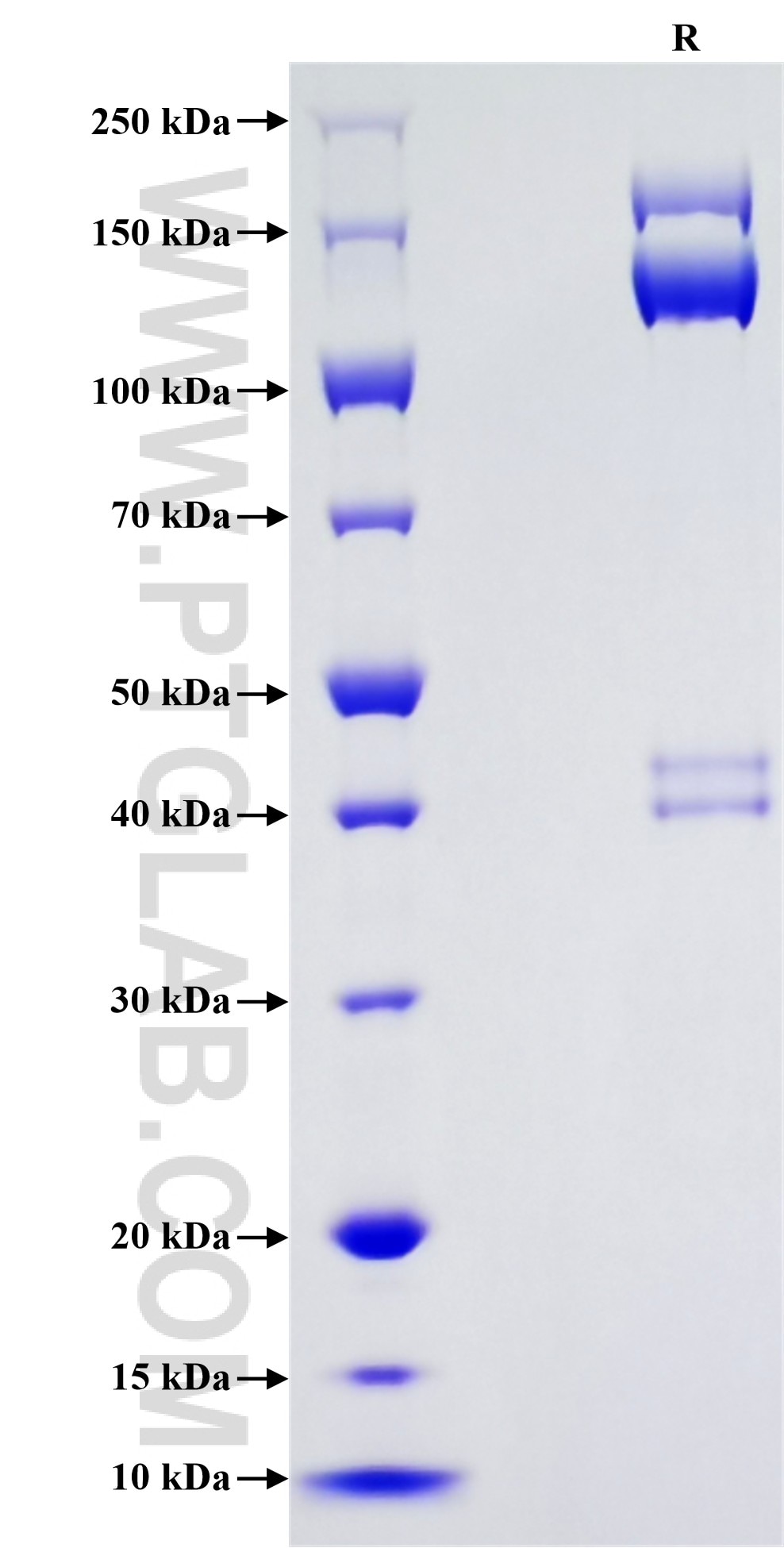
>90 %, SDS-PAGE
Tag
rFc Tag
Activity
not tested
Cat no : Eg6919
Validation Data Gallery
Product Information
| Purity | >90 %, SDS-PAGE |
| Endotoxin | <0.1 EU/μg protein, LAL method |
| Activity |
Not tested |
| Expression | HEK293-derived Human PTPRF protein Asp30-Trp1263 (Accession# P10586-1) with a rabbit IgG Fc tag at the C-terminus. |
| GeneID | 5792 |
| Accession | P10586-1 |
| PredictedSize | 162 kDa |
| SDS-PAGE | 40-45 kDa, 120-140 kDa and 150-200 kDa, reducing (R) conditions |
| Formulation | Lyophilized from 0.22 μm filtered solution in 0.5M arg, 30mM Tris, pH8.0. Normally 5% trehalose and 5% mannitol are added as protectants before lyophilization. |
| Reconstitution | Briefly centrifuge the tube before opening. Reconstitute at 0.1-0.5 mg/mL in sterile water. |
| Storage Conditions |
It is recommended that the protein be aliquoted for optimal storage. Avoid repeated freeze-thaw cycles.
|
| Shipping | The product is shipped at ambient temperature. Upon receipt, store it immediately at the recommended temperature. |
Background
PTPRF (Protein Tyrosine Phosphatase Receptor Type F) is a receptor protein tyrosine phosphatase, also known as LAR. PTPRF is a transmembrane protein with extracellular domain, transmembrane domain and two intracellular catalytic domains in series. It is located in the cell membrane and participates in the interaction between cells or cell matrix. It is widely expressed in many tissues, including fat, skin, heart, lung, liver, kidney, pancreas, small intestine, colon, brain, skeletal muscle, spleen, peripheral white blood cells and so on. The protein plays an important role in regulating a variety of cell processes, including cell growth, differentiation, mitotic cycle and carcinogenic transformation. In the insulin-responsive tissues of obese and insulin-resistant individuals, the expression level of PTPRF is increased, which may contribute to the pathogenesis of insulin resistance. PTPRF showed expression changes in many cancers, such as breast cancer, thyroid cancer, non-small cell lung cancer and so on. In gastric adenocarcinoma, PTPRF, as a new tumor suppressor, plays a role by inactivating ERK1/2 signaling pathway.
References:
1.Konishi, N et al. British journal of cancer vol. 88,8 (2003): 1223-8.
2.Soulières, Denis et al. Journal of thoracic oncology vol. 10,9 (2015): 1364-1369.
3.Tian, Xiang'an et al. OncoTargets and therapy vol. 11 7795-7803. 2 Nov. 2018, doi:10.2147/OTT.S178152