
Recombinant Human SCRIB protein (rFc Tag)
Species
Human
Purity
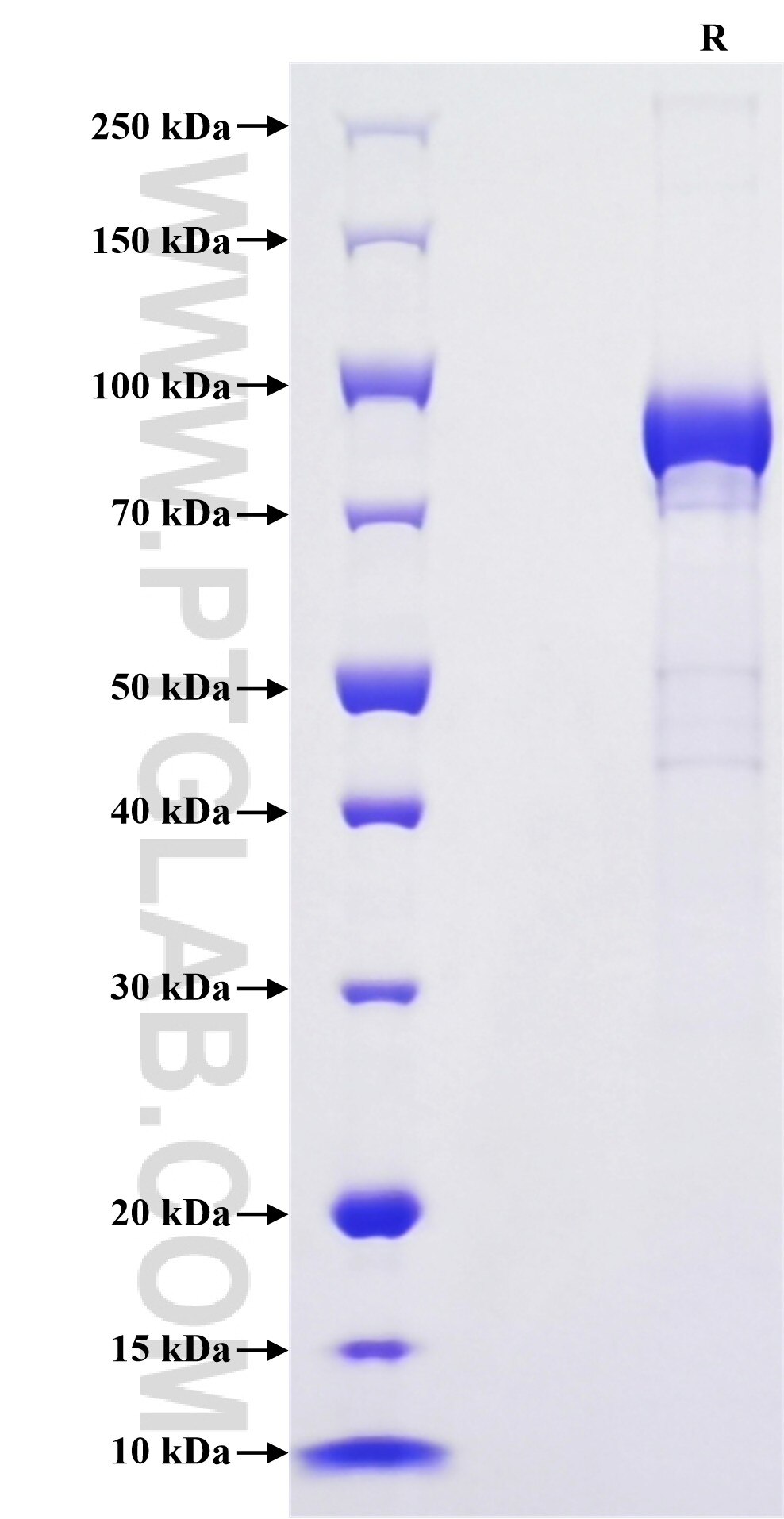
>90 %, SDS-PAGE
Tag
rFc Tag
Activity
not tested
Cat no : Eg6543
Validation Data Gallery
Product Information
| Purity | >90 %, SDS-PAGE |
| Endotoxin | <0.1 EU/μg protein, LAL method |
| Activity |
Not tested |
| Expression | HEK293-derived Human SCRIB protein Ser700-Leu1200 (Accession# Q14160-3) with a rabbit IgG Fc tag at the C-terminus. |
| GeneID | 23513 |
| Accession | Q14160-3 |
| PredictedSize | 77.6 kDa |
| SDS-PAGE | 80-100 kDa, reducing (R) conditions |
| Formulation | Lyophilized from 0.22 μm filtered solution in PBS, pH 7.4. Normally 5% trehalose and 5% mannitol are added as protectants before lyophilization. |
| Reconstitution | Briefly centrifuge the tube before opening. Reconstitute at 0.1-0.5 mg/mL in sterile water. |
| Storage Conditions |
It is recommended that the protein be aliquoted for optimal storage. Avoid repeated freeze-thaw cycles.
|
| Shipping | The product is shipped at ambient temperature. Upon receipt, store it immediately at the recommended temperature. |
Background
SCRIB encodes a large, 260-kDa cytoplasmic scaffolding protein that comprises a large leucine-rich repeat (LRR) region and 4 PDZ domains that regulate protein-protein interactionsThe loss of SCRIB in malignant tumors suggest that it has potential to be a tumor suppressor. Mislocalization of SCRIB is involved in epithelial-to-mesenchymal transition (EMT) by inducing loss of E-cadherin. Deregulated SCRIB expression induces tumorigenesis in breast and liver.
References:
1. Kapil, Shweta et al. Oncotarget vol. 8,16 (2017): 26515-26531.
2. Hussein, Usama Khamis et al. Aging vol. 12,12 (2020): 11812-11834.