
Recombinant Human P-cadherin protein (rFc Tag)
Species
Human
Purity
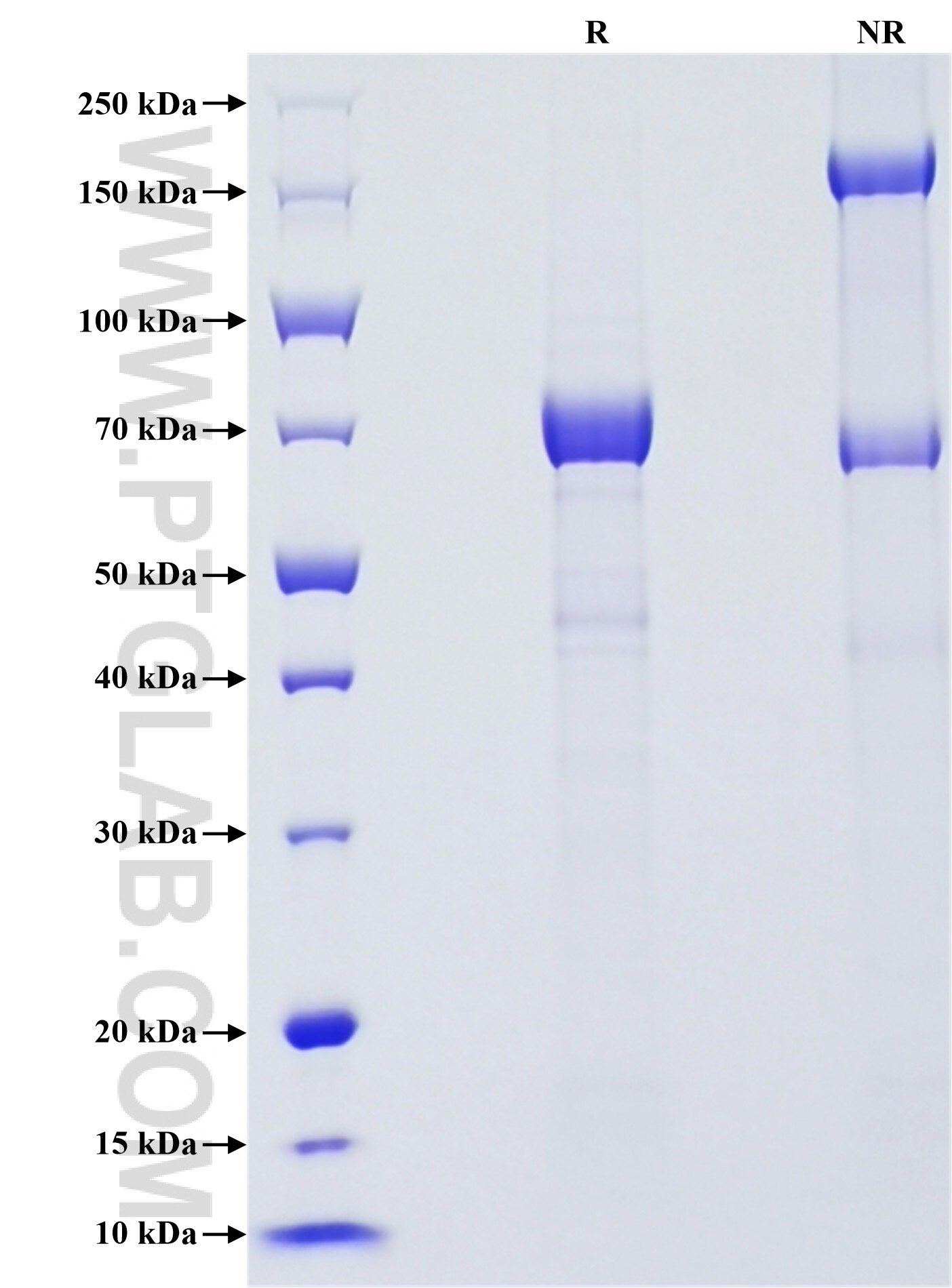
>90 %, SDS-PAGE
Tag
rFc Tag
Activity
not tested
Cat no : Eg5236
Validation Data Gallery
Product Information
| Purity | >90 %, SDS-PAGE |
| Endotoxin | <0.1 EU/μg protein, LAL method |
| Activity |
Not tested |
| Expression | HEK293-derived Human P-cadherin protein Asp108-Phe440 (Accession# P22223-1) with a rabbit IgG Fc tag at the C-terminus. |
| GeneID | 1001 |
| Accession | P22223-1 |
| PredictedSize | 62.5 kDa |
| SDS-PAGE | 65-80 kDa, reducing (R) conditions |
| Formulation | Lyophilized from 0.22 μm filtered solution in PBS, pH 7.4. Normally 5% trehalose and 5% mannitol are added as protectants before lyophilization. |
| Reconstitution | Briefly centrifuge the tube before opening. Reconstitute at 0.1-0.5 mg/mL in sterile water. |
| Storage Conditions |
It is recommended that the protein be aliquoted for optimal storage. Avoid repeated freeze-thaw cycles.
|
| Shipping | The product is shipped at ambient temperature. Upon receipt, store it immediately at the recommended temperature. |
Background
Cadherins are a family of transmembrane glycoproteins that mediate calcium-dependent cell-cell adhesion and play an important role in the maintenance of normal tissue architecture. P-cadherin (placental cadherin), also known as CDH3 (cadherin 3), is a classical member of the cadherin superfamily, which also includes E-, N-, R-, and B-cadherins. Aberrant expression of P-cadherin has been reported in many cancers, including breast, gastric, endometrial, ovarian, and prostate cancer.
References:
1.Angst, B D et al. Journal of cell science vol. 114,Pt 4 (2001): 629-41.
2.Tiwari, Prince et al. Advances in experimental medicine and biology vol. 1112 (2018): 107-138.
3.Vieira, André Filipe, and Joana Paredes. Molecular cancer vol. 14 178. 6 Oct. 2015
4.Paredes, Joana et al. Breast cancer research : BCR vol. 9,5 (2007): 214.